Many brick apartment buildings have cracks that come back however often they are patched. The cause is often movement, not a failing foundation. Building materials change size over time, and brickwork needs joints to let that happen.
Why walls move
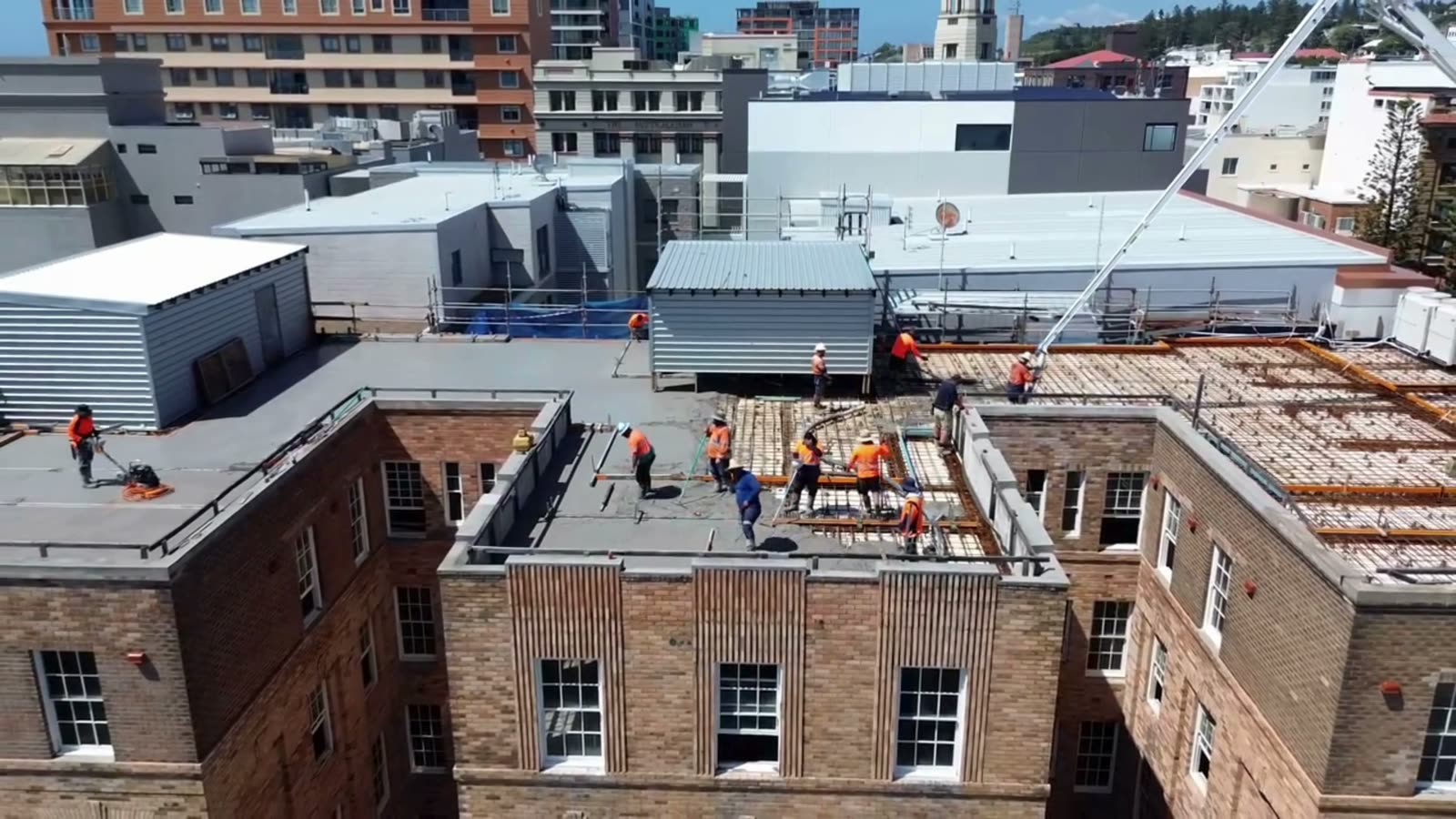
Clay bricks slowly expand as they take up moisture after they leave the kiln, and the growth continues for years. Concrete frames do the opposite. Slabs and columns shrink as they dry and creep under load. When expanding brickwork is built tight against a shrinking concrete frame, something has to give.
Temperature and moisture add daily and seasonal movement on top.
Signs of missing or failed joints
- Vertical cracks near corners and returns.
- Cracks running from window and door corners.
- Bricks pushed out or cracked at slab edges and floor lines.
- Horizontal cracks along a floor level on a concrete-framed building.
- Sealant in existing joints that has split, hardened or been rendered over.
- Long walls with no visible joints at all.
How it is fixed
Movement joints are cut into the brickwork at locations set by the engineer, usually at corners, changes in wall height, openings and regular intervals along long walls. The gap is cleaned, a backing rod is installed, and a flexible sealant is applied. Where brickwork bears on slab edges, horizontal joints under the slab or shelf angle may also be needed.
Joints must line up with wall ties and flashings so they do not create a new water path. In some buildings, corroded ties and lintels are found at the same time. See wall tie replacement and rusted lintels.
Why patching does not work
Filling a movement crack with mortar or render locks the wall again. It will crack beside the repair. Unless the movement is given somewhere to go, the problem returns.
What to ask
Ask the engineer to separate movement cracks from structural cracks. Read structural cracks in apartment buildings, then see our facade repairs page.
Call 0415 840 500 or book an inspection. METCON is a licensed NSW builder (384697C) and DBP registered (BUP4254812).
Frequently asked questions
Are movement cracks dangerous?
Most are not structural, but they let water in and can loosen brickwork. Have them assessed.
Can joints be added to an old building?
Yes. They are cut into existing brickwork at locations set by the engineer.
How long does joint sealant last?
It ages with sun and movement. Inspect it as part of regular facade maintenance.