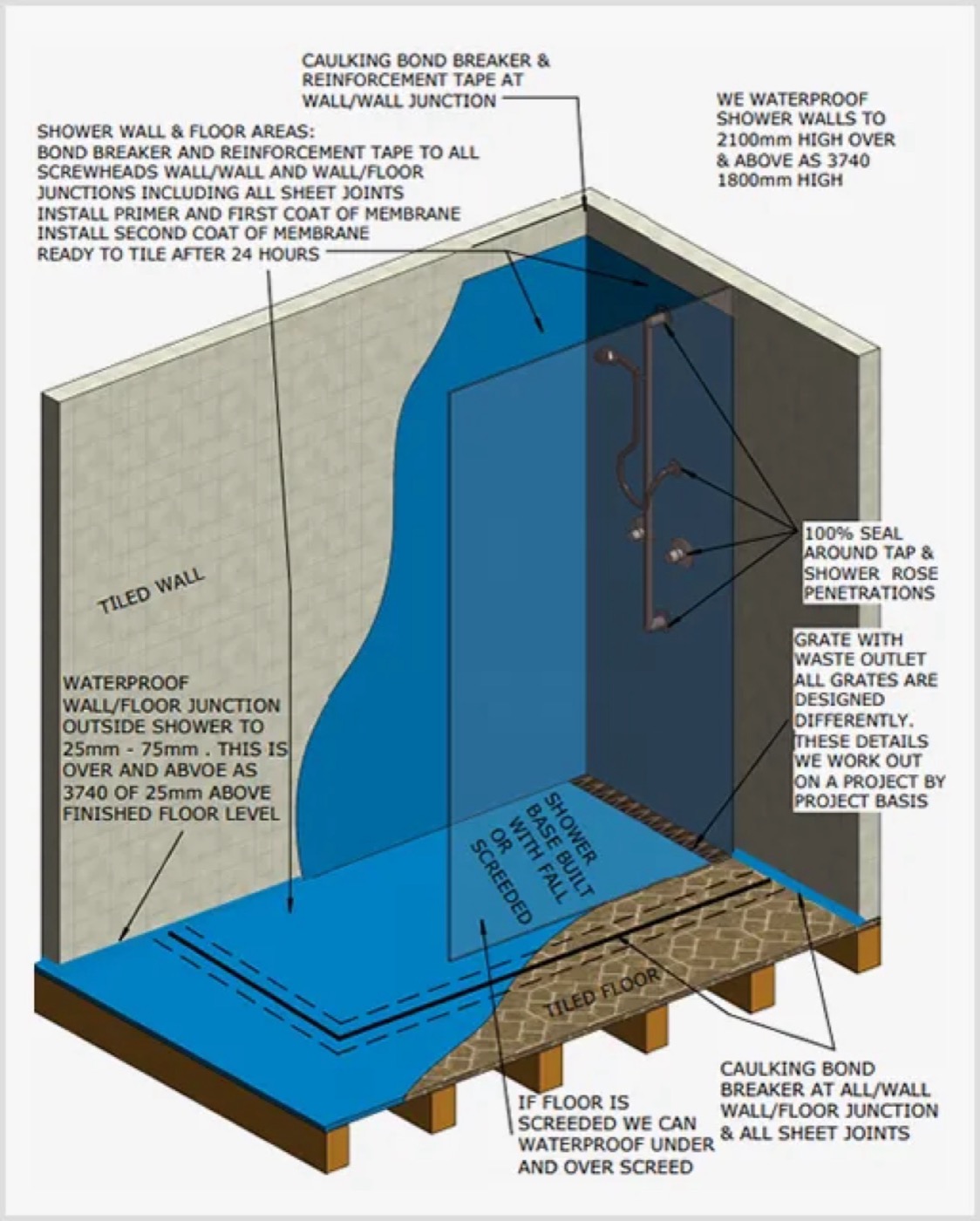
Face brickwork is not waterproof. In wind-driven rain, water passes through bricks and mortar into the cavity behind. A cavity wall is designed for this. The water runs down the back of the outer skin, hits a flashing, and is directed out through weep holes. When the flashing is missing, damaged or badly lapped, the water goes inside.
Where flashings should be
- Over windows and doors, above the head.
- At every floor level where the brickwork sits on or passes a concrete slab.
- At the base of the wall, above ground level.
- At sills, roof junctions, balcony connections and parapets.
Why they fail
- Never installed. It is more common than you would think, especially at slab levels.
- Too short. Flashings that stop short of the window or do not turn up at the ends let water run off the sides.
- Corroded or brittle. Older metal and bitumen flashings break down over decades.
- Bridged. Mortar droppings in the cavity let water jump across to the inner wall.
- Blocked weep holes. Water builds up in the cavity with nowhere to go. See weep holes.
Signs inside
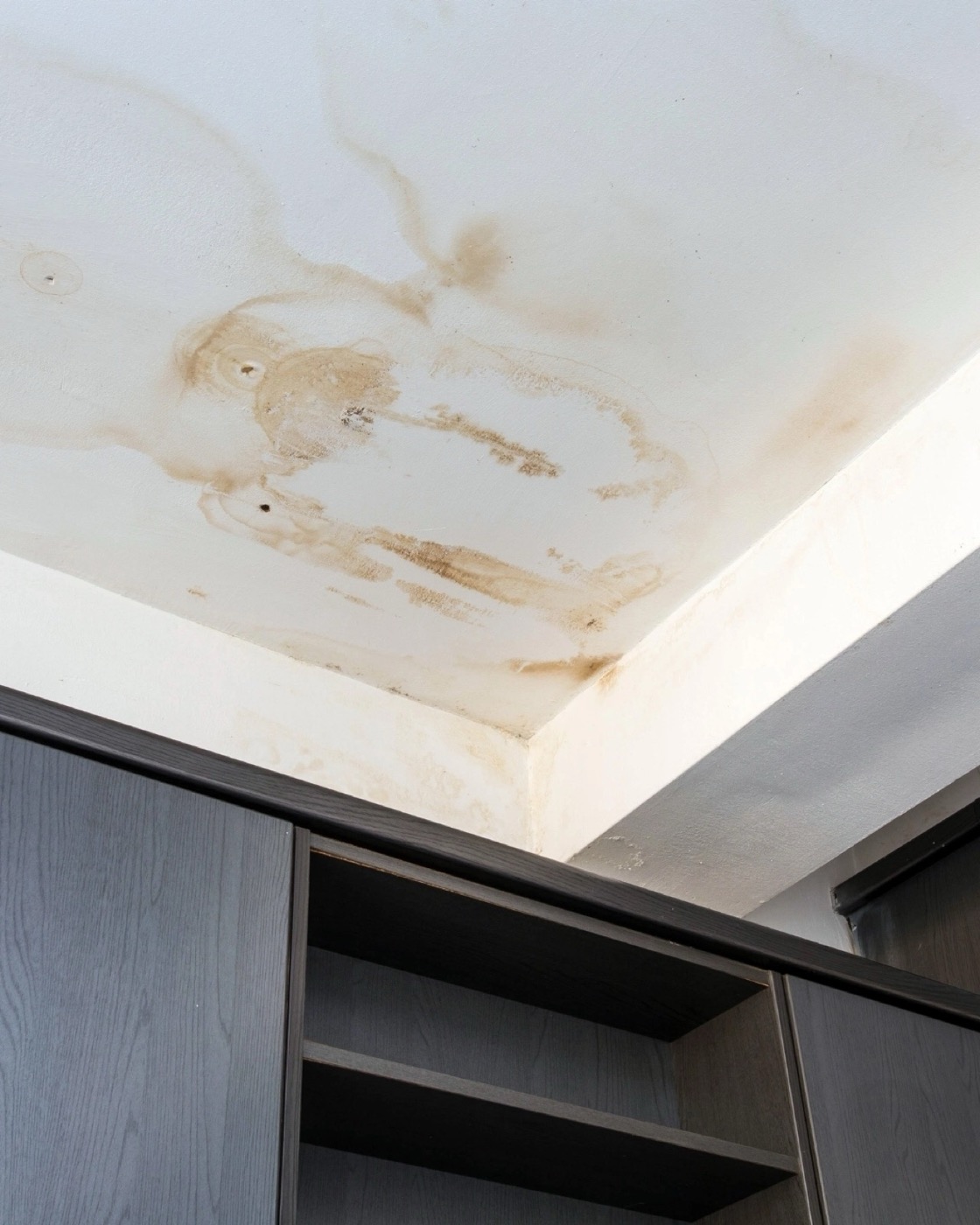
Damp patches at the top corners of windows, staining under the ceiling at the external wall, peeling paint along the skirting, and mould behind furniture on outside walls. The leak often only shows in storms from one direction.
How they are replaced
Bricks above the opening or along the slab line are removed in short lengths, so the wall stays supported. The cavity is cleaned, a new flashing is installed with the right laps, end dams and upturns, and the brickwork is relaid with new weep holes. On some walls, temporary support is needed above openings. Lintels are often replaced at the same time. See rusted lintels.
Find it first
A water test of the wall, together with opening a small section, confirms the path before a building-wide program is priced. Read water ingress investigation and see our waterproofing and facade repairs pages.
Call 0415 840 500 or book an inspection. METCON is a licensed NSW builder (384697C) and DBP registered (BUP4254812).
Frequently asked questions
Can flashings be fixed from inside?
Not usually. They are in the cavity and are reached by removing outer bricks.
Will sealing the bricks stop the leak?
It may reduce water entering, but it does not replace a missing flashing. It can also trap moisture.
Is this a strata repair?
External walls are usually common property, so flashing repairs are normally an owners corporation item.