These are questions people ask about this problem, with short plain answers. Use them to decide what to ask next, not as a diagnosis of your building.
Can new waterproofing go over old?
It can suit some sound, compatible surfaces. It is a poor choice over loose, wet, contaminated or moving layers.
Why not simply add another coat?
The new coat only holds as well as the old one beneath it. A crack may return, and trapped water can blister the new surface.
What should be tested?
- Bond of the old layer.
- Moisture below.
- Existing product and contamination.
- Movement and cracking.
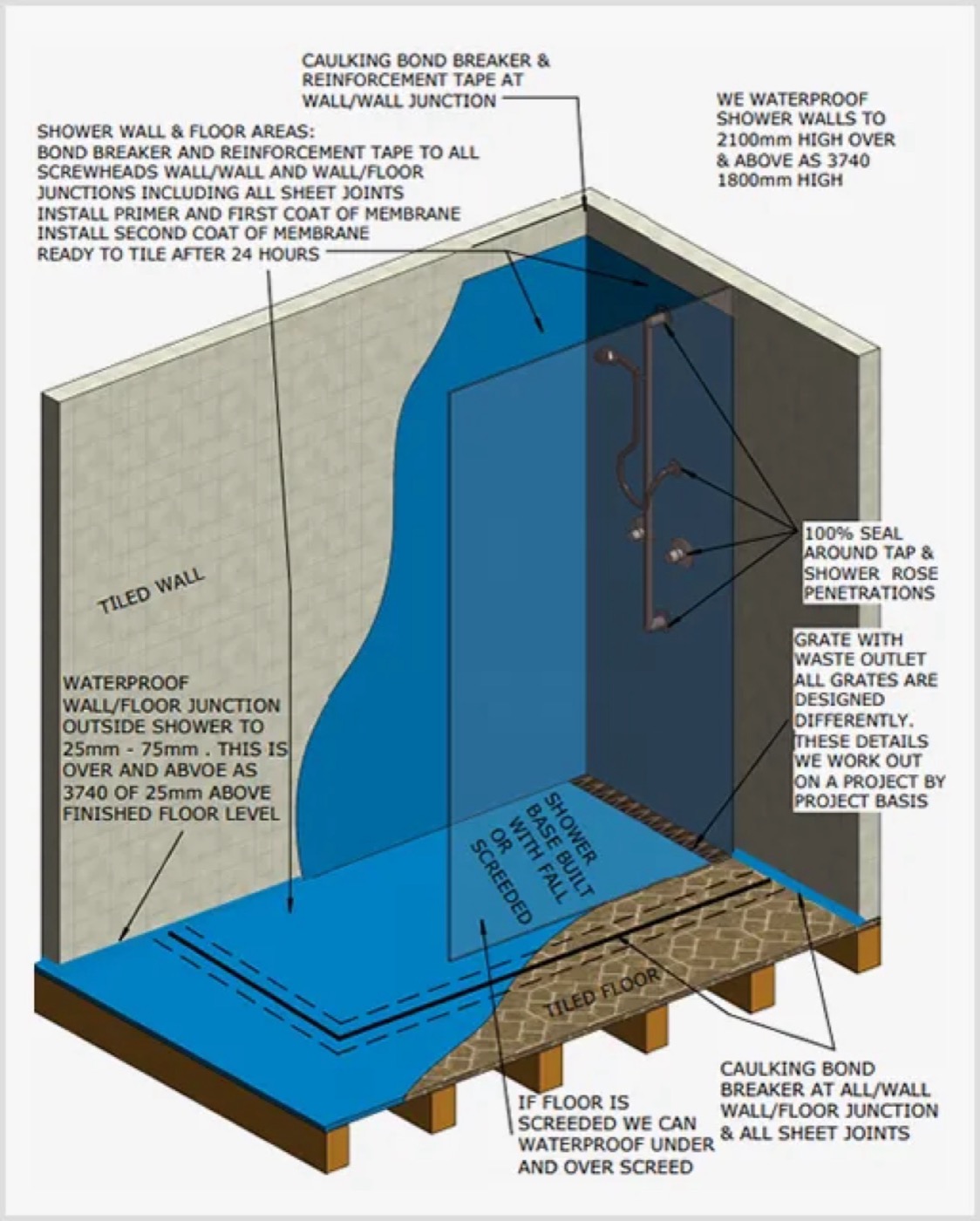
- Drain and upstand height.
- Available thickness at doors.
Open a representative area rather than judging a shiny surface.
Does an overlay raise the floor?
Yes, even thin systems may affect doors, drains, falls and tiles. One door edge can decide the method for a whole balcony.
Can it keep the original warranty?
Do not assume it. Two manufacturers may not share responsibility for each other's layers.
Is it allowed in an apartment?
Class 2 rules, strata approval and product requirements must be checked for the actual scope. A small bathroom and a whole roof can follow different paths.
When is removal safer?
When the old system is loose, wet, unknown, at the end of its life or fails in several locations. A cheaper overlay can otherwise leave the expensive work for next time.
See membrane types, flat roof methods and bathroom exclusions.
Call 0415 840 500 or book an inspection. METCON is a licensed NSW builder (384697C) and DBP registered (BUP4254812).
Frequently asked questions
Can I waterproof over tiles?
Some systems permit it, but tiles, falls, joints and existing leaks must be assessed.
Can two different brands be mixed?
Only with confirmed compatibility and responsibility.
Will a new coat fix a leaking joint?
Not if the joint moves or the source is below it.