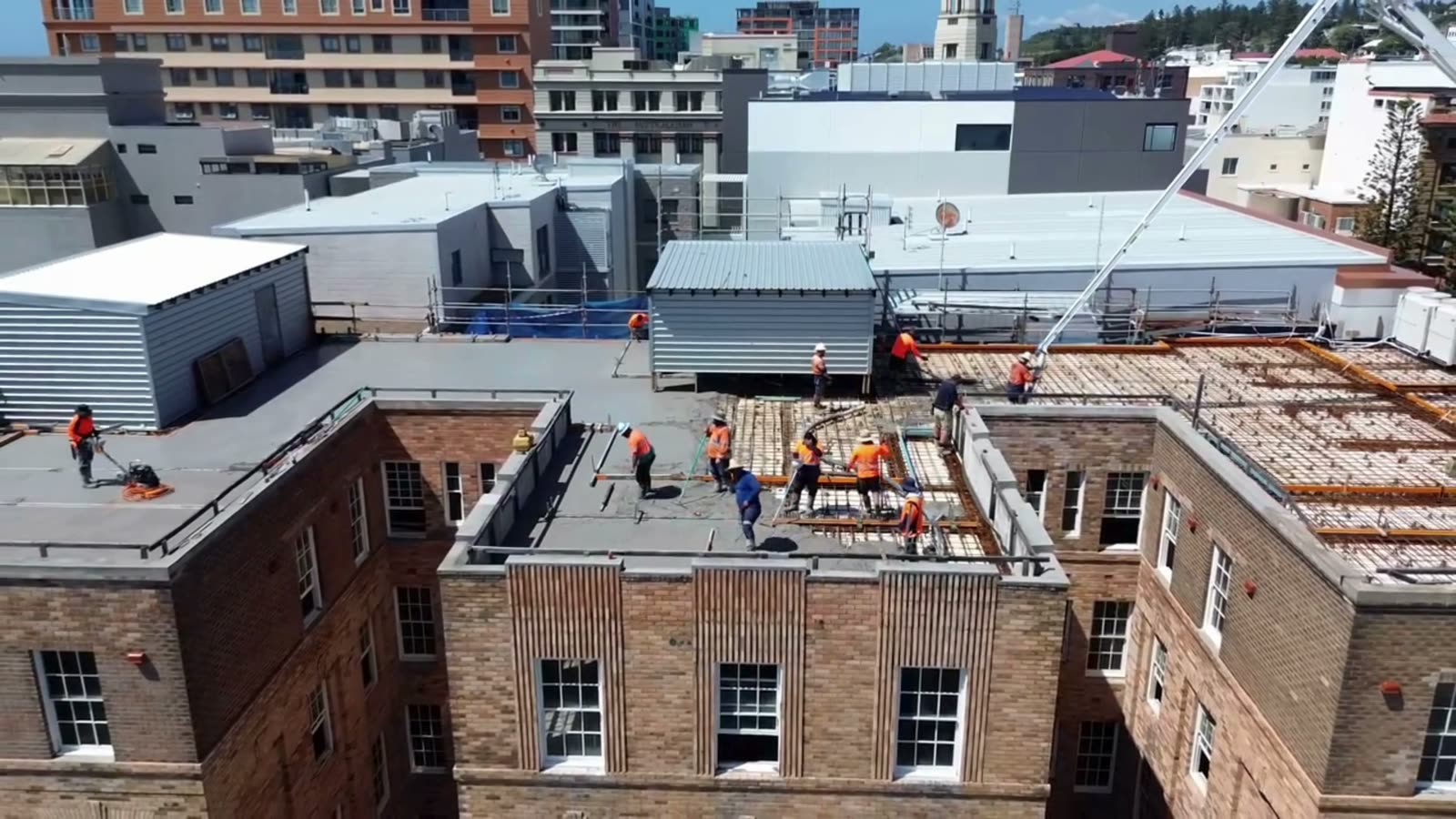
A roof can have dozens of patches and still be leaking. Once several areas have failed, finding one more hole may not give much extra life. The question becomes how much of the system below is still dry and sound.
Survey before choosing an overlay
An overlay leaves the old roof in place. A strip and replace removes it. Core samples, moisture mapping and adhesion tests help decide which is suitable. Covering wet insulation can trap the problem.
Look at the whole roof
- Falls and places where water ponds.
- Outlet size, overflows and downpipe capacity.
- Walls, parapets, hatches and plant supports.
- Expansion joints and solar frames.
- Safe access and anchor points.
Stage for rain
Open only what can be made weather tight again in the available window. Every work zone needs a temporary edge that stops water running underneath. Keep responsibility for overnight protection clear.
Plant can control the program
Air conditioning, exhaust fans and telecommunications may need shutdown or lifting. Find out who owns each item and who can disconnect it. Moving one large unit on the wrong day can delay an entire stage.
Inspection and handover
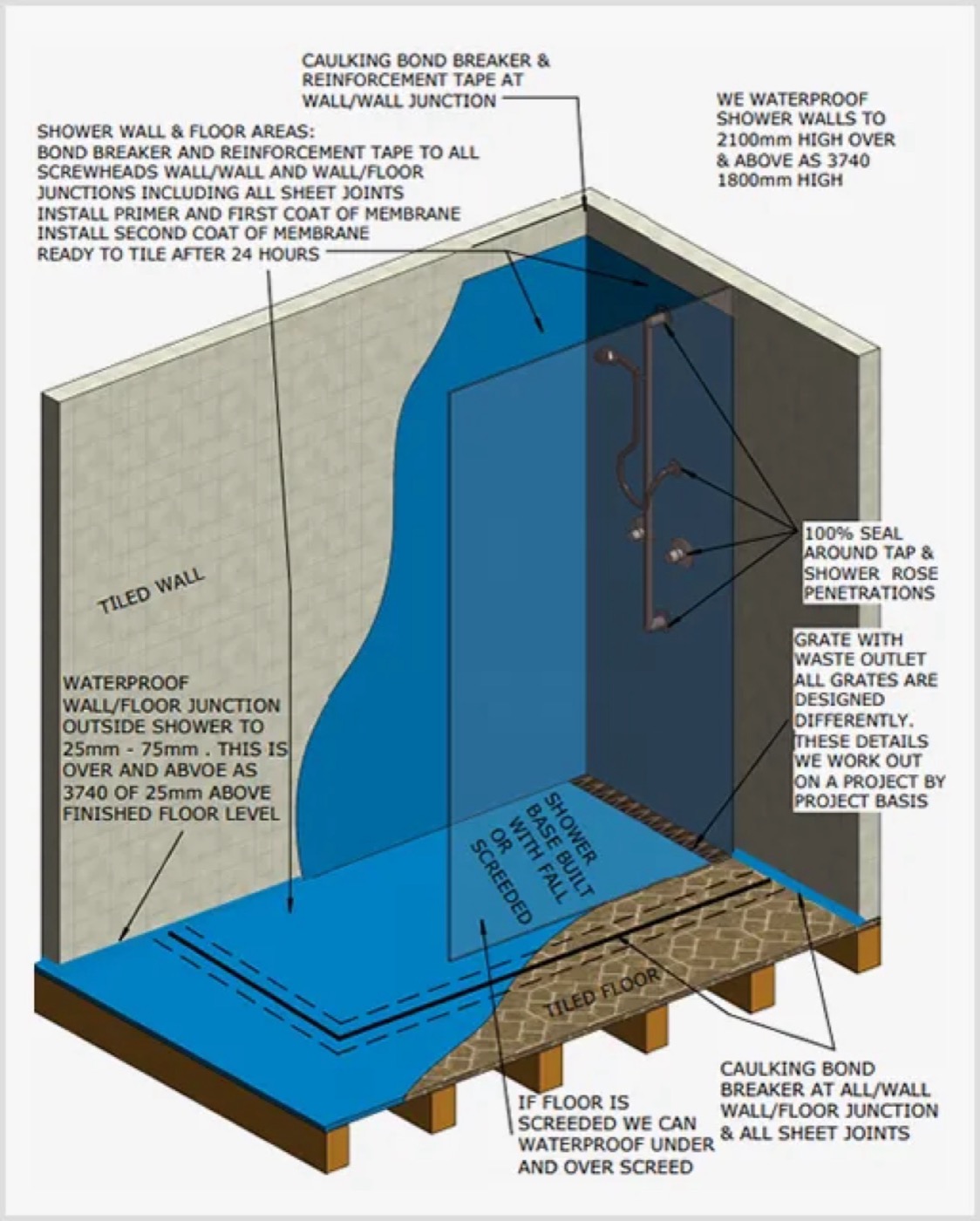
Check the substrate, primer, details and membrane before each is covered. Record testing, roof zones, products and outlets. Ask what maintenance is needed for any product warranty.
See roof plant leaks, flat roof waterproofing and commercial remedial works.
Call 0415 840 500 or book an inspection. METCON is a licensed NSW builder (384697C) and DBP registered (BUP4254812).
Frequently asked questions
Can the roof be done in winter?
Yes, if moisture, temperature and rain controls meet the product requirements.
Is an overlay cheaper?
It can be, but wet or poorly bonded layers may make it a poor choice.
Can solar panels stay?
Some zones may need panels and frames removed so the membrane and details can be reached.