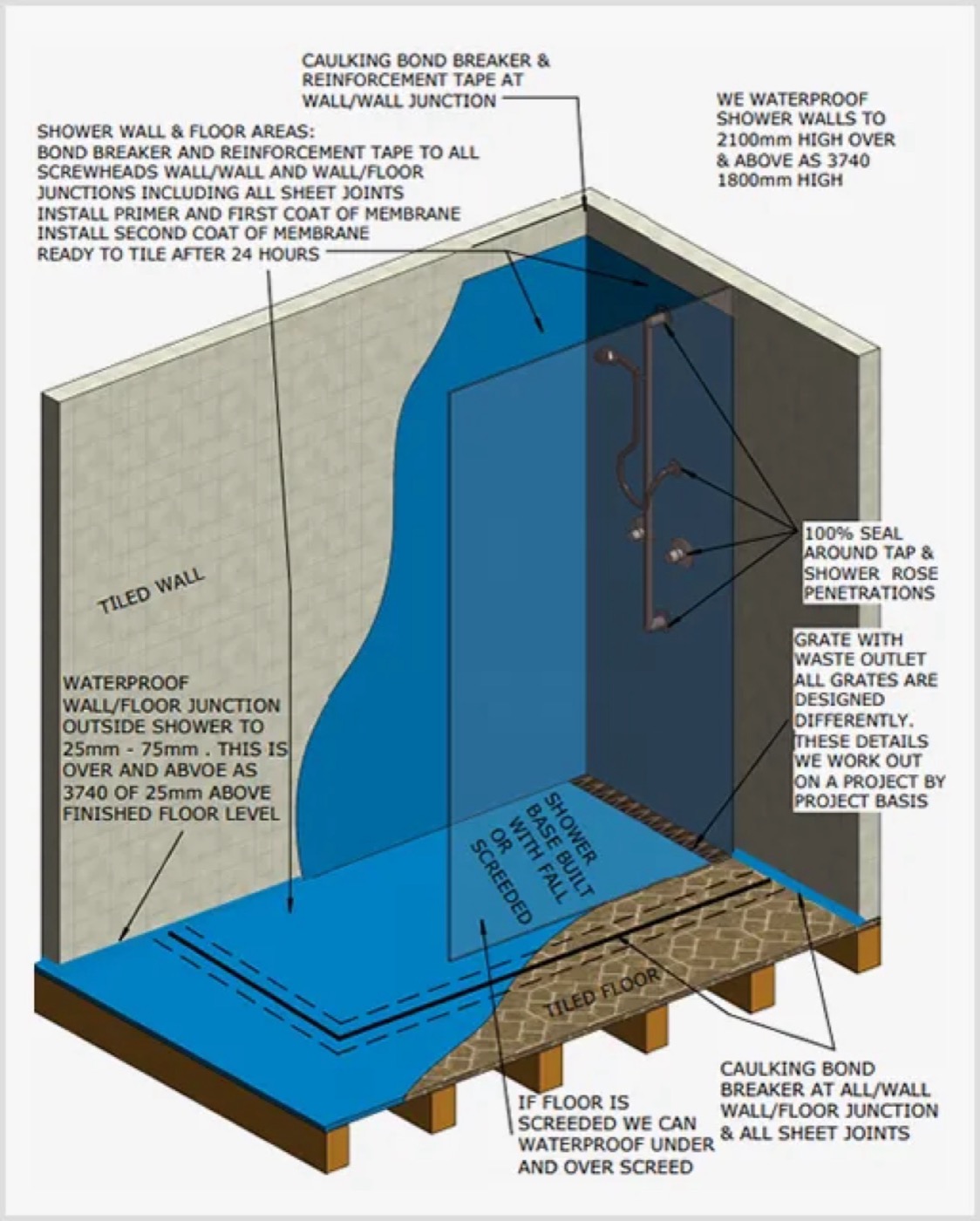
The positive side is where water first reaches a wall. In a basement that is usually outside, against the soil. Negative side treatment is applied on the dry, internal face.
Why use the inside?
There may be a neighbour, road or slab outside. Excavation can also disturb footings. Working from within avoids some of that, but the system must resist water pushing it off the wall.
What needs checking
- Is water coming through the wall, a joint, a pipe or the floor?
- How much pressure is there?
- Is the concrete cracked, porous or contaminated by salt?
- Can water be drained instead?
- Will shelves or linings be fixed through the coating?
The main options
Cement-based coatings may suit sound masonry or concrete. Injection targets cracks and joints. A drained cavity catches water and sends it to a drain or pump. They solve different problems and may be combined.
Where systems fail
Paint over damp concrete can blister. Treating a wall but leaving the wall-to-floor joint open moves the leak. A cavity without maintained pumps can overflow. Coating a floor may also cover movement that still needs repair.
Before finishes return
Observe the basement through wet weather or a planned test where practical. Keep access to drains, pumps and inspection points. A dry-looking wall on a sunny week proves little.
See crack injection, tanking or drainage and waterproofing.
Call 0415 840 500 or book an inspection. METCON is a licensed NSW builder (384697C) and DBP registered (BUP4254812).
Frequently asked questions
Is negative side waterproofing permanent?
Life depends on water pressure, movement, the system and maintenance.
Does it stop damp inside the wall?
It may stop water reaching the room while the wall itself remains wet.
Do I need a pump?
If collected water cannot drain by gravity, a pump may be needed with suitable backup.