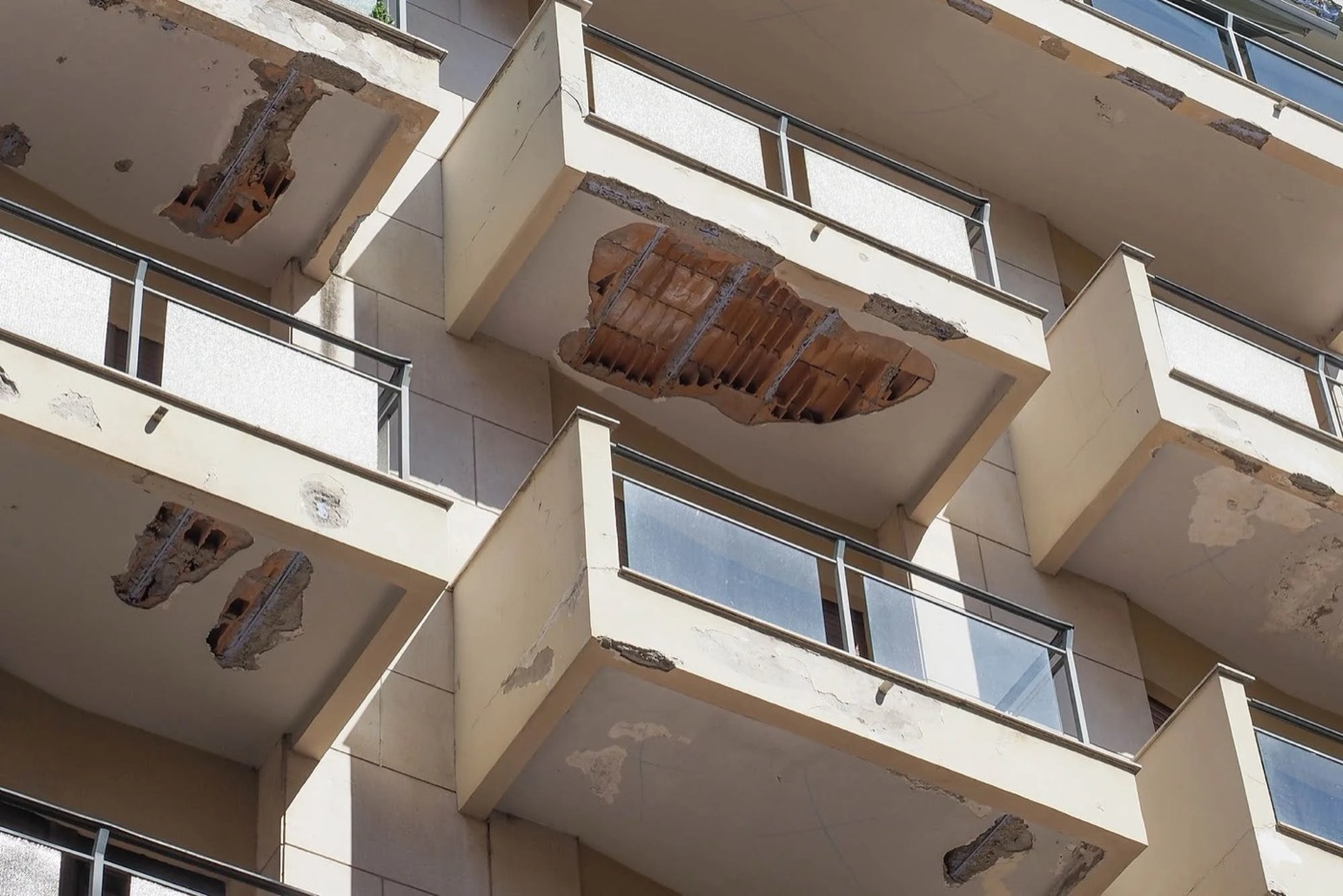
A balustrade is the barrier that stops people falling from a balcony. When it wobbles, rusts or cracks the concrete it is fixed into, it is a safety issue first and a maintenance issue second. On apartment buildings it is also often the first visible sign of a wider problem at the slab edge.
Warning signs
- The balustrade or handrail moves when pushed.
- Rust stains running down from post bases or fixings.
- Cracking or spalling concrete around posts set into the slab.
- Corroded base plates, bolts or brackets.
- Glass panels that rattle, have chipped edges or sit loose in their channels or spigots.
- Rotten timber posts or rails on older balconies.
If a balustrade feels loose, keep people off the balcony and get it checked. Temporary barriers can be installed until it is repaired.
Why balustrades fail
Water in post holes
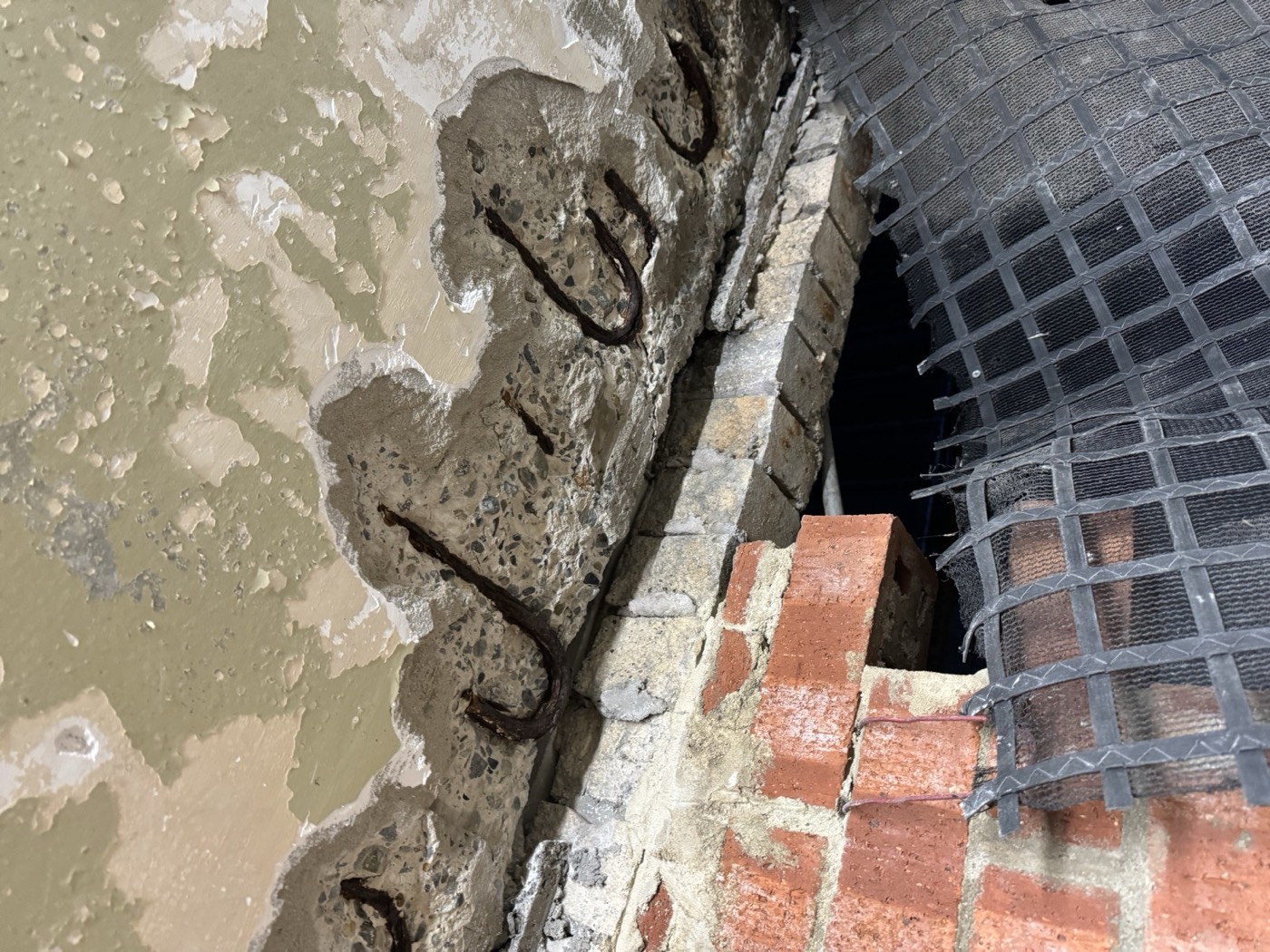
Many older balustrades have steel posts set into holes drilled or cast into the slab edge. Water gets into the hole, rusts the post and the reinforcement next to it, and the expanding rust cracks the concrete. This is one of the most common causes of concrete cancer on balcony edges.
Corrosion
Mild steel, galvanised steel that has lost its coating, and lower-grade stainless steel can all corrode, especially in coastal buildings.
Failed fixings
Anchors into cracked or weak concrete, fixings that were never adequate, and fixings through the membrane can all fail over time.
Glass issues
Glass balustrades rely on clamps, spigots or channels. Corroded spigots, loose grout or packers in channels and damaged glass all need attention. Toughened glass can occasionally break without warning, and damaged or cracked panels should be replaced promptly.
Repair or replace?
Repairs can work when the damage is local: a few corroded fixings, a loose rail or one cracked post base. Replacement makes sense when posts are corroded throughout, the balustrade no longer meets the required height or gaps, or the balcony is being re-waterproofed anyway.
Replacing a balustrade usually means it must meet current requirements, including height and opening sizes. See balcony balustrade height rules in NSW.
Better fixing details
- Side or face fixing to the slab edge, rather than posts cored into the top of the slab, keeps water out of the slab.
- Fixings clear of the membrane, or properly sealed where they pass through it.
- Materials suited to the exposure, such as marine-grade stainless steel or suitably coated aluminium near the coast.
- Engineered fixings designed for the loads, into sound concrete.
Doing it with the balcony repair
Balustrades usually have to come off for slab edge concrete repairs and re-waterproofing. Planning them together saves money and avoids drilling through a new membrane later.
Who is responsible in strata?
Balustrades are commonly common property, which makes them the owners corporation's responsibility, but always check the strata plan and any by-laws. See who is responsible for strata repairs.
Balustrade and balcony repairs in Sydney
We repair and replace balustrades as part of engineer-led balcony remediation on apartment buildings. METCON is a licensed builder (384697C) and DBP registered (BUP4254812) for Class 2 work. Call 0415 840 500 or book a free inspection.
Frequently asked questions
Is a loose balcony balustrade dangerous?
It can be. A balustrade that moves may not hold if someone leans or falls against it. Keep people off the balcony until it has been checked and made safe.
Why is the concrete cracking around my balustrade posts?
Water gets into the holes the posts sit in, rusting the posts and the nearby reinforcement. The rust expands and cracks the concrete, a common form of concrete cancer.
Does a replacement balustrade have to meet current rules?
Generally, yes. New balustrades are expected to meet current requirements for height, openings and strength. Your builder or certifier will confirm what applies.