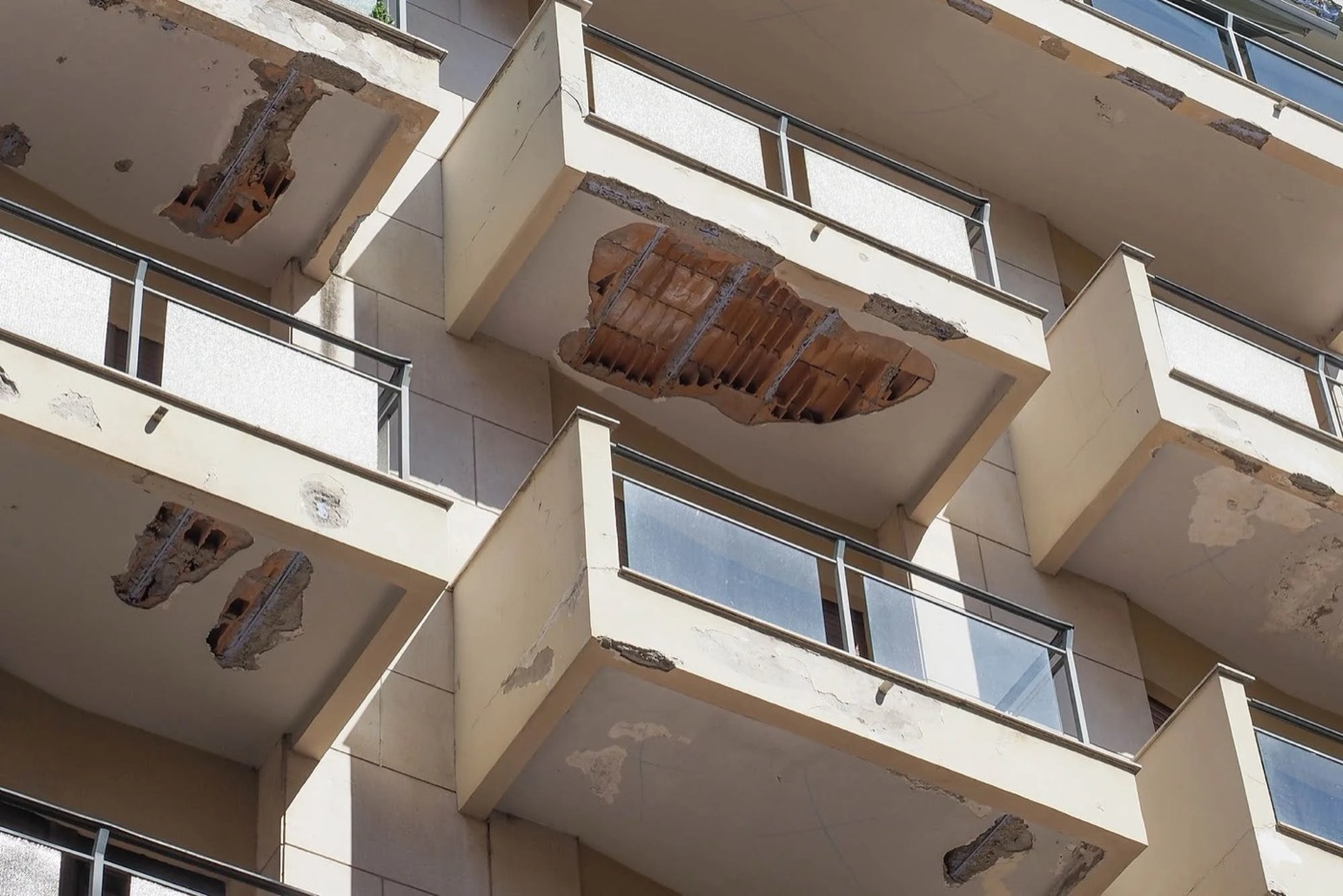
Owners are often frustrated to see concrete cancer pop up again a few years after a repair, right on the edge of the old patch. It is not always bad workmanship. There is a well known electrochemical reason for it, and galvanic anodes are one of the tools used to prevent it.
The ring effect, or incipient anode
When steel corrodes inside concrete, the rusting area acts like a battery that partly protects the steel around it. When you cut out the rust and rebuild that spot with fresh, alkaline repair mortar, that protection disappears. The steel just outside the patch, still sitting in salty or carbonated concrete, can then start corroding faster. Engineers call this the incipient anode or halo effect. The result is a ring of new cracking around the old repair.

What a galvanic anode is
A galvanic anode is a small unit, usually zinc surrounded by a special mortar, that is tied to the reinforcement at the edge of a repair. Zinc is more reactive than steel, so it corrodes slowly in place of the steel around it. It sacrifices itself to protect the bars. No power supply or wiring is needed.
Where they make sense
- Patch repairs in chloride-contaminated concrete, such as buildings near the harbour or ocean.
- Balcony slab edges and soffits where corrosion keeps returning.
- Car park columns and beams exposed to salt from vehicles or sea air.
- Repairs where removing all the contaminated concrete is not practical.
What they do not do
- They do not fix leaking waterproofing. Water still needs to be kept out.
- They protect a limited area around each unit, so spacing and design matter.
- They have a service life and are eventually used up.
- They are not a substitute for cutting out damaged concrete and treating the steel.
Who decides
Whether to use anodes, how many and where is a design decision, usually made by the remedial engineer after testing. The testing shows how much chloride is in the concrete and how widespread corrosion is. See carbonation vs chloride concrete cancer and concrete cancer in coastal buildings.
Repairs that last
We carry out concrete cancer repairs to the engineer's specification, including galvanic anodes where specified, and we photograph each repair before and after. See concrete cancer repair. METCON is a licensed builder (384697C) and DBP registered (BUP4254812) for Class 2 apartment buildings. Call 0415 840 500 or book an inspection.
Frequently asked questions
Do galvanic anodes need power?
No. They work like a sacrificial battery, corroding in place of the steel. Impressed current cathodic protection is the powered alternative.
Are they needed on every repair?
No. They are most useful where the surrounding concrete has high chloride levels. The engineer decides based on testing.
Can you see them after the repair?
No. They are buried inside the repair and the finished surface looks the same as any other patch repair.