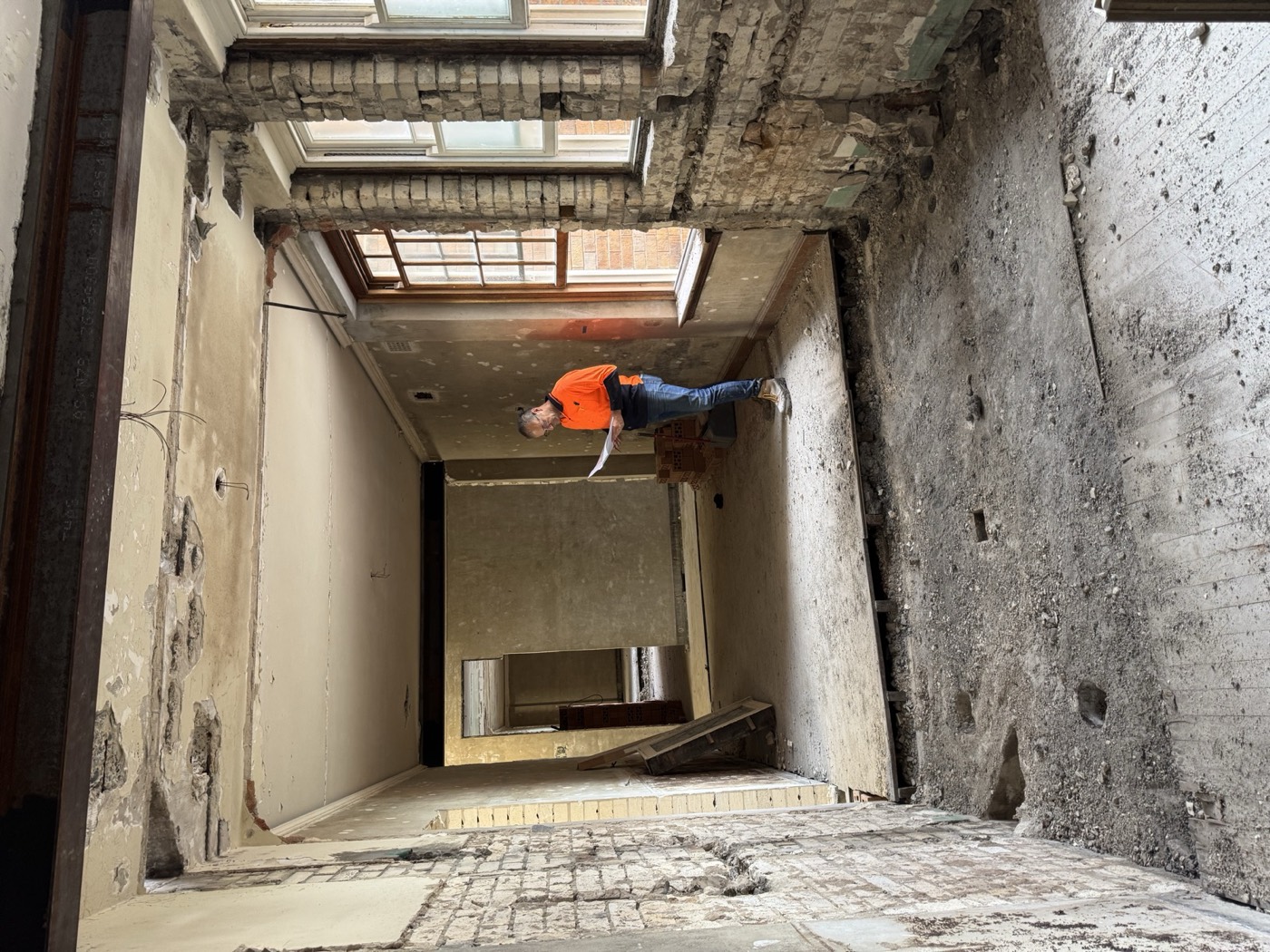
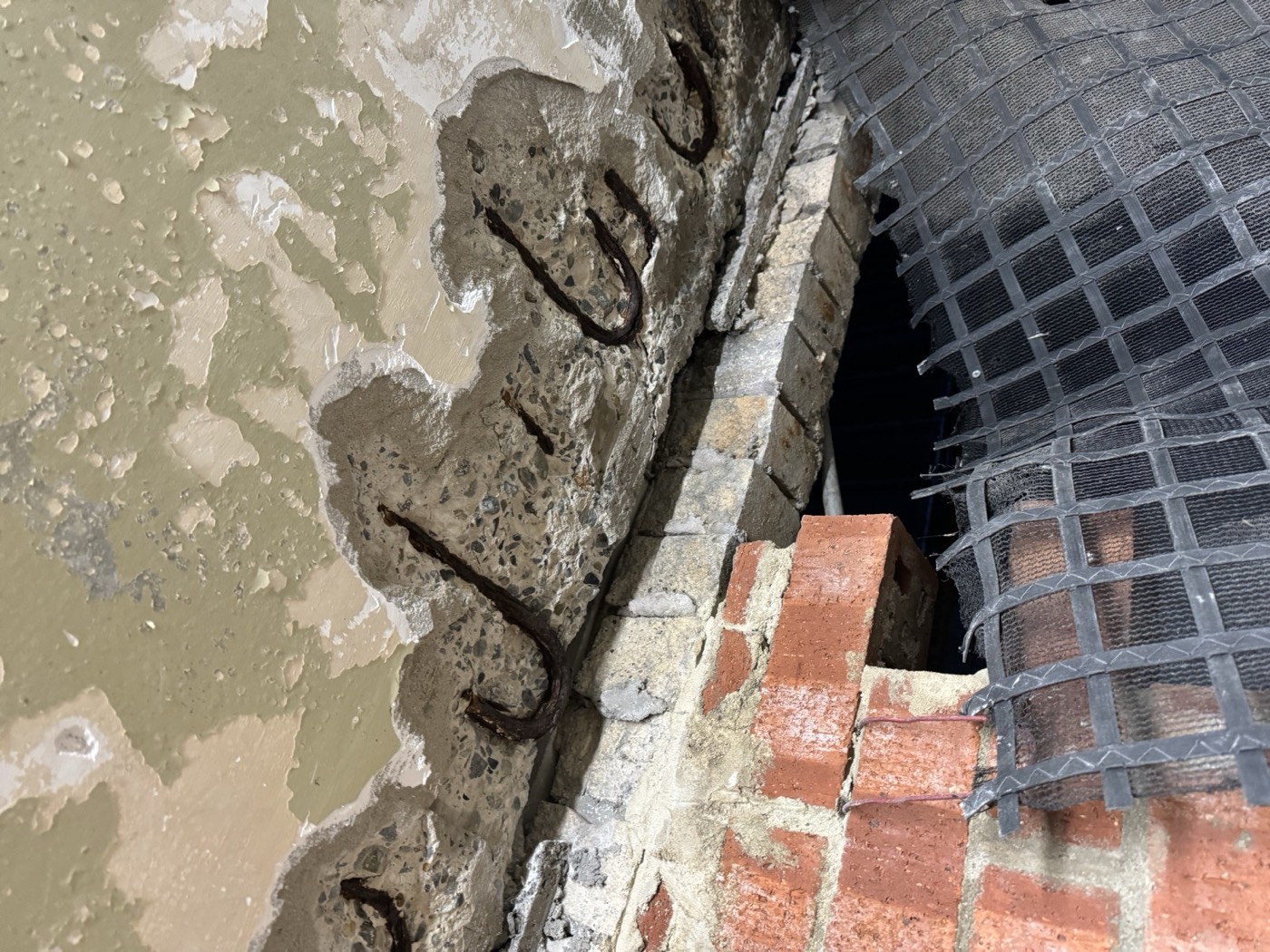
"Concrete cancer" is the everyday name for steel reinforcement rusting inside concrete. The rust takes up more space than the steel, so it cracks and pushes off the concrete around it. But the rust does not start on its own. Something has to break down the protection that concrete normally gives the steel, and in Sydney buildings that is almost always one of two things: carbonation or chlorides.
How concrete protects steel
Fresh concrete is highly alkaline. That alkalinity forms a thin passive layer on the surface of the steel that stops it rusting, even when the concrete is damp. As long as the concrete around the bar stays alkaline and free of salt, the steel is protected. The thickness of concrete over the bar, called the cover, is what keeps the outside world away from it.
Cause 1: carbonation
Carbon dioxide from the air slowly soaks into concrete and reacts with it, lowering its alkalinity. This happens from the surface inwards, a few millimetres at a time over many years. When the carbonated zone reaches the steel, the passive layer is lost, and with moisture and oxygen present, the steel starts to rust.
- Where it shows up: older buildings with thin cover, porous or poorly compacted concrete, and inland as well as coastal sites.
- How it looks: rust stains and cracking along the line of bars, often on soffits, columns and slab edges where cover is thinnest.
- How it is tested: a fresh break in the concrete is sprayed with an indicator solution. Alkaline concrete turns pink, carbonated concrete stays colourless, and the depth of the colourless zone is measured against the cover.
Cause 2: chloride attack
Chlorides, mainly from salt, can break down the passive layer even when the concrete is still alkaline. Once enough chloride reaches the steel, rust can start in localised spots and corrosion can be fast and deep.
- Where it shows up: coastal buildings exposed to sea spray, car parks where salt is carried in, and some older buildings where chloride-based additives were used in the mix.
- How it looks: cracking and spalling on the most exposed faces, such as balcony edges facing the ocean, and sometimes deep pitting of bars with less visible cracking.
- How it is tested: dust samples are drilled at different depths and tested in a laboratory for chloride content. Engineers may also use a half-cell potential survey to map where corrosion is likely.
Why the cause matters for the repair
A standard patch repair breaks out damaged concrete, cleans and treats the steel, and rebuilds the section with repair mortar. That works well when the cause is understood and dealt with. When it is not, the repair can fail early.
Carbonation repairs
Once the damaged areas are patched, an anti-carbonation coating is often applied over the whole element to slow further carbon dioxide getting in. Areas with low cover but no damage yet may be treated at the same time.
Chloride repairs
Chloride-contaminated concrete around a patch can keep corroding the steel next to it. This is often called the incipient anode or ring effect, and it is a common reason for new cracking just outside an older repair. Engineers deal with it by removing more contaminated concrete, installing galvanic anodes in the patches, or on larger jobs, specifying a cathodic protection system.
Moisture is the third ingredient
Whatever the cause, rust needs water and oxygen. On balconies, a failed membrane keeps the slab wet and speeds up corrosion. That is why a lasting concrete cancer repair on a balcony usually includes new waterproofing as well.
What a good investigation includes
- A visual and tap survey to find cracked and drummy concrete.
- Cover meter readings to measure how deep the steel is.
- Carbonation depth tests, chloride testing, or both, as the engineer decides.
- A report with a repair specification, quantities and a way to deal with the cause.
Read more in our guides on the signs of concrete cancer, how long repairs last and repair costs.
Concrete cancer repair in Sydney
We carry out engineer-specified concrete cancer repairs on balconies, facades, car parks and slabs across Sydney. METCON is a licensed builder (384697C) and DBP registered (BUP4254812) for Class 2 work. Call 0415 840 500 or book a free inspection.
Frequently asked questions
What is the difference between carbonation and chloride attack?
Carbonation is carbon dioxide from the air lowering the alkalinity of concrete until it no longer protects the steel. Chloride attack is salt reaching the steel and breaking down its protection even in alkaline concrete.
How do you know which one caused concrete cancer?
An engineer tests for it: an indicator solution shows how deep carbonation has gone, and laboratory testing of drilled dust samples shows chloride levels at the depth of the steel.
Why do concrete cancer repairs crack again next to the patch?
In chloride-affected concrete, steel next to a new patch can start corroding faster. Removing more contaminated concrete or installing galvanic anodes in the repair helps prevent it.