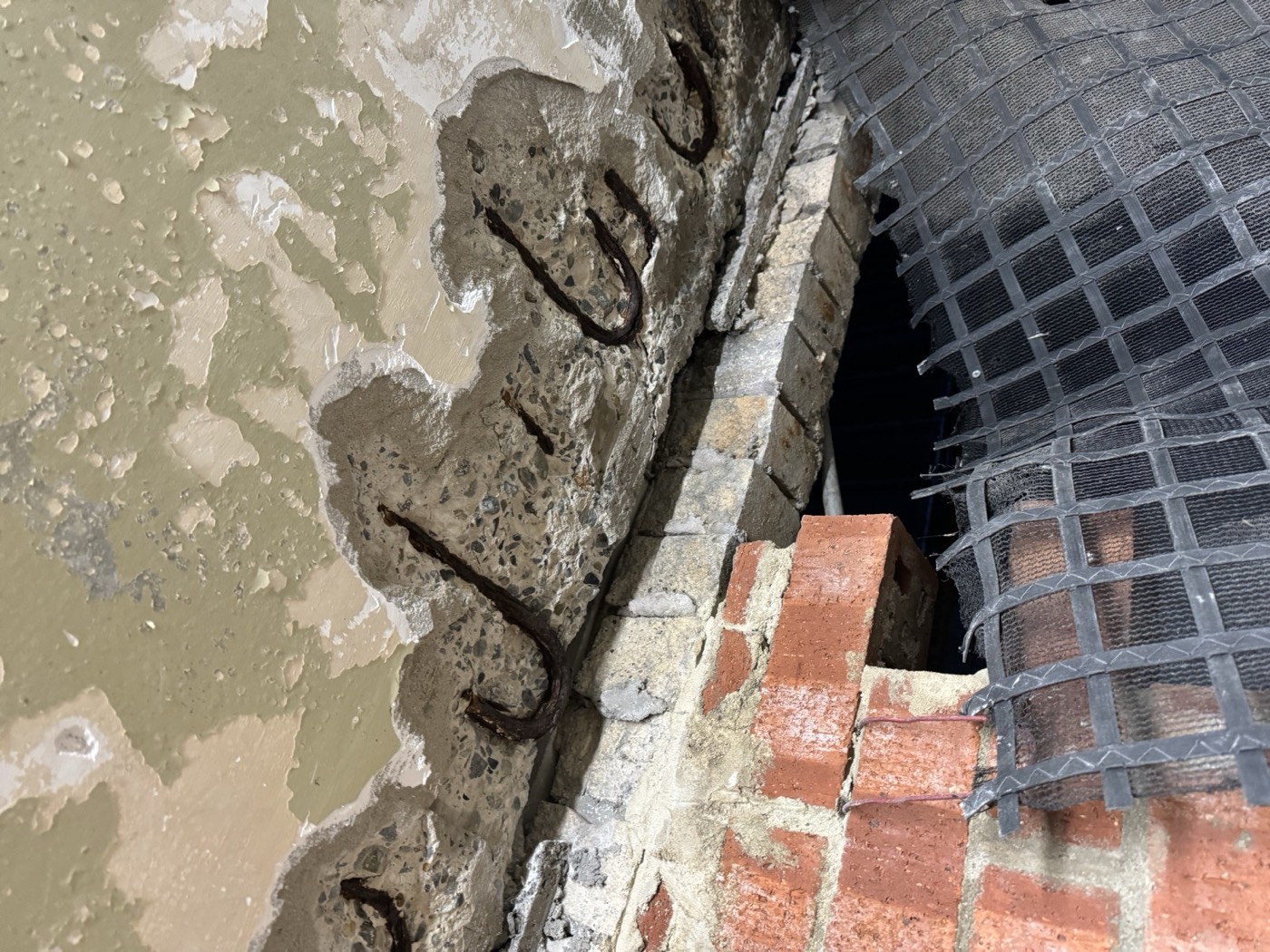
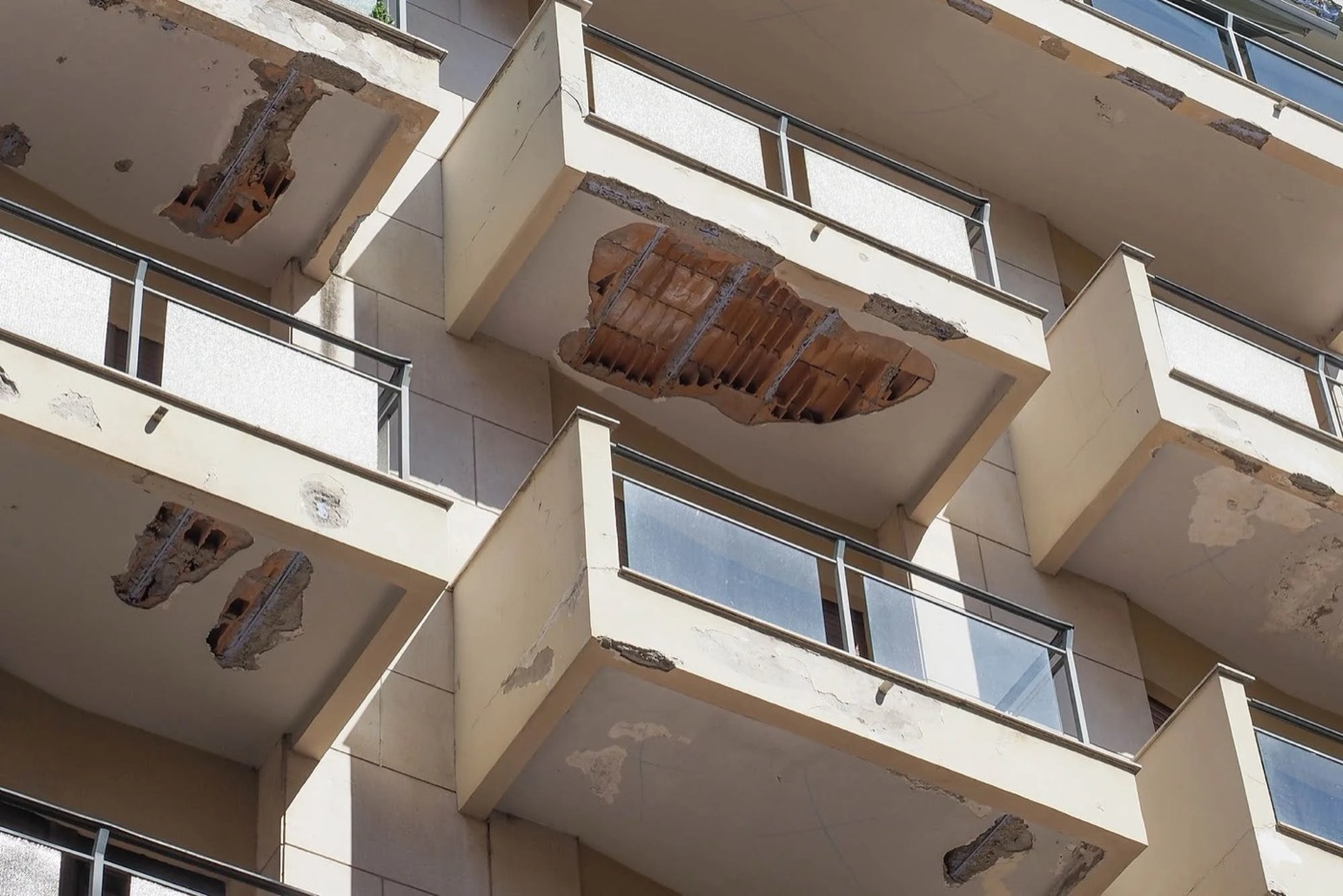
Concrete cancer is the everyday name for concrete damaged by corroding steel reinforcement. It starts inside the concrete, so by the time you see it, it has usually been developing for years. Catching the early signs keeps repairs smaller and cheaper.
1. Rust stains
Brown or orange streaks running from cracks, slab edges or the underside of balconies. Rust is coming from the steel inside.

2. Cracks along the line of the steel
Straight cracks following the reinforcement, especially along slab edges, beams and columns. Rust expands and splits the concrete along the bar.
3. Drummy or hollow concrete
Tap the surface with a hammer handle. A hollow sound means the concrete has separated from the steel behind it.
4. Spalling
Pieces of concrete flaking or breaking off. This is the stage most people notice. See what is concrete spalling.
5. Exposed reinforcement
Visible rusted steel where the concrete cover has fallen away. The steel is losing strength.
6. Bulging or cracked render
Render pushed out over slab edges, beams or window heads, often hiding corroding steel behind it.
7. Leaks from balconies and roofs above
Ongoing water through failed waterproofing is one of the main causes, so leaks and stains are an early warning.
8. Lifting tiles on balconies
Tiles lifting or cracking along balcony edges can be caused by expanding steel in the slab below.
How urgent is it?
- Urgent: concrete falling, or loose pieces above walkways, driveways or balconies. Restrict access and get a make-safe inspection.
- Soon: cracking, rust staining and drummy areas. Repairs are cheaper now than after spalling spreads.
- Monitor and plan: minor staining with no cracking, ideally with an inspection to confirm.
Where it shows up most
Balcony slab edges, carparks, columns, beams, window heads and concrete close to the coast. Apartment buildings from the 1960s to the 1990s are especially prone.
Get it checked
Send us photos and we will tell you how serious it looks. See our concrete cancer repair service or read about concrete cancer repair costs.
Frequently asked questions
What are the first signs of concrete cancer?
Rust stains, fine cracks along the line of the steel, and hollow-sounding concrete are usually the first signs.
Is concrete cancer dangerous?
It can be. Falling concrete is a safety risk, and corroding steel loses strength over time.
Can concrete cancer be stopped?
Yes. Removing the damaged concrete, treating the steel, rebuilding the section and fixing the water source stops it progressing.