These are questions people ask about this problem, with short plain answers. Use them to decide what to ask next, not as a diagnosis of your building.
Can a brick building have concrete cancer?
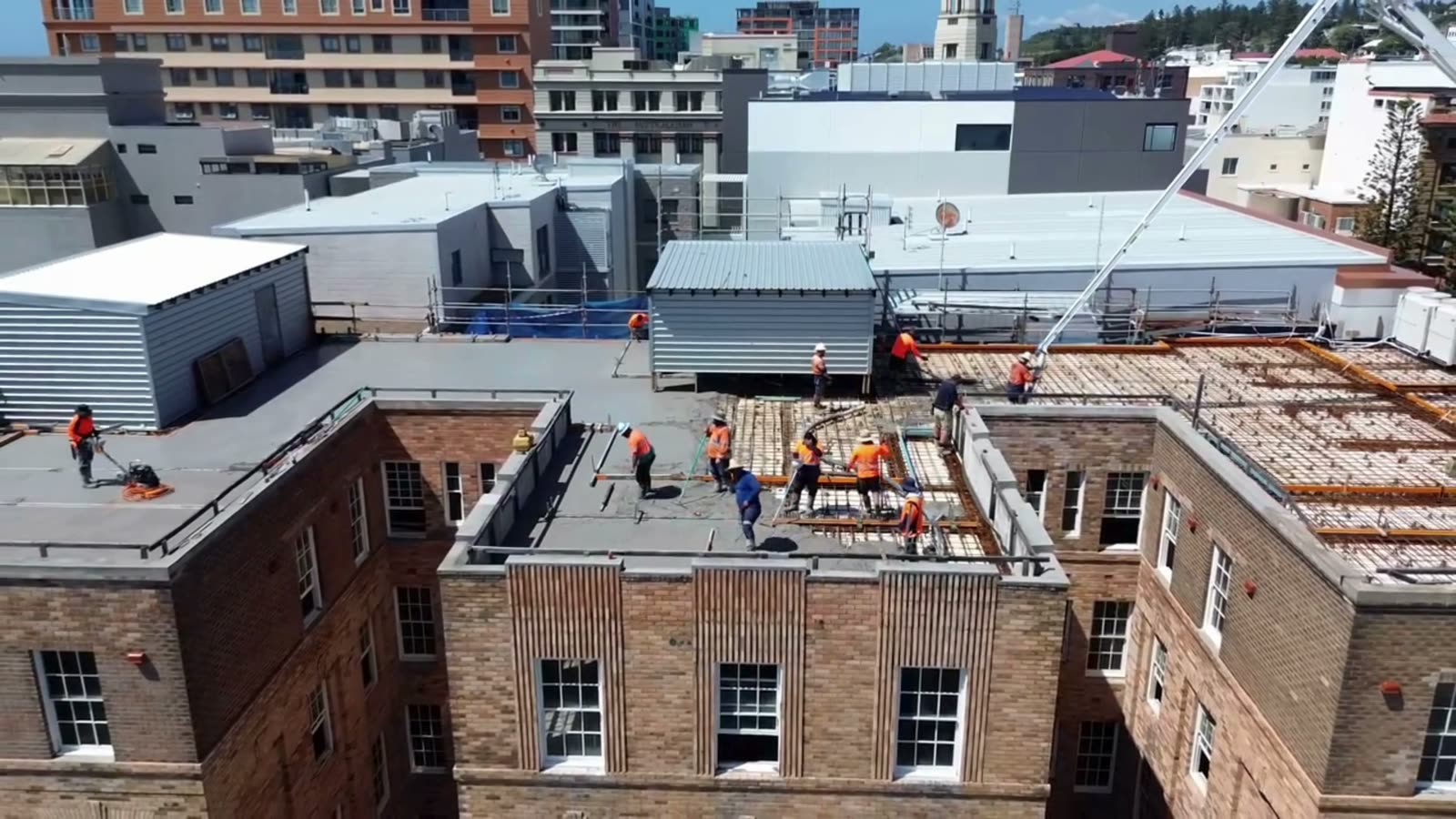
Yes. Brick walls do not mean the floors, balconies, beams, stairs or roof are brick. Those concrete parts can corrode.
Where should owners look?
- Slab edges below brick walls.
- Balcony soffits and stairs.
- Car park columns and beams.
- Window hoods and awnings.
- Roof slabs and lift rooms.
- Concrete sills hidden by paint.
Is a crack in brick concrete cancer?
Usually a crack in masonry has other possible causes: movement, rusted lintel, wall ties or moisture. It can also be pushed by corroding steel inside or beside it.
Why does brick stain brown?
Rust may come from lintels, ties, fixings or reinforcement in concrete behind. Follow the location and sound nearby material before repairing the brick face.
Can brick repair hide the problem?
Yes. Re-pointing or painting can cover a bulge while steel keeps expanding. Open the area safely and confirm the source first.
Is rendered brick different?
Render and sealed paint can hide early marks and trap water. Hollow or bulging areas need careful checks.
What order should work follow?
Make falling pieces safe, find water and steel sources, repair structure, then brick, joints and render.
See rusted lintels, wall ties and facade repairs.
Call 0415 840 500 or book an inspection. METCON is a licensed NSW builder (384697C) and DBP registered (BUP4254812).
Frequently asked questions
Do solid brick walls contain steel?
Some have ties, lintels or other metal parts, even when the wall itself is masonry.
Does white staining mean rust?
No. White salts often come from moisture moving through masonry.
Can a double brick unit have concrete floors?
Yes. Many do.