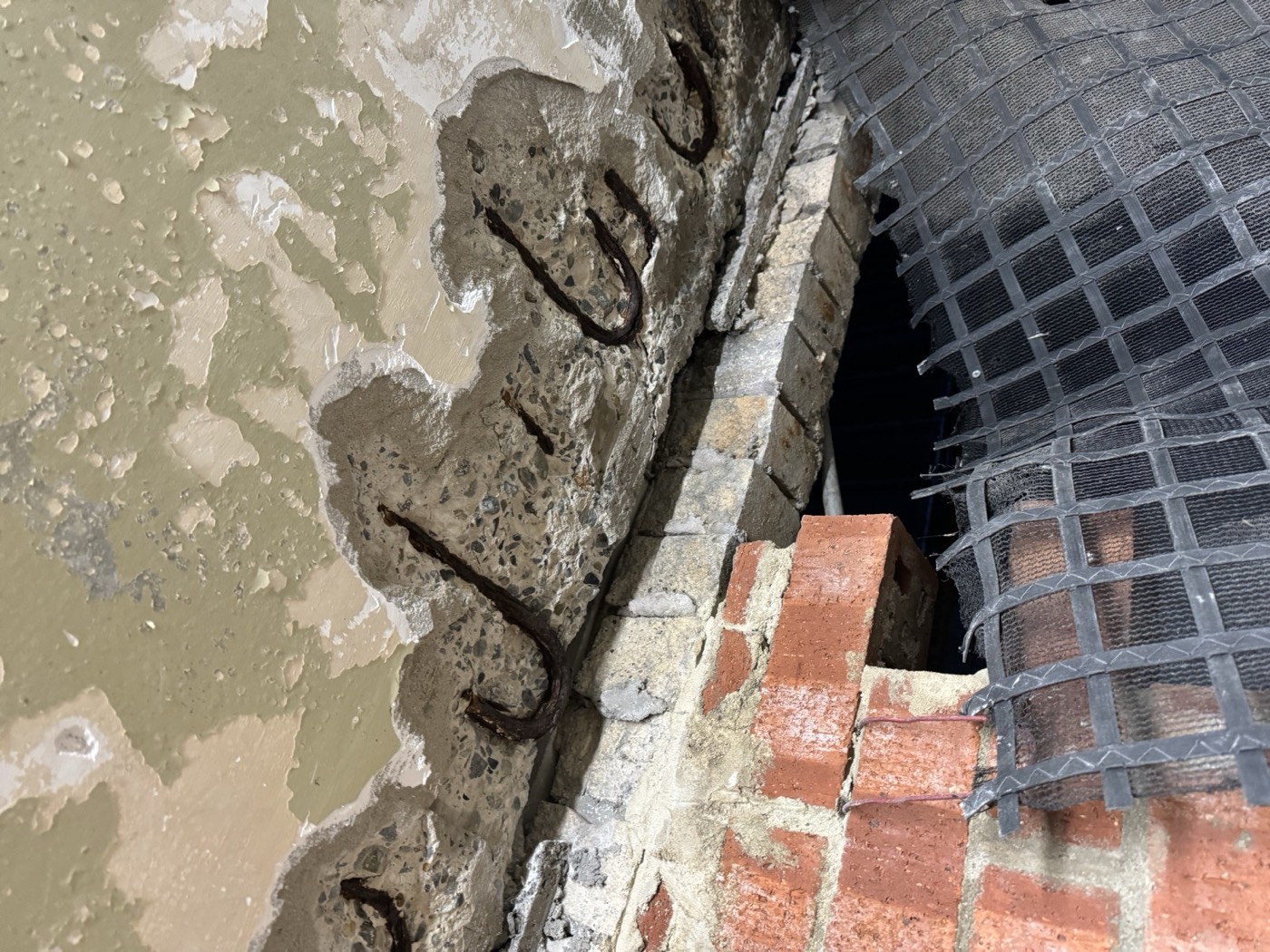
Balcony failures are rare, but when they happen they can be serious. Most failing balconies give plenty of warning first. Knowing the signs means problems are repaired while they are still small, and before anyone is at risk.
9 warning signs of a failing balcony
1. Rust stains on the slab edge or underside
Brown streaks running from cracks or the edge of a concrete balcony usually mean the reinforcement is rusting. This is the start of concrete cancer.
2. Cracking or spalling concrete
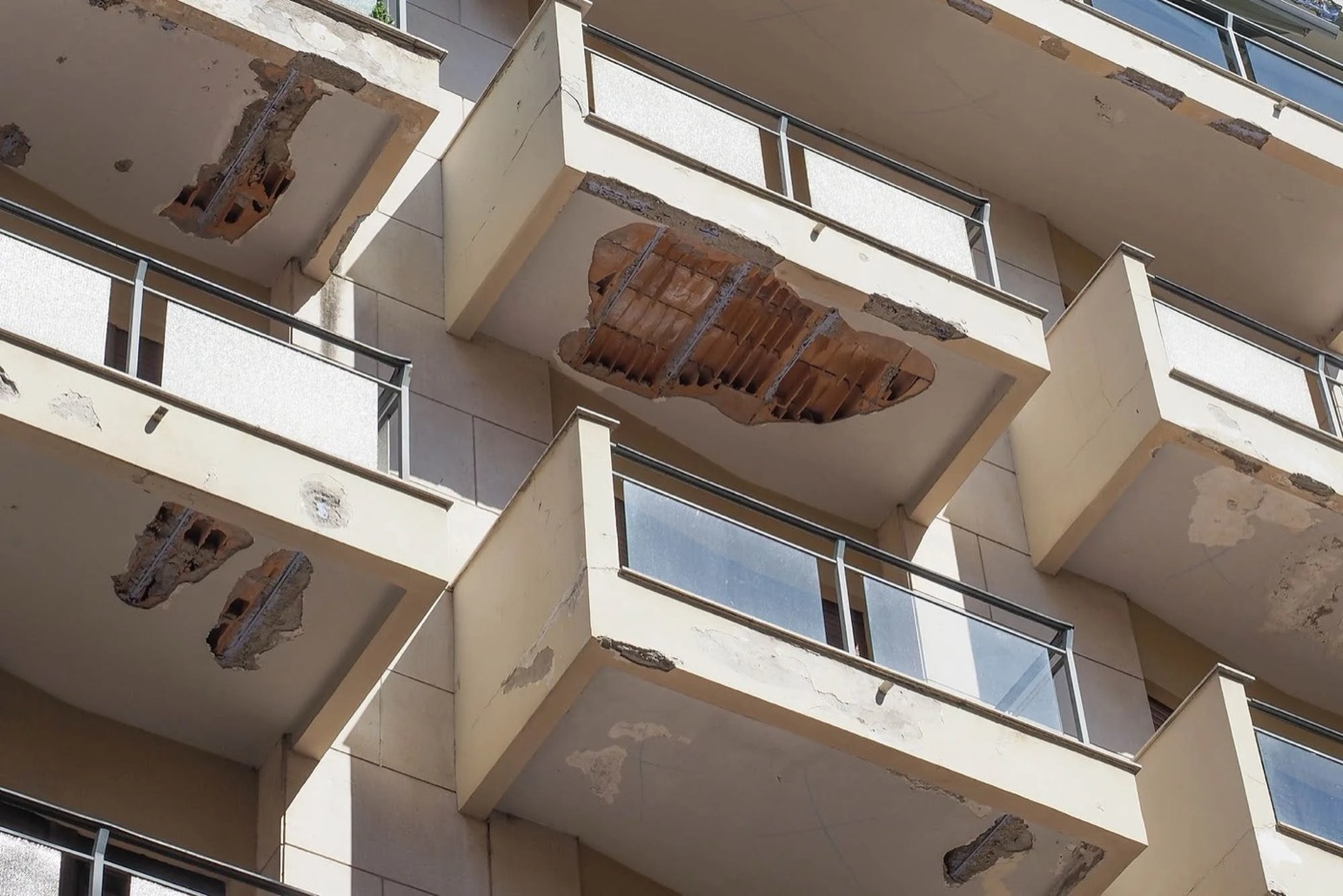
Straight cracks along the slab edge, or pieces of concrete falling off, show the steel inside is expanding as it rusts. Falling concrete is a safety risk to people below.
3. Exposed reinforcement
If you can see rusted bars, the concrete cover has already gone and the steel is losing strength.
4. Sagging, sloping or bouncing
A balcony that slopes towards the building, sags at the outer edge or feels bouncy may have structural problems. Cantilevered balconies rely on the connection to the building, so movement there needs an engineer.
5. Loose or rusted balustrades
Balustrades that move when pushed, rust at the base of posts, or cracked concrete around fixings are a fall risk. See balustrade height rules.
6. Drummy, cracked or lifting tiles
Hollow-sounding tiles mean the bed has lost its bond, often because water is getting underneath. See drummy tiles.
7. Leaks, stains or mould below
Ceiling stains, bubbling paint or mould in the room or unit below means water is getting through the balcony. See balcony leaking into the room below.
8. Water pooling
Water that sits on the balcony after rain keeps the tiles, bed and membrane wet and speeds up every other problem. See water pooling on a balcony.
9. Rotten or soft timber
On timber balconies and decks, soft joists, rotten bearers, rusted bolts or a ledger pulling away from the house are serious. See rotten timber balcony repairs.
What to do if you see these signs
- Keep people off if there is sagging, bouncing, a loose balustrade or falling concrete. Tape off the area below if concrete is dropping.
- Remove heavy loads such as large planters, spas and furniture.
- Take photos and note when you first noticed the problem.
- Tell the strata manager straight away if you are in a strata building, because balconies are often common property.
- Get an inspection from a remedial builder, and a structural engineer where there is movement or structural damage.
Why balconies fail
- Water getting through failed waterproofing for years.
- Thin concrete cover over reinforcement, common in older apartments.
- Salt air in coastal suburbs.
- Poor drainage and falls.
- Balustrades fixed through the membrane without sealing.
- Rot in timber that was never protected or ventilated.
- Overloading with planters, water features or spas.
Balcony inspection and repair
We inspect concrete and timber balconies, make them safe, and repair the waterproofing, concrete and balustrades with engineer input where needed. For strata buildings, see balcony safety inspections. See our balcony repair service or call 0415 840 500.
Frequently asked questions
How do I know if my balcony is unsafe?
Warning signs include rust stains, cracking or falling concrete, exposed steel, sagging or bouncing, loose balustrades, rotten timber and leaks into the room below.
What should I do if my balcony is cracking?
Keep people and heavy loads off, take photos, tell the strata manager if relevant, and get it inspected by a remedial builder and, if there is movement, a structural engineer.
Can a failing balcony be repaired?
Usually yes. Most failing balconies can be repaired with concrete repairs, new waterproofing and new balustrades, if the problem is caught early.