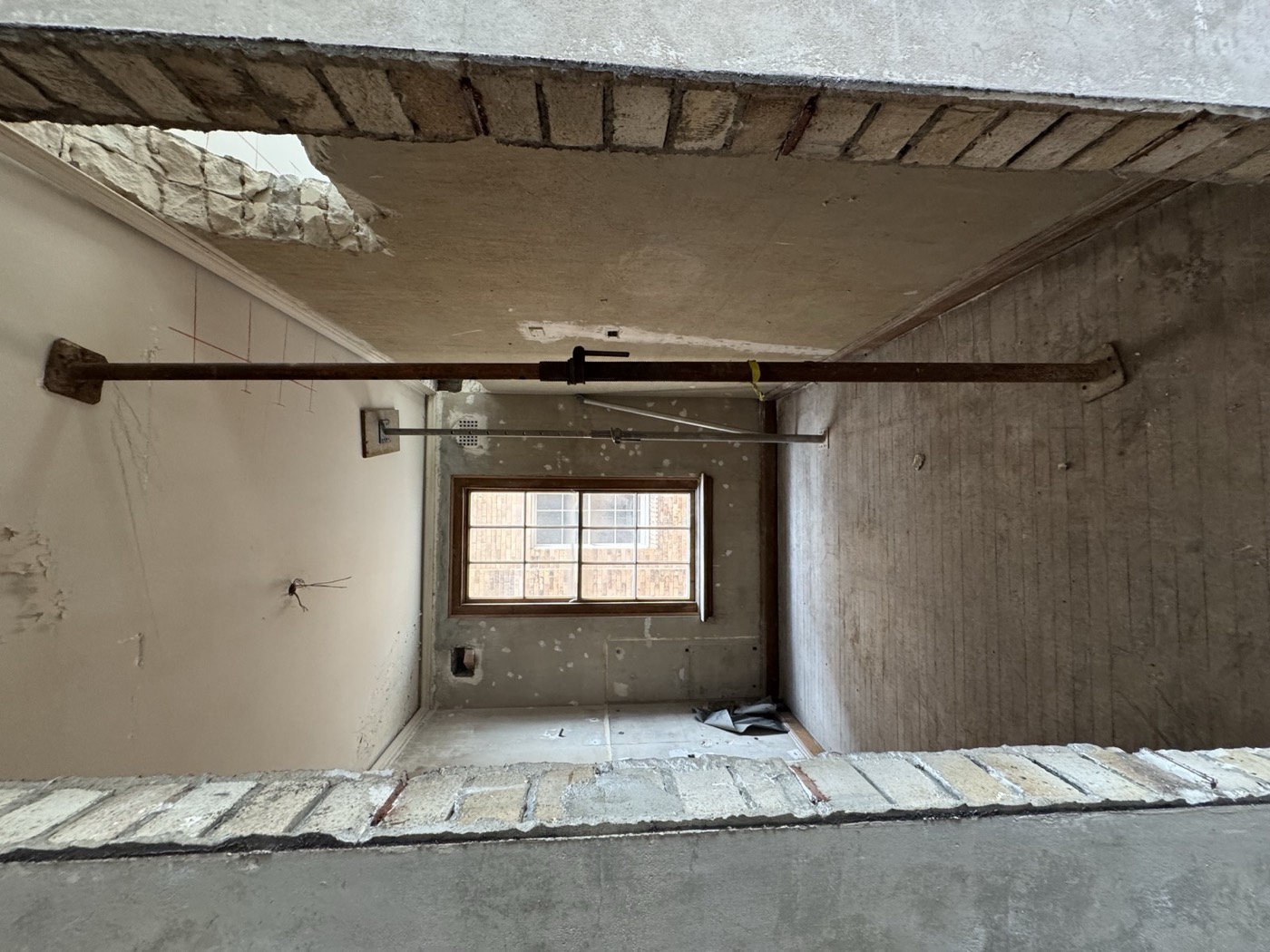
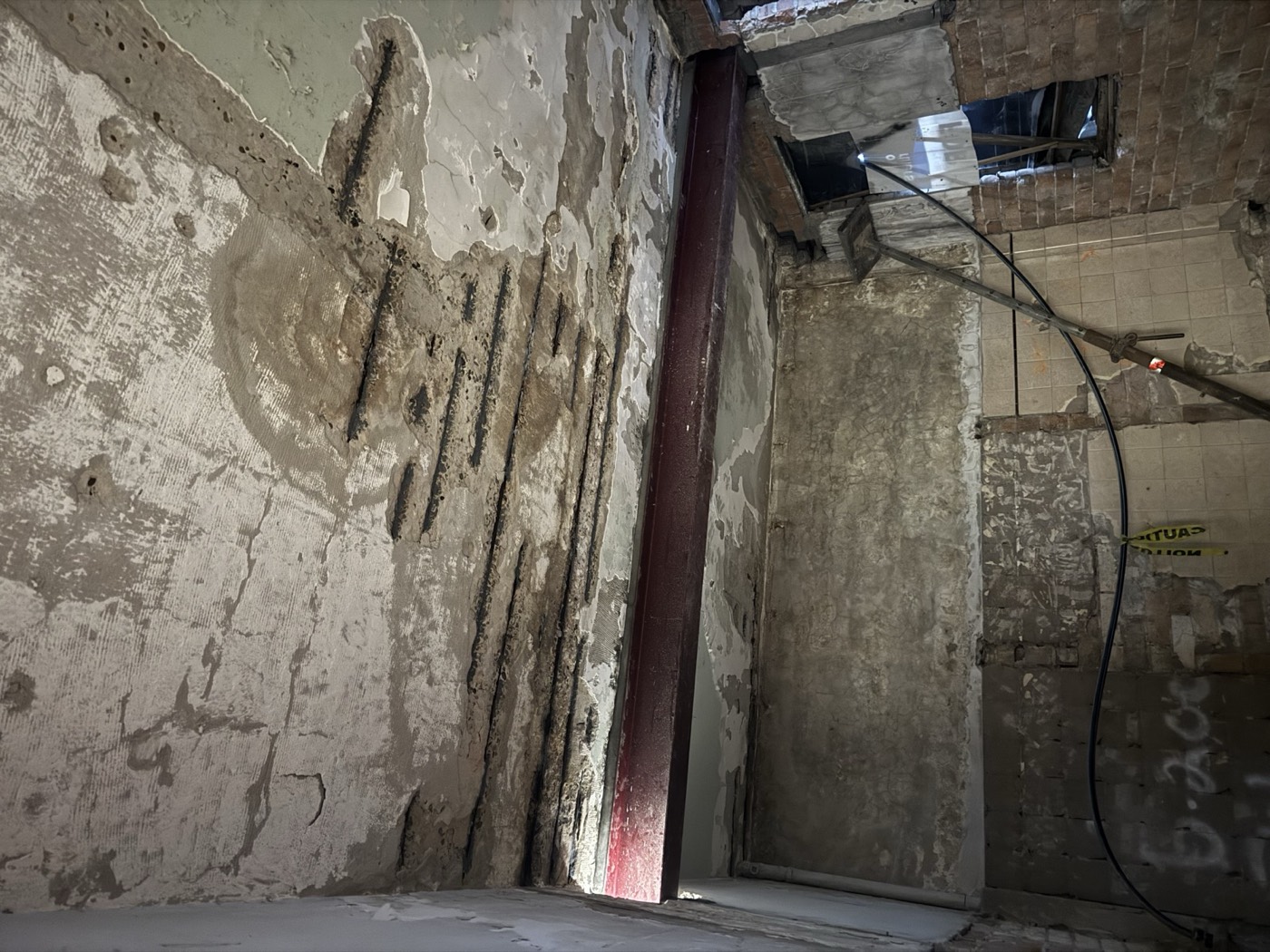
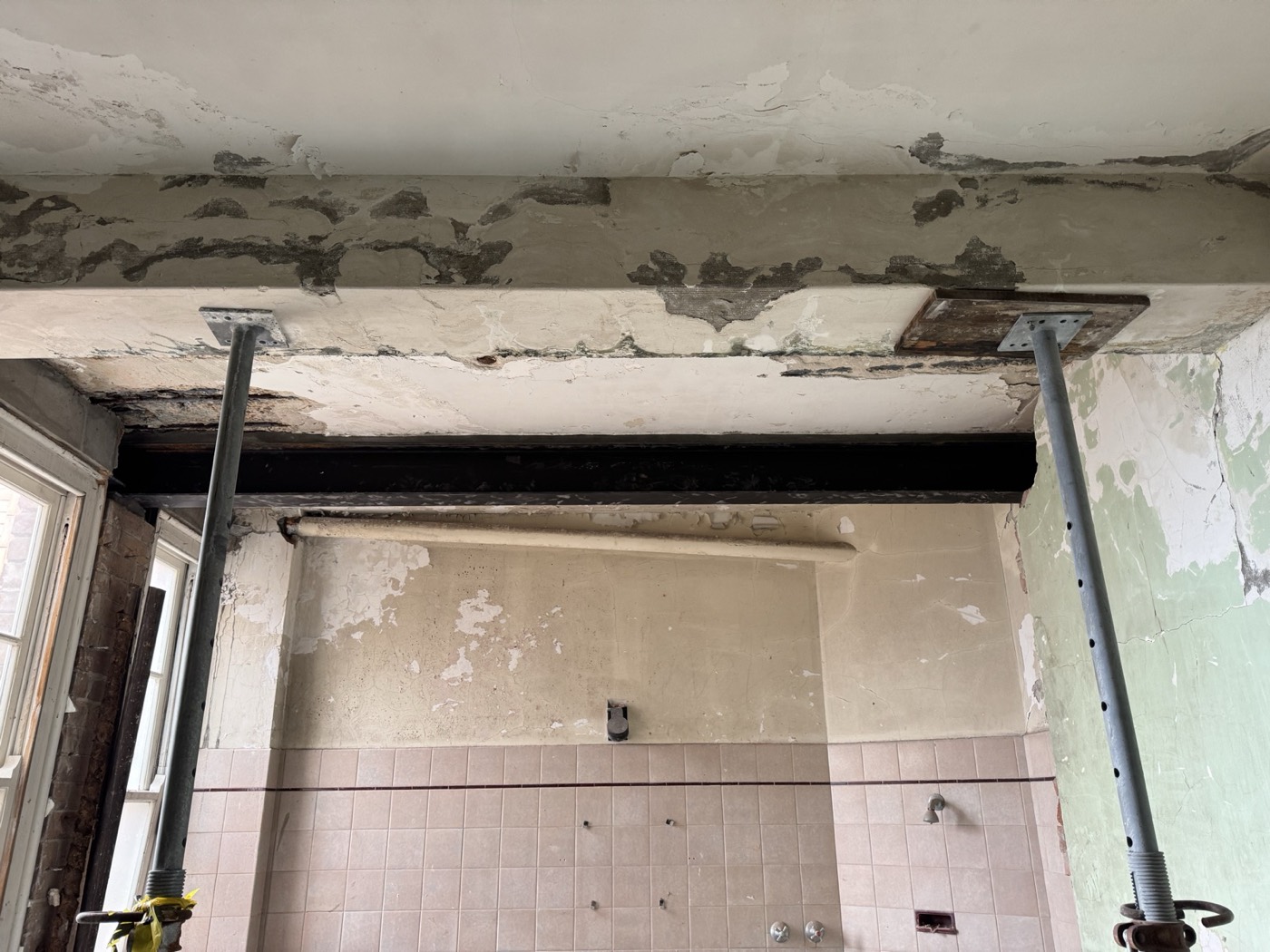
A new opening may look like a simple square on a plan. Inside the slab it can cross reinforcement, cables, pipes and important load paths.
Do not cut from the architectural plan
Find the original drawings and confirm them on site. Scanning can locate many items but not explain the structure. Post-tensioned slabs need special care, because cutting a stressed tendon can be dangerous.
What the engineer checks
- Slab span and direction.
- Load from rooms, walls and equipment.
- Distance to columns and beams.
- Steel and concrete to be removed.
- Support during and after cutting.
The answer may be extra steel beams, bonded strengthening, a concrete ring beam or a different location.
Temporary works and cutting
- Isolate services and protect levels below.
- Scan, mark and agree the cut line.
- Install props and strengthening as designed.
- Cut into controlled pieces.
- Support each piece before it is released.
- Finish edges, fire seals and barriers.
Water cooling reduces dust but creates slurry that must be controlled. Cutting corners beyond the corner point can also weaken a slab, so the cut method matters.
The programme beyond the hole
Lift, stair and service trades need dimensions based on the finished opening. Measure after cutting and account for linings and tolerances. Keep it covered or guarded at every stage.
Read post-tensioned slabs and lift shaft modifications.
Call 0415 840 500 or book an inspection. METCON is a licensed NSW builder (384697C) and DBP registered (BUP4254812).
Frequently asked questions
Can small pipe holes be drilled without checking?
No. Even one core can hit a tendon, bar or service.
Does scanning find everything?
No. It is one source of evidence, with limits that should be understood.
Do openings need approval?
Often yes, depending on building use and structural work. Check before cutting.