A container forklift may place more demand on a hardstand than a much heavier truck, because its load reaches the concrete through small areas. Use the actual equipment in the design.
Map the loads
Record wheel and axle loads, container legs, turning, loading and fixed equipment. Tell the designer what may change in the next few years.
The ground carries it
Slab thickness cannot fix weak support everywhere. Test and prepare subgrade, remove soft zones and compact in controlled layers. Drain water before it weakens the base.
Joints make or break it
Cracks will try to form as concrete dries and temperatures change. Joint spacing, dowels and sawcut timing control where. Wheel paths should not run along a weak edge.
A practical build order
- Protect services and create stable access.
- Prepare subgrade and drainage.
- Place base and check levels.
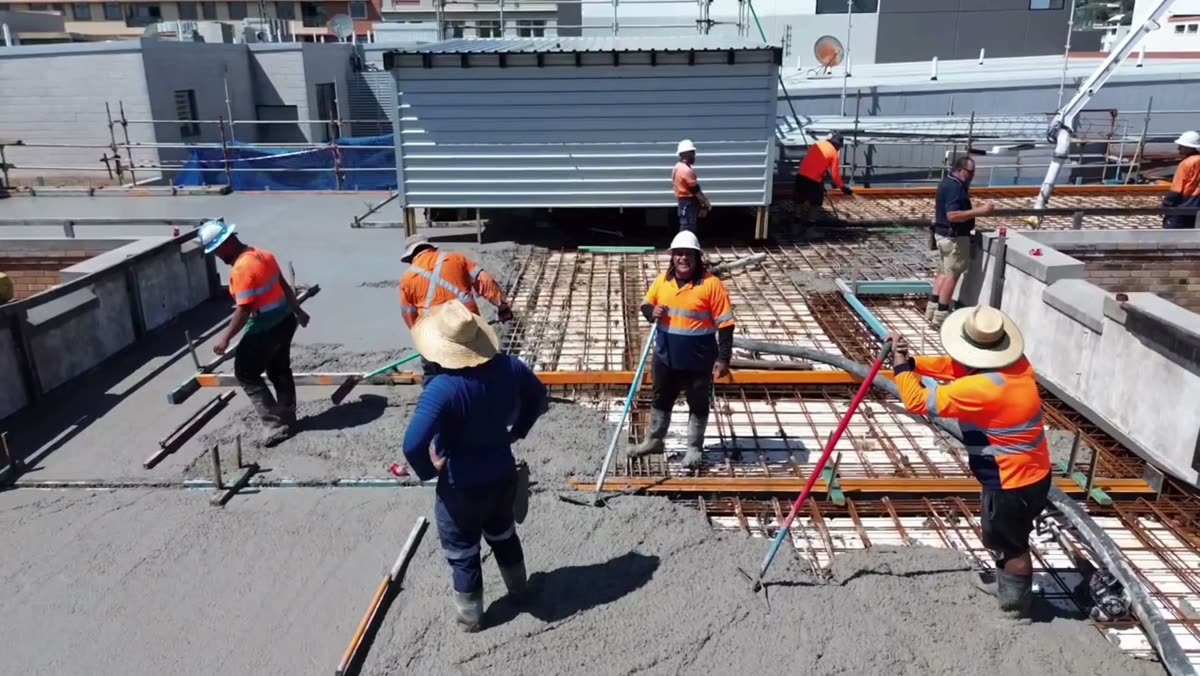
- Set formwork, steel and dowels.
- Pour in planned bays.
- Cure, cut joints and protect from traffic.
Keep the site working
Separate open and closed bays with a traffic plan. Concrete that looks hard may not be ready for a forklift, so link reopening to the specified strength.
Records for repairs
Keep bay layout, mix, joint type and test results. They make later repair and equipment checks faster. See warehouse slabs, formwork and concrete works.
Call 0415 840 500 or request a quote. METCON is a licensed NSW builder (384697C).
Frequently asked questions
How thick should a hardstand be?
Loads and ground determine it. Copying another site can be wrong.
Does steel stop cracks?
It helps control cracking but joints, base and curing still matter.
Can a failed bay be replaced?
Often, with joint connection and ground support designed.