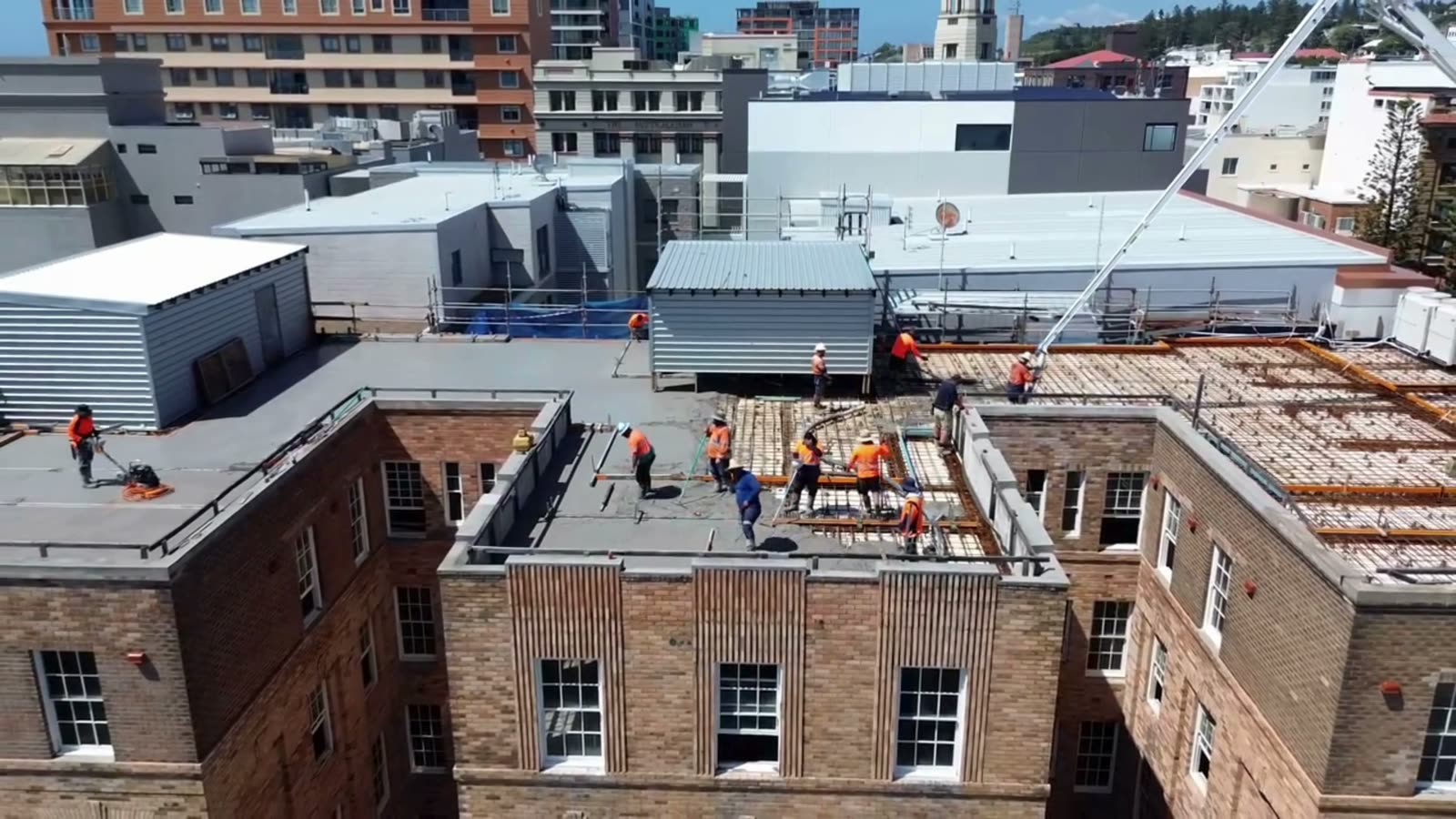
Concrete roofs look solid, but water passes through cracks, joints and holes around pipes. It can then travel along the slab and appear several metres from the entry point.
Find the entry before choosing a product
- Cracks over beams and supports.
- Construction and movement joints.
- Outlets and overflows.
- Parapet bases and door thresholds.
- Plant supports and pipe holes.
- Old patches that have lifted.
Testing one area at a time, starting low, shows which detail leaks. Flooding the whole roof only proves what you already know.
Is the crack moving?
A stable shrinkage crack and a moving joint need different repairs. Filling a moving joint with rigid mortar makes a new crack beside it. Joints need a detail that can stretch.
Check the slab below
Rust stains, drummy areas or falling concrete mean the reinforcement may be corroding. That damage is repaired before a new membrane, and both sides of the slab may need work.
Patch or replace?
A local repair can suit one failed outlet on a sound membrane. Replacement makes more sense when leaks appear in several zones, patches overlap or the membrane no longer bonds.
Get the falls and edges right
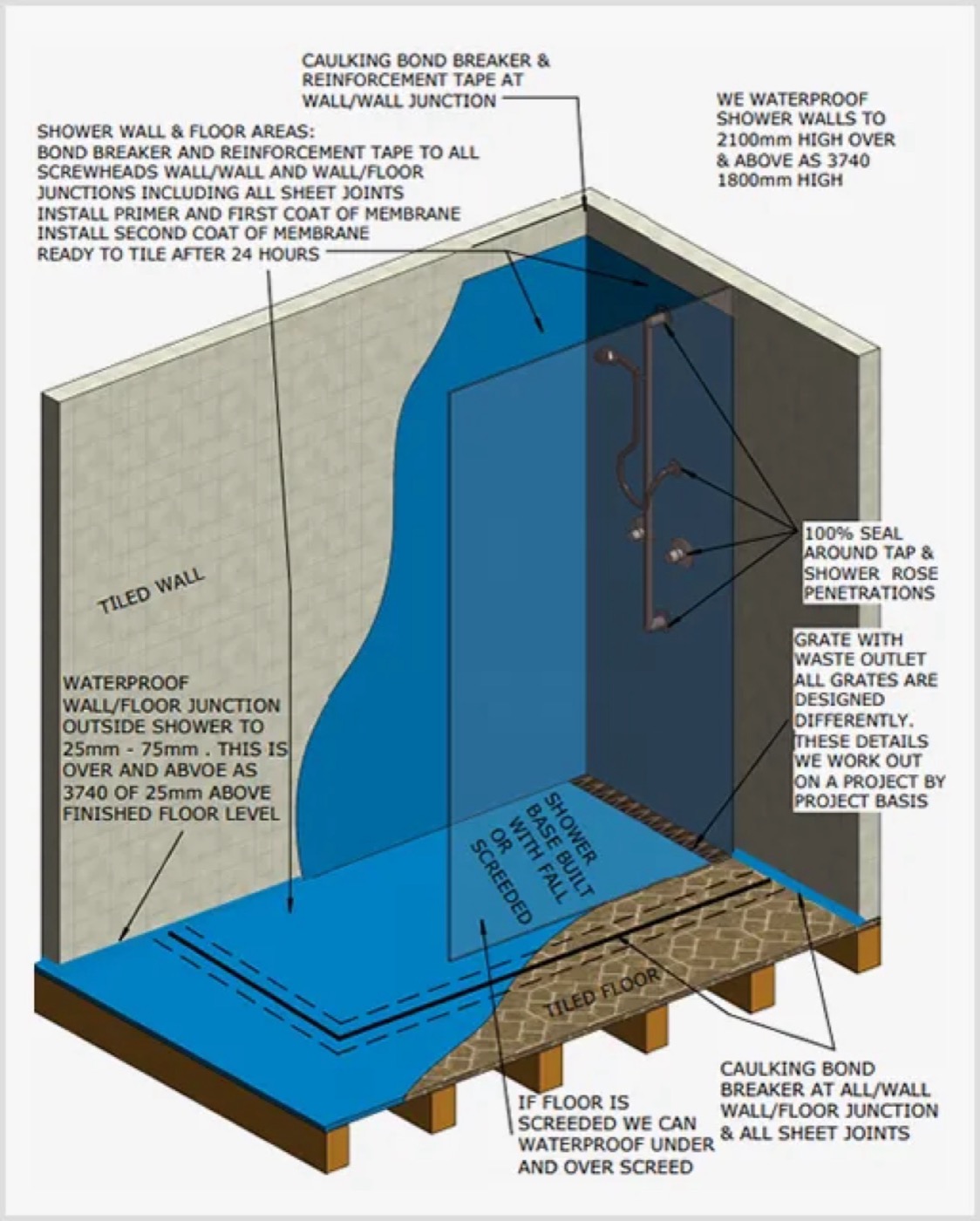
Standing water finds every weakness. Correct falls where possible, then detail upstands, outlets and edges before covering the open field.
Class 2 rules
On apartment buildings, replacing a membrane across a roof is generally regulated remedial work that needs a registered design. See regulated designs.
Also read roof slab concrete cancer and waterproofing.
Call 0415 840 500 or book an inspection. METCON is a licensed NSW builder (384697C) and DBP registered (BUP4254812).
Frequently asked questions
Can a concrete roof be sealed with paint?
Coatings suit some roofs, but cracks, joints and outlets must be repaired first.
Why does it only leak in long rain?
Water may need time to fill a low point or travel through the slab.
Who pays for a strata roof leak?
The roof is usually common property, but check the strata plan and by-laws.