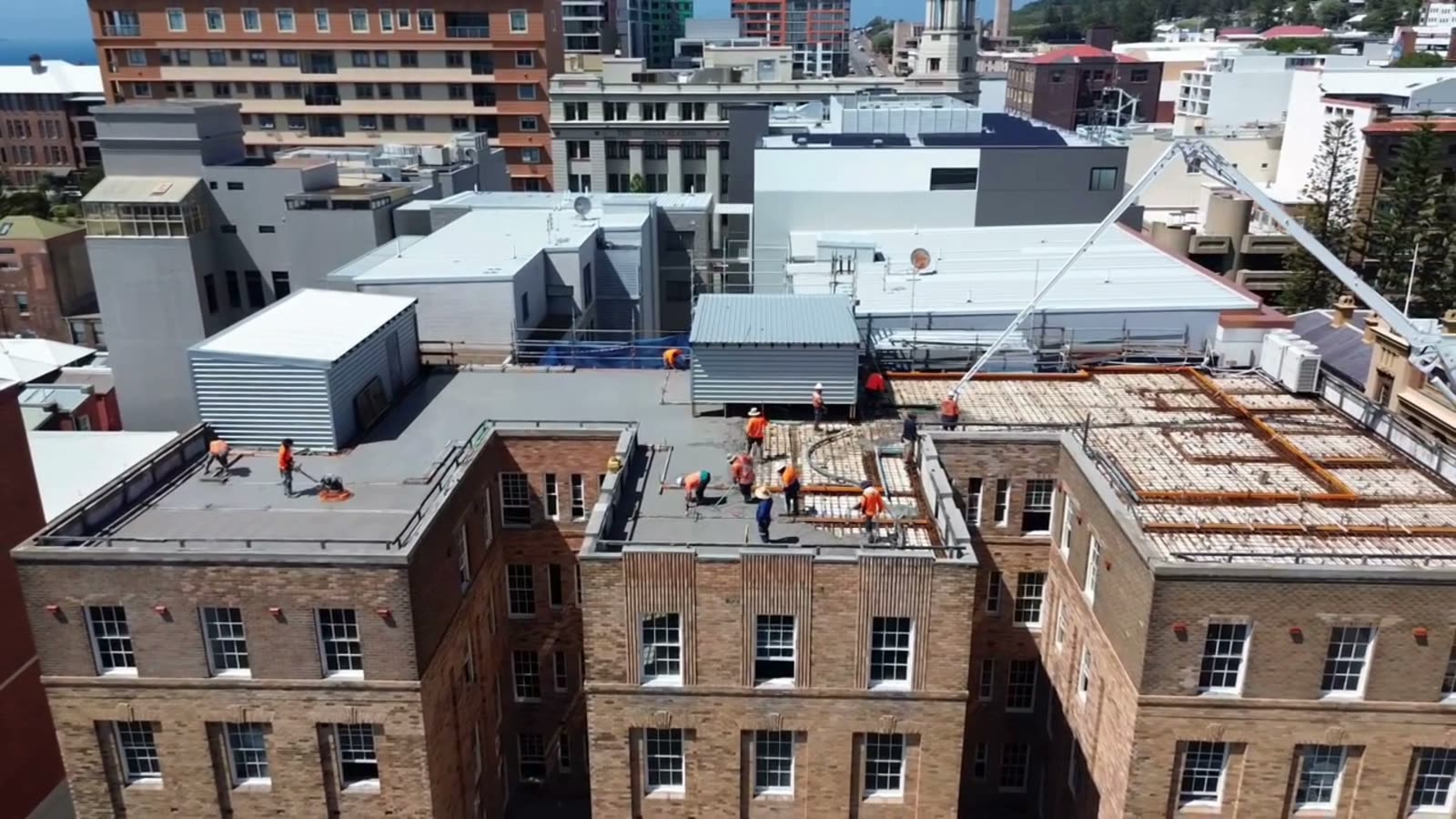
Hospitals run around the clock, and they are full of people who are vulnerable to dust, noise, water and disruption. Remedial works such as concrete repairs, roof waterproofing and facade repairs still have to happen. The difference is in the planning.
Start with the facility rules
Every hospital has rules for contractors: inductions, permits to work, hot work permits, service isolations, access routes and working hours. These shape the program and price, so they should be known before quoting.
Infection control
Construction dust can carry fungal spores, and water damage can grow mould, both risks to vulnerable patients. Most health facilities require an infection control risk assessment, prepared or approved by the infection prevention team, which sets controls by area. Controls can include:
- Sealed barriers and doors between work and clinical areas.
- Negative air pressure with filtered extraction.
- Covered transport of materials and waste.
- Wet cutting and dust suppression.
- Sticky mats and extra cleaning at exits.
- Daily inspection with the facility team.
Noise and vibration
Concrete break-out, coring and grinding can affect theatres, imaging, laboratories and patients trying to rest. Work near sensitive areas may be limited to agreed windows. Vibration-sensitive equipment may need monitoring.
Staging
Work is broken into small zones that can be isolated, completed and handed back. Wards or departments may need to move temporarily, so the program needs agreement well in advance.
Essential services and access
Fire exits, ambulance routes, lifts, medical gases, power and water must be protected. Any shutdown is booked with the engineering team. Deliveries and waste are timed around clinical traffic.
Common remedial items in hospitals
- Roof and plant deck leaks over clinical areas.
- Concrete cancer in car parks and older structures.
- Facade and window leaks.
- Wet area failures in wards and kitchens.
Records
Health facilities need detailed handover records for their asset systems. Hold-point photos and test results should be part of the scope. See hold-point inspections, then see our hospitals and healthcare page.
Call 0415 840 500 or book an inspection. METCON is a licensed NSW builder (384697C) and DBP registered (BUP4254812).
General information only. Confirm current requirements with your certifier, engineer, strata manager or lawyer.
Frequently asked questions
Who prepares the infection control risk assessment?
Usually the facility's infection prevention team, with input from the project team and contractor.
Is most work done at night?
Noisy or disruptive work near clinical areas often is. Other work can be done during the day behind barriers.
Does the DBP Act apply to hospitals?
Hospitals are generally Class 9a, which is not a regulated building class under the NSW DBP scheme. Other approvals and the Building Code still apply.