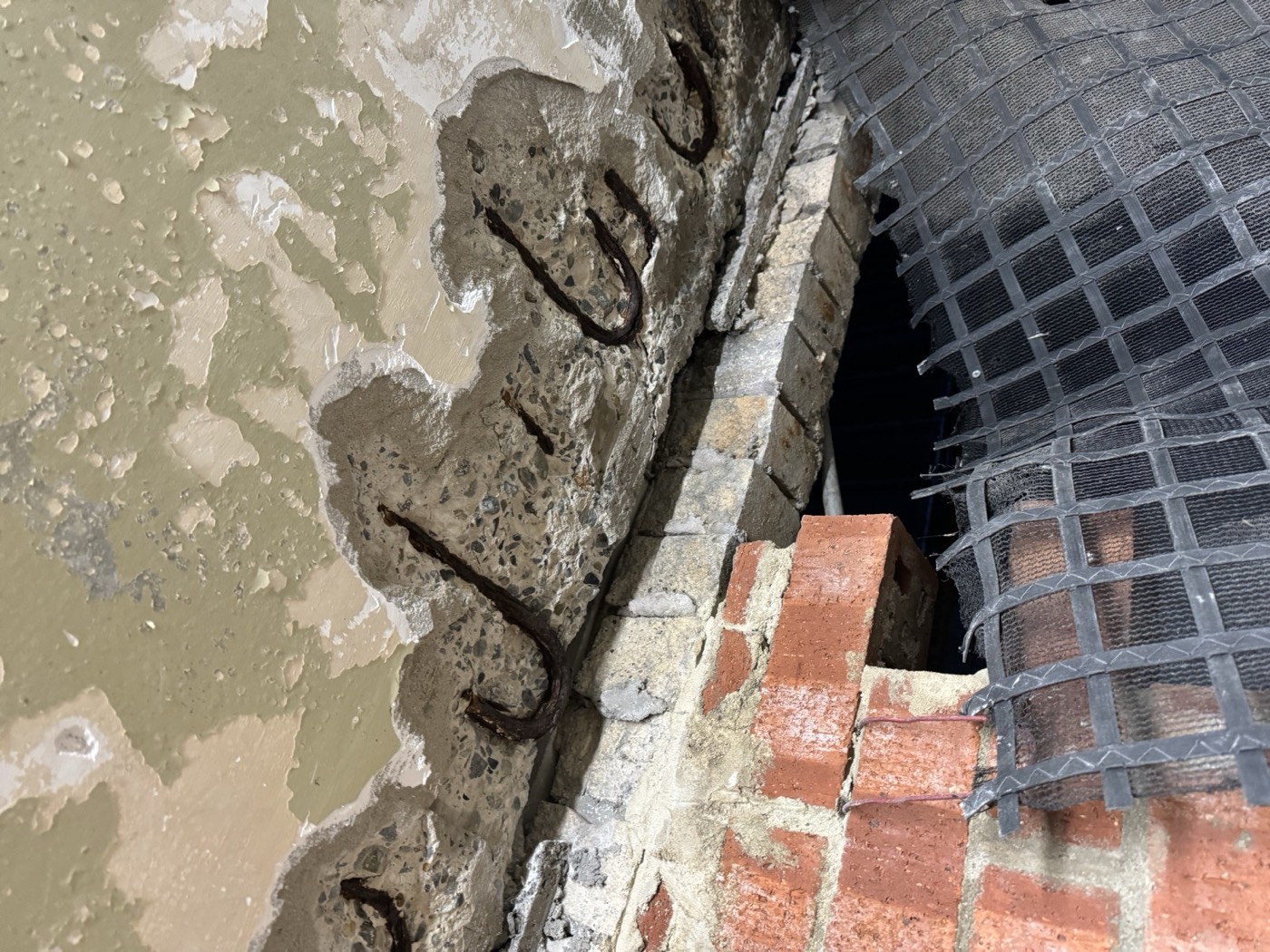
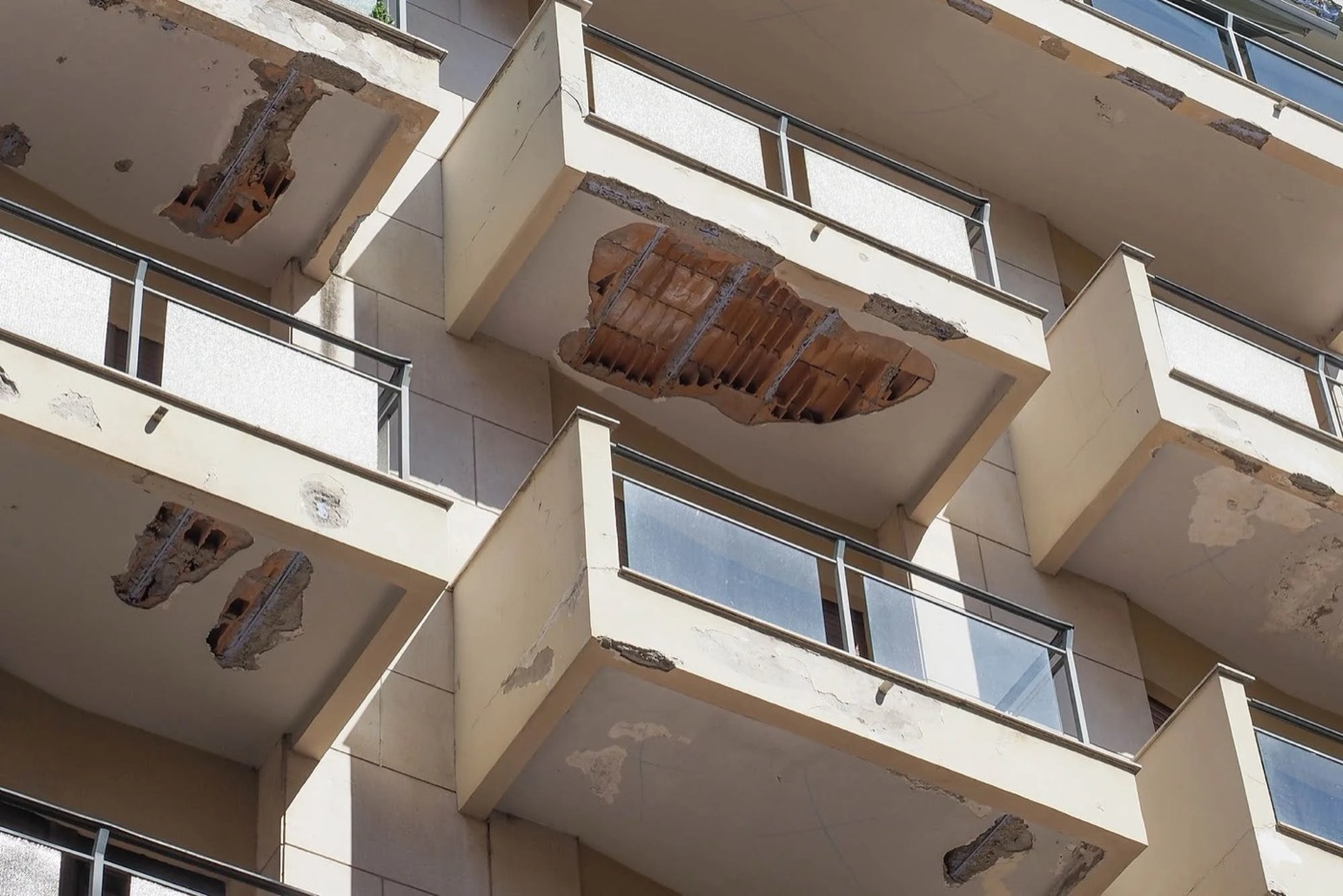
A balcony membrane is not just on the floor. It must turn up the walls and under door frames to a sufficient height. When upstands are too low, missing or damaged, water finds its way into walls and apartments.
Where upstands matter
- At external walls around the balcony.
- Under and around sliding door frames. See door thresholds.
- Around hobs, planters and parapets.
- At balustrade bases and penetrations.
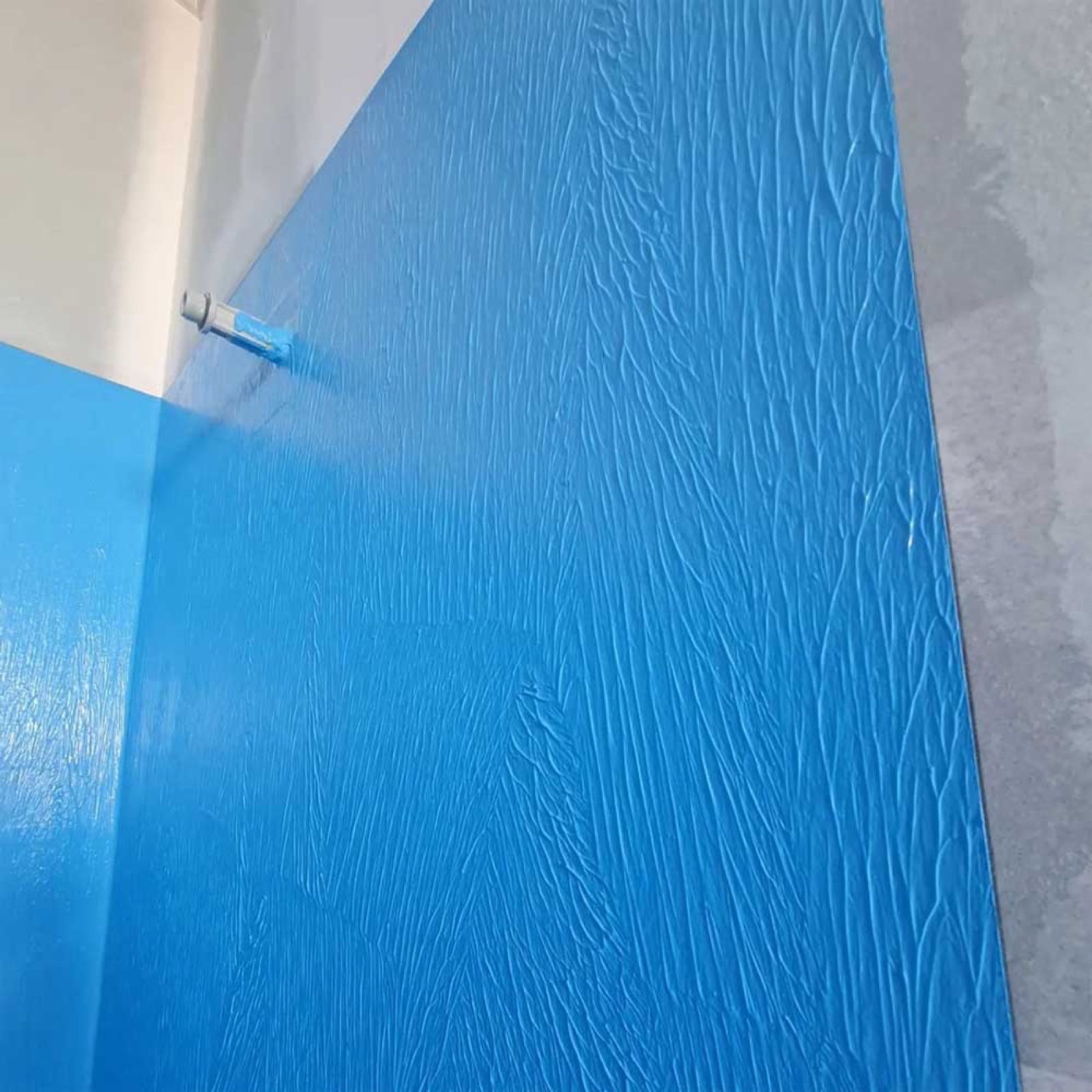
Signs of upstand problems
- Damp or swollen skirting boards inside near the door.
- Mould on the inside face of balcony walls.
- Stains below the balcony at the wall line.
- Leaks during heavy or wind-driven rain. See water getting into walls.
Why upstands fail
- Built too low in the first place.
- Tiles and screed raised the floor over time, reducing the effective height.
- Membranes cracked at corners or not protected under cladding and render.
- Door frames installed without proper sill details.
How they are fixed
- Removing tiles and skirting tiles along walls.
- Installing new membrane upstands with reinforcing at corners.
- Protecting the top edge with flashings or cover.
- Reworking door sill details, sometimes with a set-down or new frame.
- Flood testing before re-tiling. See flood testing.
How it helps
Getting upstands right stops water reaching walls and floors inside, which protects plaster, timber and health.
Balcony waterproofing repairs
We correct upstands, sills and other balcony details on apartment buildings. METCON is a licensed builder (384697C) and DBP registered (BUP4254812) for Class 2 work. Call 0415 840 500 or book a free inspection.
Frequently asked questions
What is a membrane upstand?
The part of the waterproofing that turns up the wall, door frame or hob, so water cannot run under it.
Why does water come in under my balcony door?
Common causes are a low or missing upstand, a poor sill detail, or a floor that has been raised by new tiles.
Can upstands be fixed without redoing the whole balcony?
Sometimes, along one wall or door, but often the floor membrane needs work too. An inspection tells you.