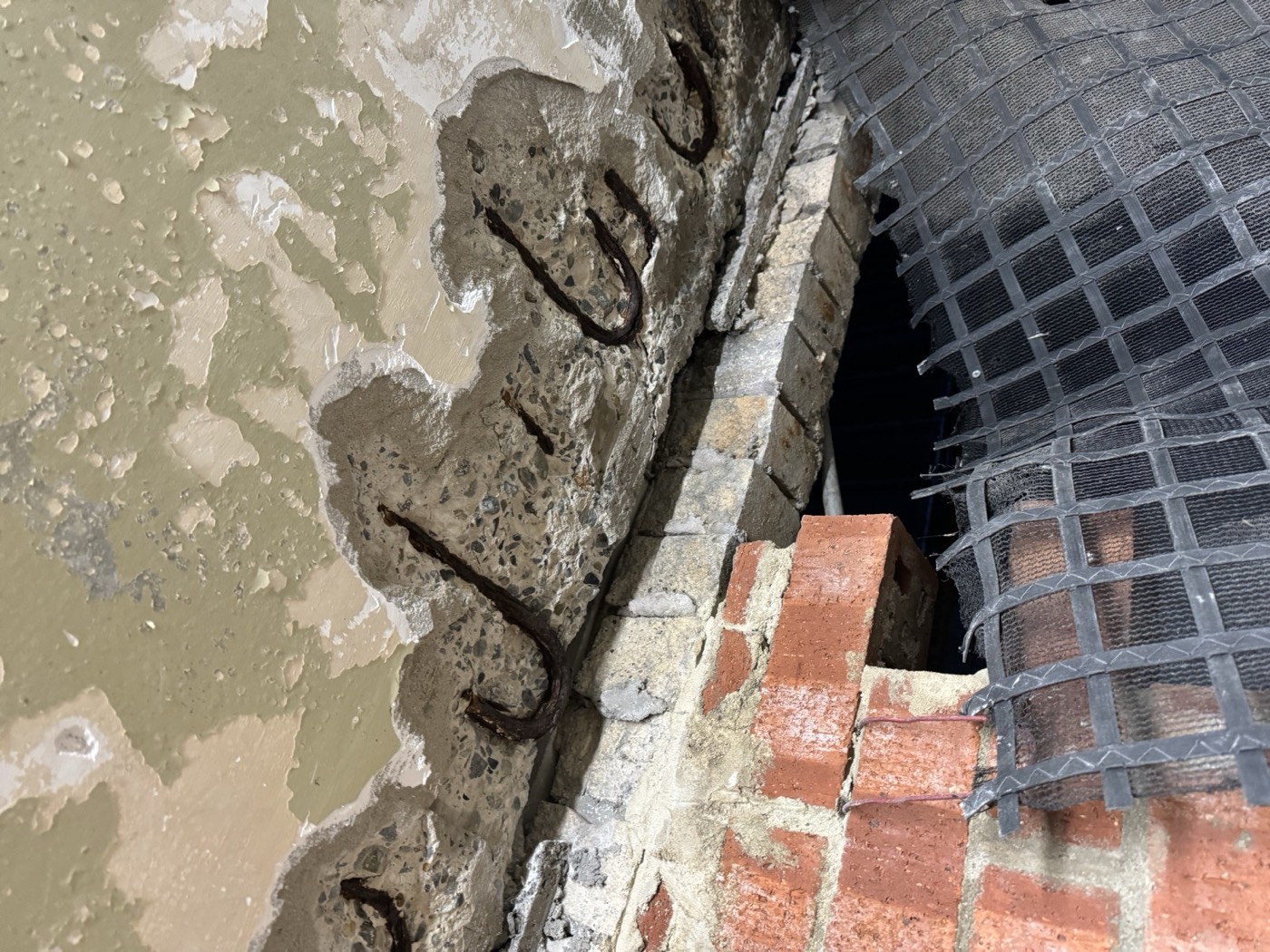
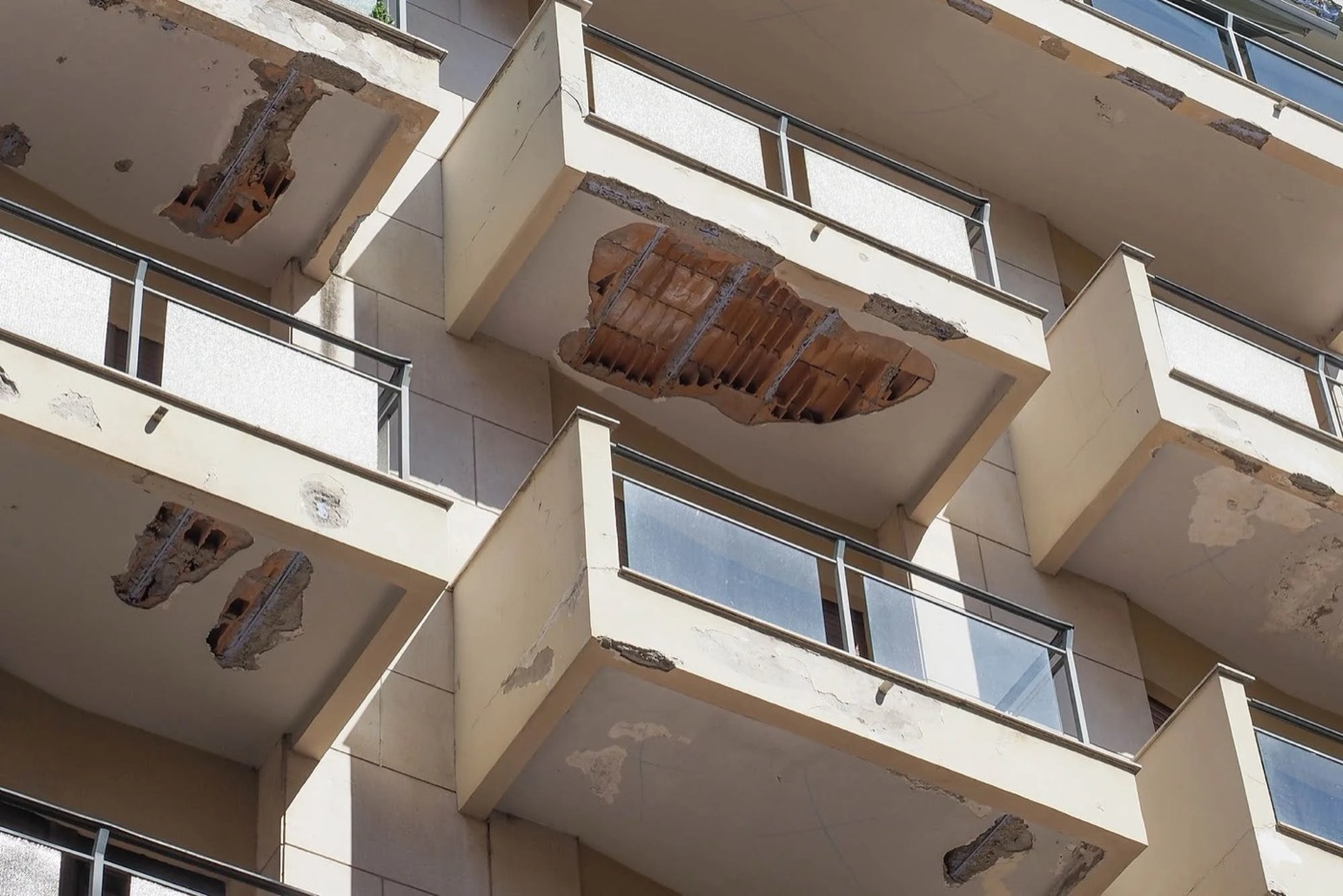
Once tiles go down, nobody can see the membrane again without removing them. A flood test checks the waterproofing while it is still exposed, so problems can be fixed before they are buried.
How a flood test works
- The membrane is fully cured.
- Drains are plugged and the edges dammed.
- Water is held on the balcony to a set depth.
- It is left for a set period, commonly 24 hours or as specified.
- The area below and around is checked for leaks.
- Results and photos are recorded.
What it proves
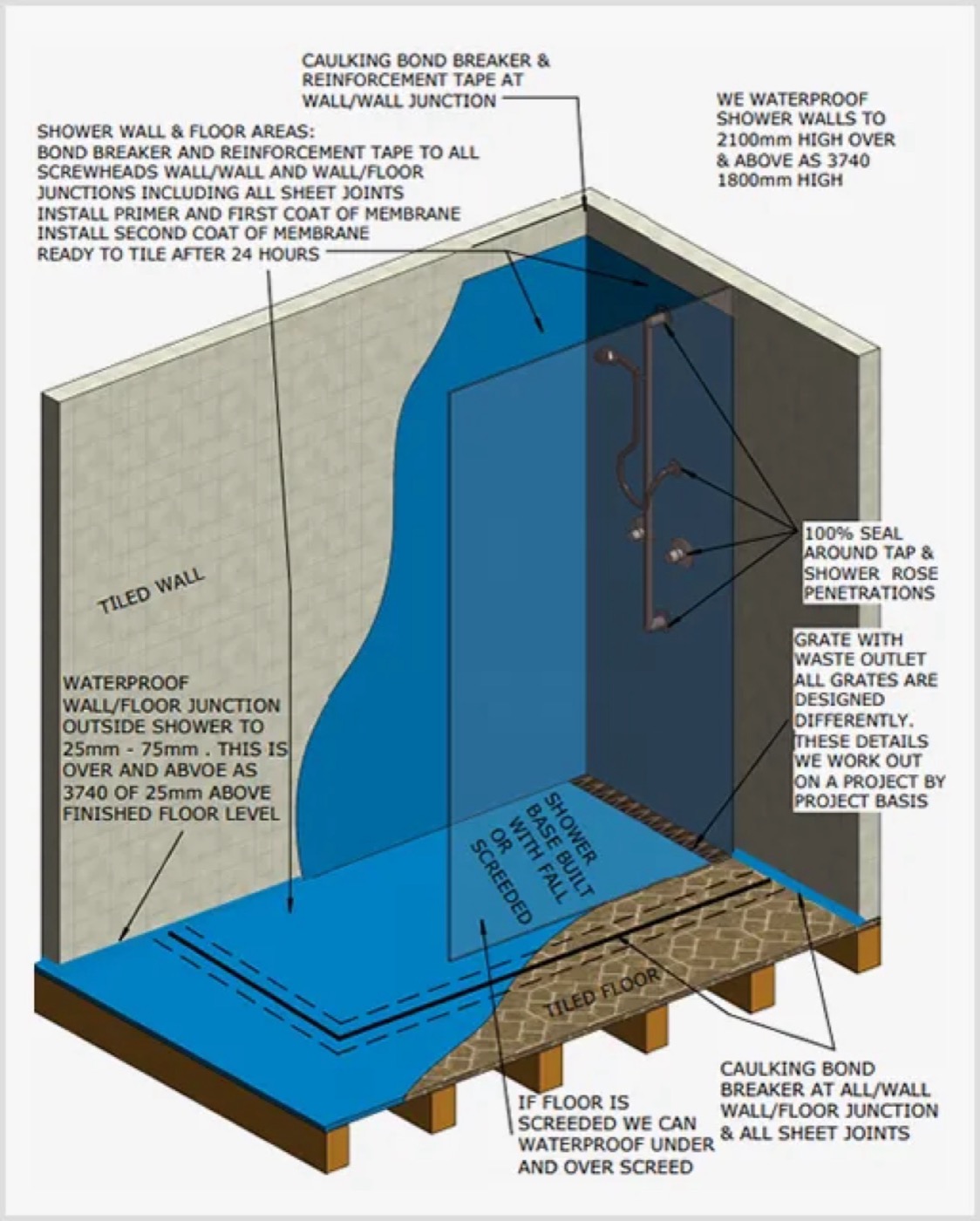
- The membrane and its details hold water at the time of testing.
- Drains, upstands and penetrations are sealed.
What it doesn't prove
- It doesn't test wind-driven rain on walls and door frames above water level.
- It doesn't show the long-term durability of the system.
Testing door sills and walls
Separate water testing may be used for door frames and walls. See upstands and sliding doors.
Record it
Keep the date, duration, photos and result with the strata records. It helps with warranties and future buyers. See warranties.
How flood testing helps
It catches mistakes when they are cheap to fix and gives owners confidence that the membrane works.
Waterproofing with testing
We flood test balcony waterproofing where suitable and keep the records. METCON is a licensed builder (384697C) and DBP registered (BUP4254812) for Class 2 work. Call 0415 840 500 or book a free inspection.
Frequently asked questions
How long does a balcony flood test take?
Commonly 24 hours, or as set out in the specification, after the membrane has cured.
Is a flood test required?
It depends on the specification and project. It is good practice before tiling where suitable.
Does a flood test guarantee no leaks?
It shows the membrane holds water at the time. It does not test wind-driven rain on walls or long-term durability.