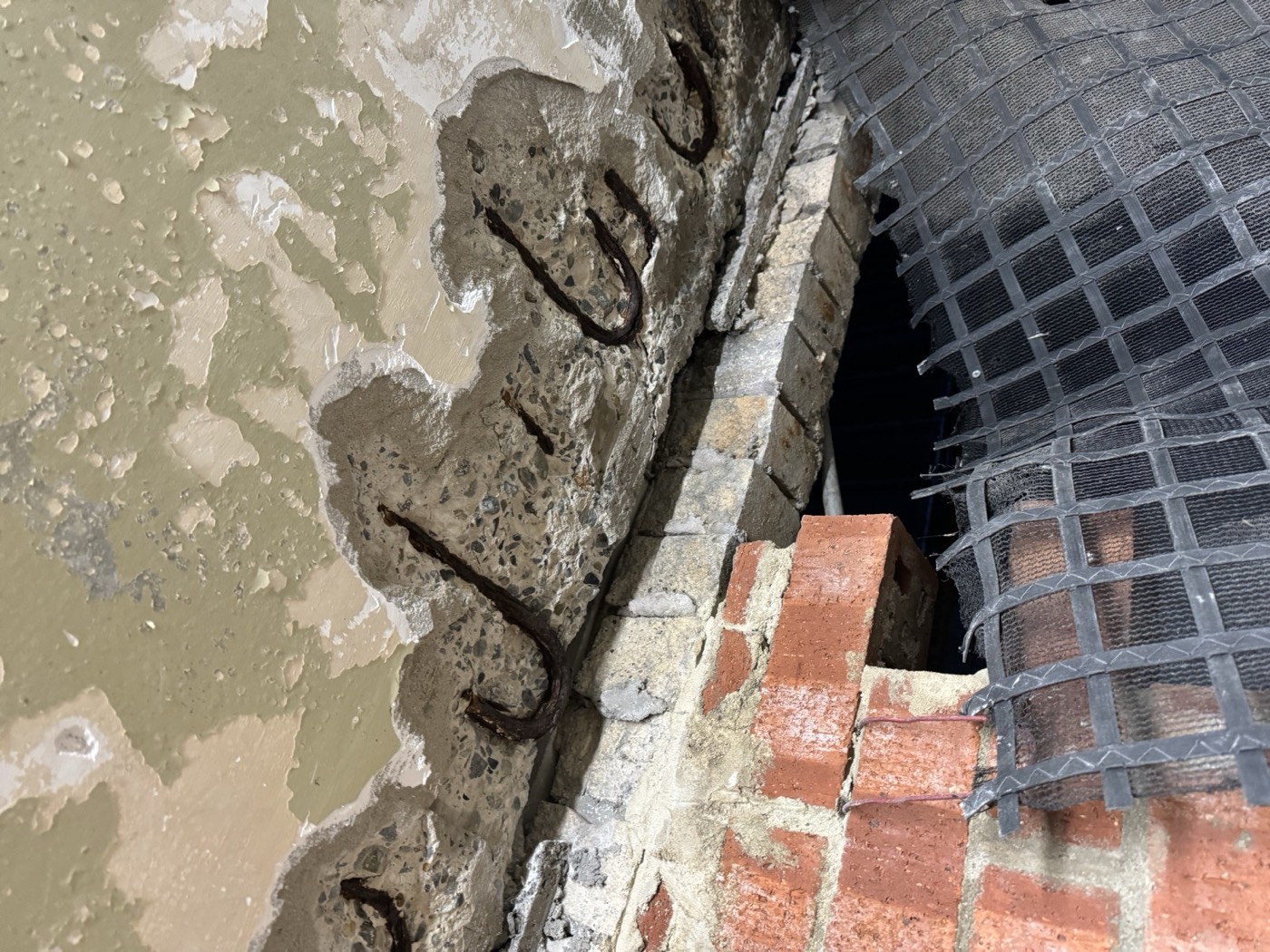
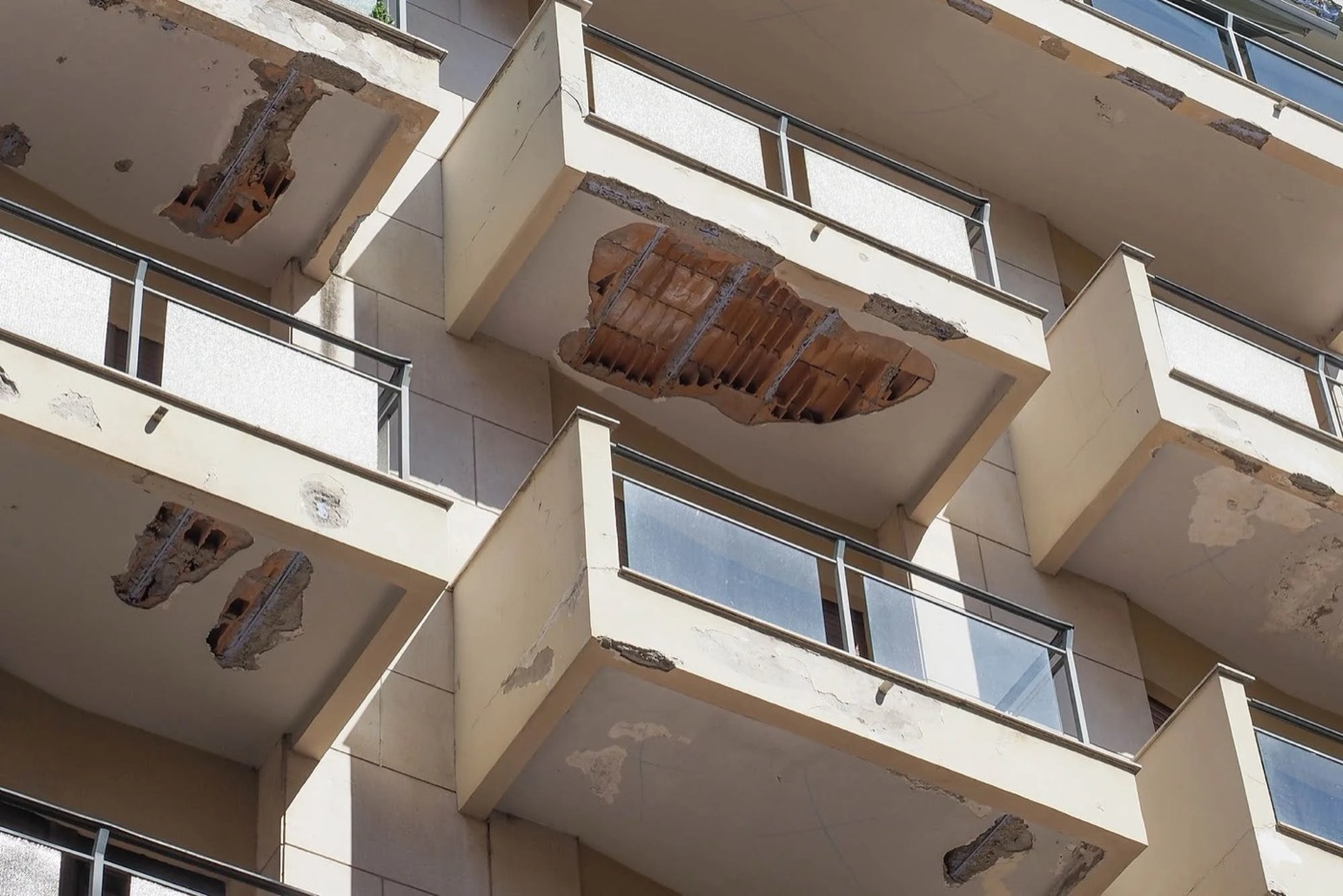
A screed is the sand and cement layer that sits under many balcony tiles. It sets the falls to the drain and gives the tiles a base. When it cracks, debonds or was laid flat, water ponds, tiles drum and leaks follow.
Signs of screed problems
- Water sitting on the balcony after rain.
- Drummy, hollow sounding tiles. See drummy tiles.
- Cracked tiles and grout in lines.
- White deposits in grout joints. See efflorescence.
- A soft or crumbling bed under lifted tiles.
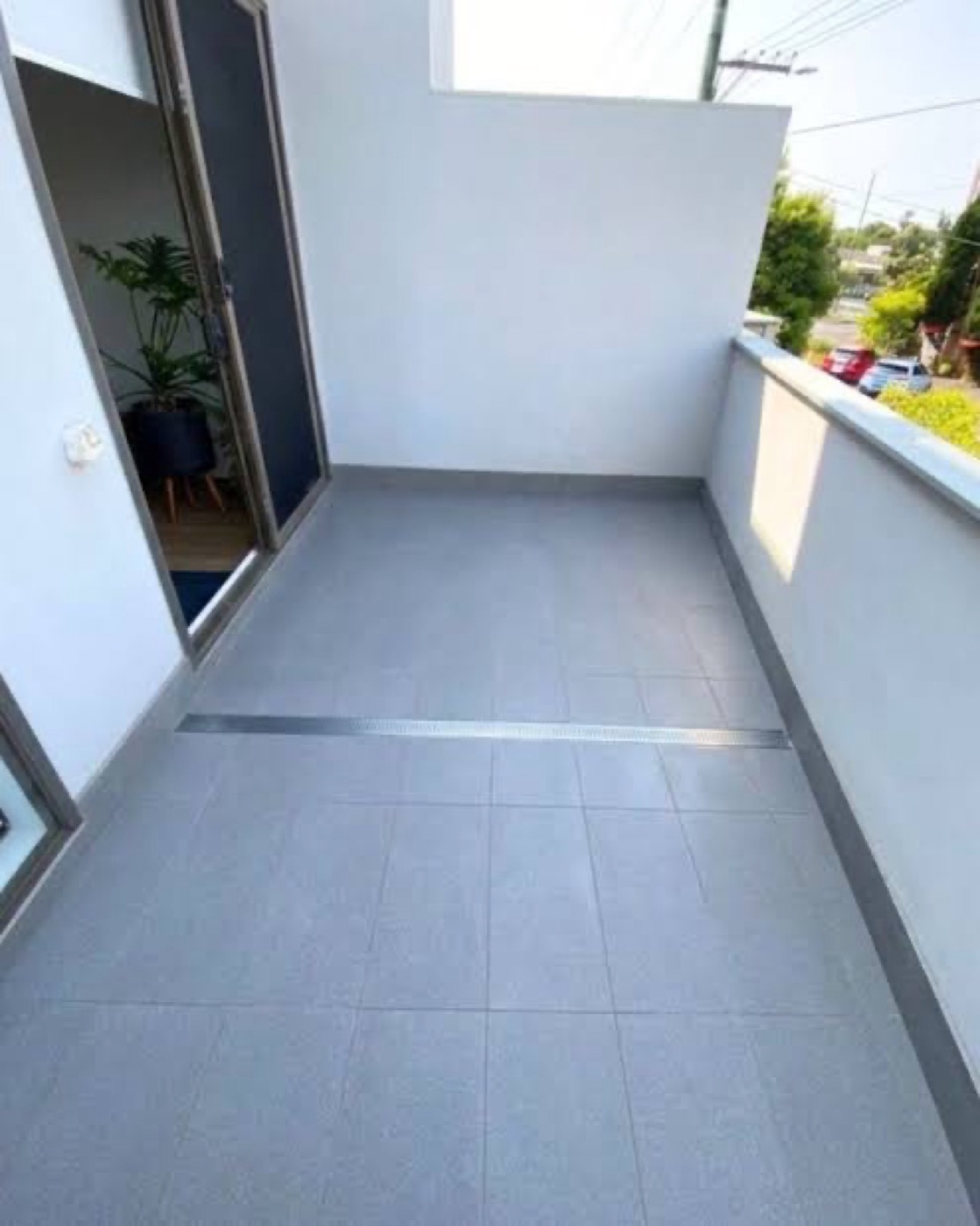
Why screeds fail
- Laid flat or falling the wrong way.
- Too thin or too weak.
- Saturated by water sitting on the membrane underneath.
- Laid directly on a membrane with no drainage path.
Where the membrane sits matters
Some balconies have the membrane under the screed, so water can soak the screed before it reaches the membrane. Others have the membrane on top of the screed under the tiles. The right detail depends on the design, and many older balconies were not detailed well.
How it is fixed
- Remove tiles and screed.
- Repair the slab.
- Set falls correctly, with a new screed or by grinding or building up the slab.
- Install the membrane and drainage details.
- Flood test and re-tile. See how to waterproof a balcony.
How it helps
A proper base with correct falls lets water drain away, so tiles stay bonded and the membrane lasts.
Balcony repairs
We rebuild balcony screeds, falls and waterproofing. Call 0415 840 500 or book a free inspection.
Frequently asked questions
What is a balcony screed?
A sand and cement layer under the tiles that sets the falls to the drain and gives the tiles a base.
Why is water pooling on my balcony?
Often because the screed was laid flat or the wrong way, or the drain sits too high.
Can a balcony screed be repaired without removing tiles?
Generally no. Falls and failed screeds need the tiles and screed removed and rebuilt.