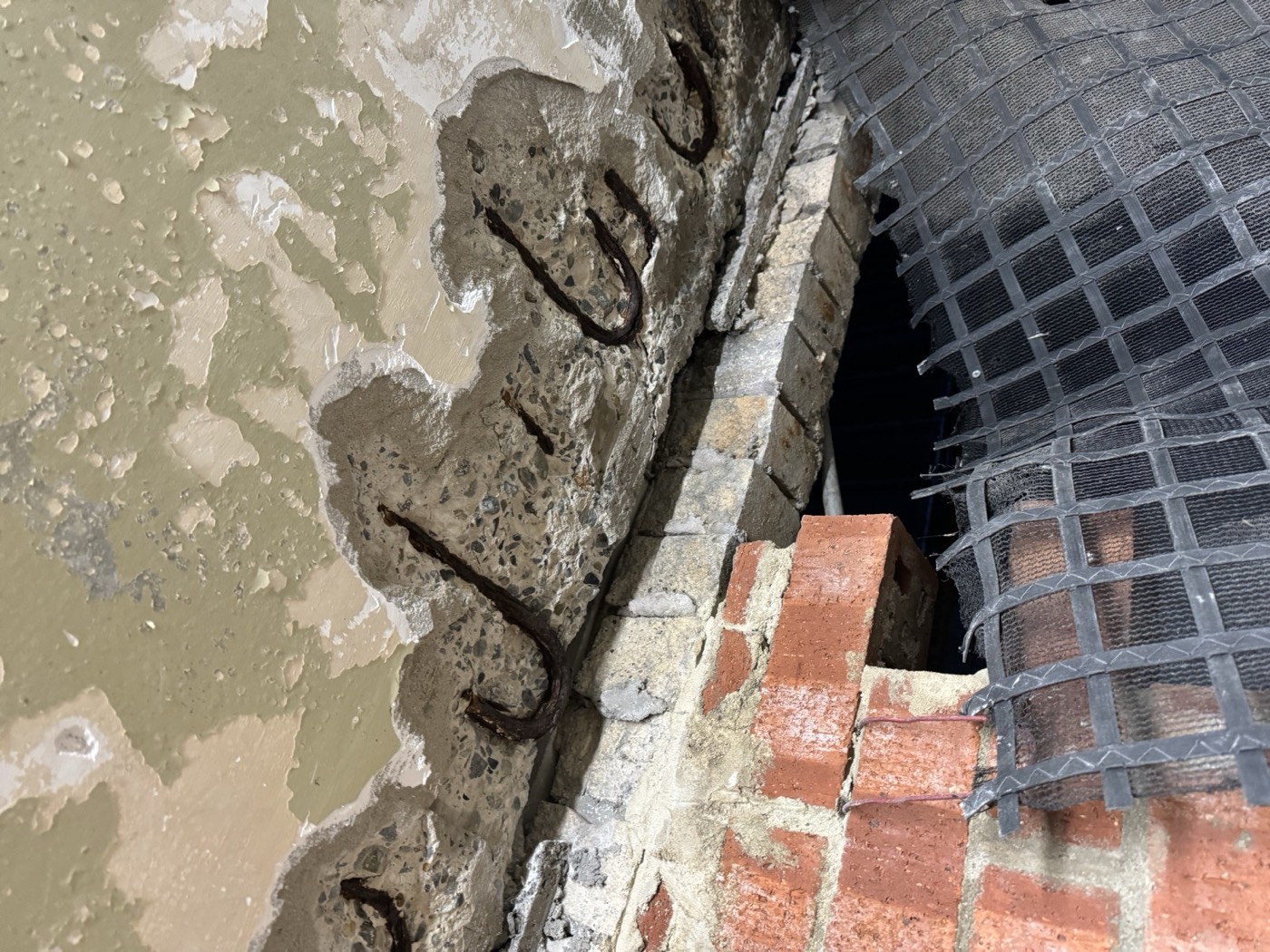
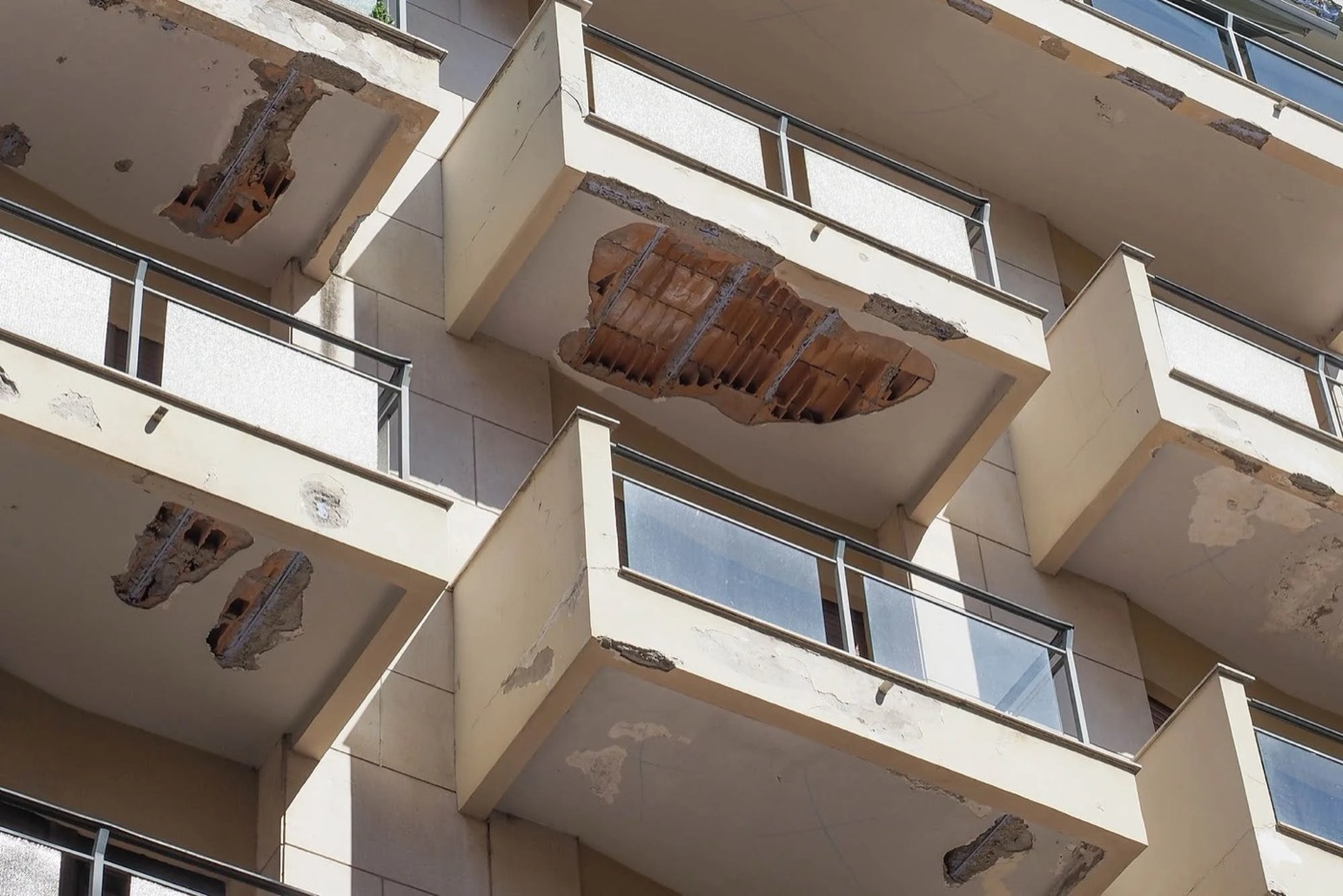
A parapet is the low wall that extends above the roof line at the edge of a flat roof or around a rooftop terrace. Parapets are exposed on three sides, and when their capping, flashings or render fail, water runs down inside the wall and appears as leaks well below.
Where parapet leaks come from
- Capping: cracked mortar or concrete copings, or metal capping with failed joints.
- Flashings: missing or failed flashings where the roof meets the parapet.
- Membrane upturns: roof membranes not turned up high enough or not terminated properly.
- Cracked render on the parapet faces.
- Penetrations: fixings for balustrades, antennas and signs drilled through the capping.
Signs of parapet leaks
- Stains and damp on walls and ceilings just inside the building edge.
- Efflorescence or cracked render on the parapet.
- Leaks during wind-driven rain rather than ponding.
Repairs
- Remove and replace failed capping, ideally with metal capping that has a fall and drip edges, or properly sealed copings with a damp course beneath.
- Install or replace flashings at the roof junction.
- Extend and terminate roof membranes properly up the parapet.
- Repair render and seal cracks.
- Seal or relocate penetrations through the capping.
Part of a roof and facade program
Parapet repairs are often done with roof waterproofing and facade work, sharing access. See roof waterproofing and facade restoration.
Parapet repairs in Sydney
See our waterproofing service or call 0415 840 500.
Frequently asked questions
Why do parapet walls leak?
Usually failed capping or copings, missing flashings, membranes not turned up properly, or cracked render.
What is parapet capping?
The cover on top of a parapet wall, usually metal or masonry coping, that sheds water away from the wall.
Can parapet leaks cause concrete cancer?
Yes. Water running into the wall can reach reinforcement and steel, causing corrosion over time.