A geotechnical report describes the ground under a site: what soil and rock is there, how strong it is, whether there is water, and what that means for footings, retaining walls and excavation. Engineers use it to design, councils often require it, and builders rely on it.
How the ground is investigated
- Boreholes: drilled with a small rig to sample soil and rock at depth.
- Test pits: dug with an excavator to see layers directly.
- Penetrometer tests: to measure soil strength near the surface.
- Lab tests: for soil reactivity, moisture and other properties.
What the report contains
- A log of soil and rock layers at each test location.
- Groundwater observations.
- Site classification for footings, such as how reactive the clay is.
- Allowable bearing pressures for footings.
- Parameters for retaining wall design, such as soil strength and density.
- Advice on excavation, batter slopes, rock and support.
- Slope stability or landslip risk on steep sites.
Why it matters for retaining walls
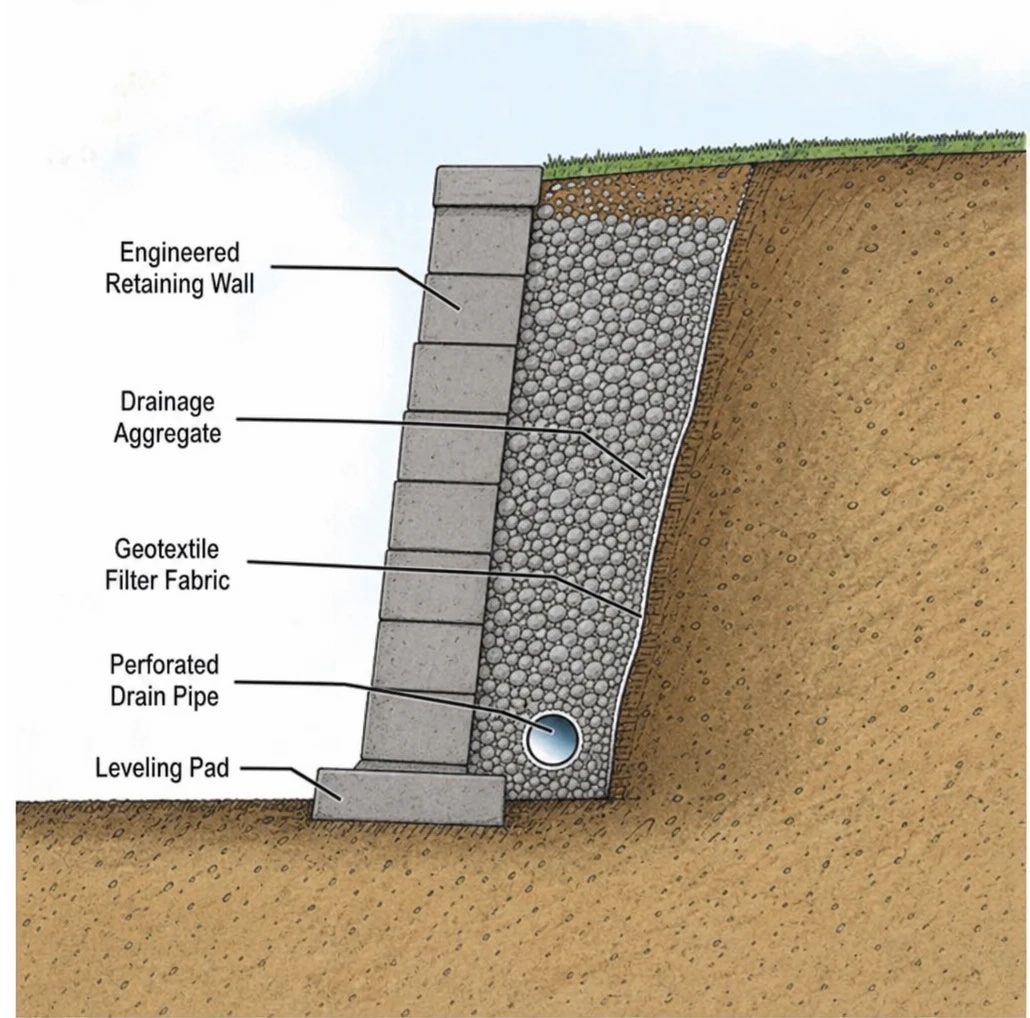
Retaining wall design depends on the soil behind and under the wall. The wrong assumption can mean an over-designed and expensive wall, or an under-designed one that leans or fails. See engineered retaining walls.
Why it matters for footings
Footings in reactive clay need to be deeper or stiffer than on rock. Founding on rock may mean piers down to it. See piers and piles.
When you need one
- New houses, duplexes, extensions and granny flats in most cases.
- Retaining walls over about a metre or near structures and boundaries.
- Excavation for basements, pools and driveways.
- Sites in landslip or slope risk areas, where council may require one.
Building from the report
We build retaining walls, footings and excavations to the geotechnical and structural engineers' requirements. See excavation and footings. METCON is a licensed NSW builder (384697C) delivering civil works, excavation and retaining walls across Sydney. Call 0415 840 500 or request a quote.
Frequently asked questions
Who orders the geotechnical report?
Usually the owner or designer, early in the project, so the engineer can design footings and walls.
How long does a geotechnical investigation take?
Fieldwork is often a day for a house site, with the report following once lab tests are done.
Can I use an old geotechnical report?
Sometimes, if it covers the same area and works. Your engineer will decide if it is adequate.