On a block that falls to the back, stormwater cannot simply flow to the street gutter. Councils usually want it piped to a legal point of discharge, which may be an existing drainage easement across the lots behind, a new easement, or an on-site alternative.
What a drainage easement is
An easement is a legal right registered on the title that allows a pipe to run through someone else's land, and access to maintain it. Many Sydney subdivisions already have inter-allotment drainage easements along rear boundaries. Check your title and the deposited plan.
If there is an easement
- Your stormwater can usually connect to the existing inter-allotment line.
- The connection is designed by an engineer and done by a licensed drainer.
- Do not build over the easement without approval.
If there is no easement
- You may need to negotiate a new easement with downhill neighbours, usually with compensation and restoring their property.
- If neighbours will not agree, NSW law allows an application to the Supreme Court in some circumstances, which is slow and costly.
- Council may accept alternatives such as a charged line to the street, a pump-out system, or an absorption or dispersal trench, depending on the site and soils.
Building in an easement
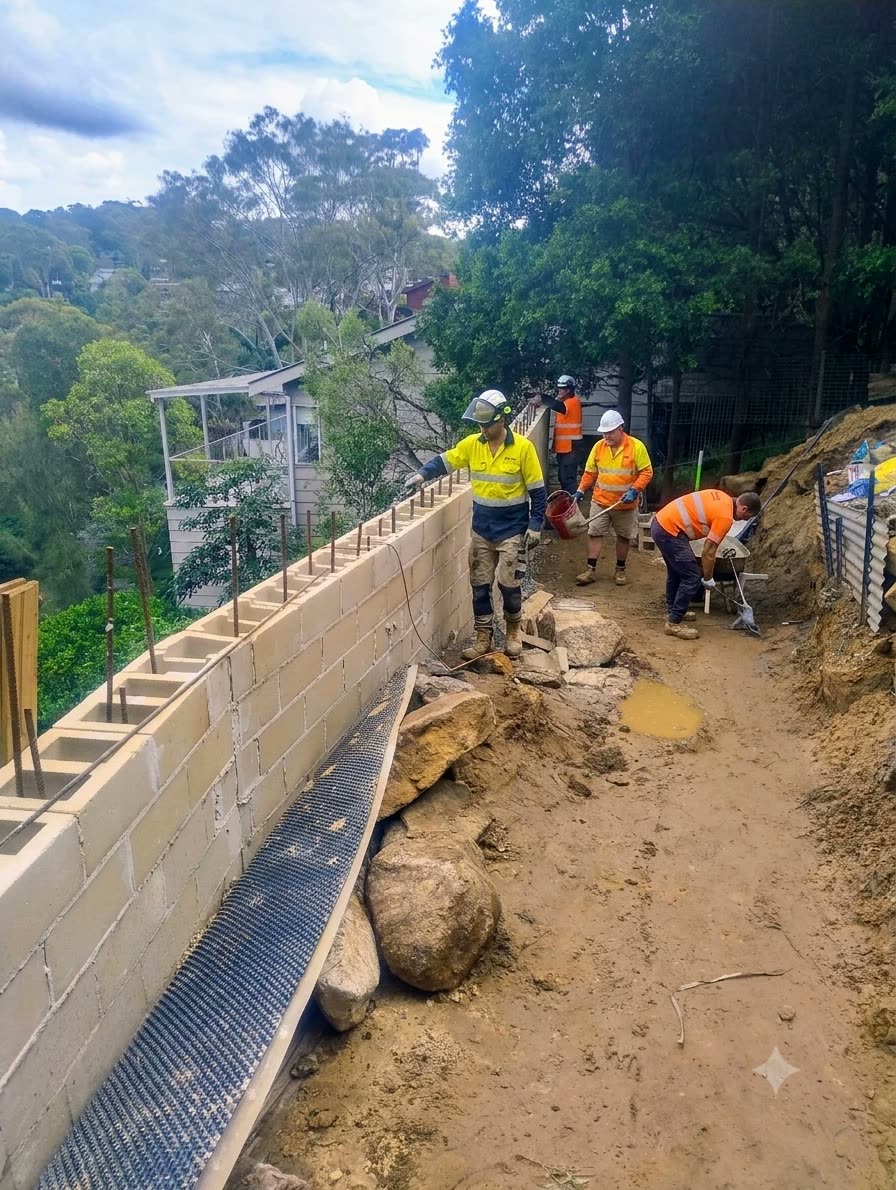
Construction of the pipe through a neighbour's yard is usually by open trench or, where fences, trees and paving are in the way, sometimes by under-boring. Good practice includes a dilapidation report on the neighbour's property before work and full reinstatement after. See dilapidation reports.
Plan it early
Stormwater discharge is one of the things councils check on a DA for new houses, duplexes and granny flats. Sorting it out early avoids design changes later. See civil works for duplex and granny flat sites.
Drainage civil works
We carry out excavation, trenching, pits and reinstatement for drainage works, with licensed drainers for pipe connections. See civil and structural works. METCON is a licensed NSW builder (384697C) delivering civil works, excavation and retaining walls across Sydney. Call 0415 840 500 or request a quote.
This article is general information, not legal advice.
Frequently asked questions
How do I find out if my block has a drainage easement?
Check your title search and the deposited plan, or ask your conveyancer or council.
Can my neighbour refuse a drainage easement?
They can refuse to agree. In some cases a court can impose one, but that is slow and costly. Alternatives may be possible.
Can I build over a drainage easement?
Generally not without the approval of the party that benefits from it, and usually council.