Many Sydney excavations meet water: seepage along sandstone bedding planes, perched water in clay, or true groundwater in sandy soils near the coast and harbour. Managing it properly keeps the excavation stable, the works dry and the neighbours safe.
Types of water
- Seepage: water trickling from joints in sandstone or clay. Common and usually manageable.
- Perched water: water sitting on a clay or rock layer after rain.
- Groundwater table: the permanent water level, common in sandy coastal areas.
Managing it
- Sumps and pumps: collect water at low points and pump it out. Suits minor seepage.
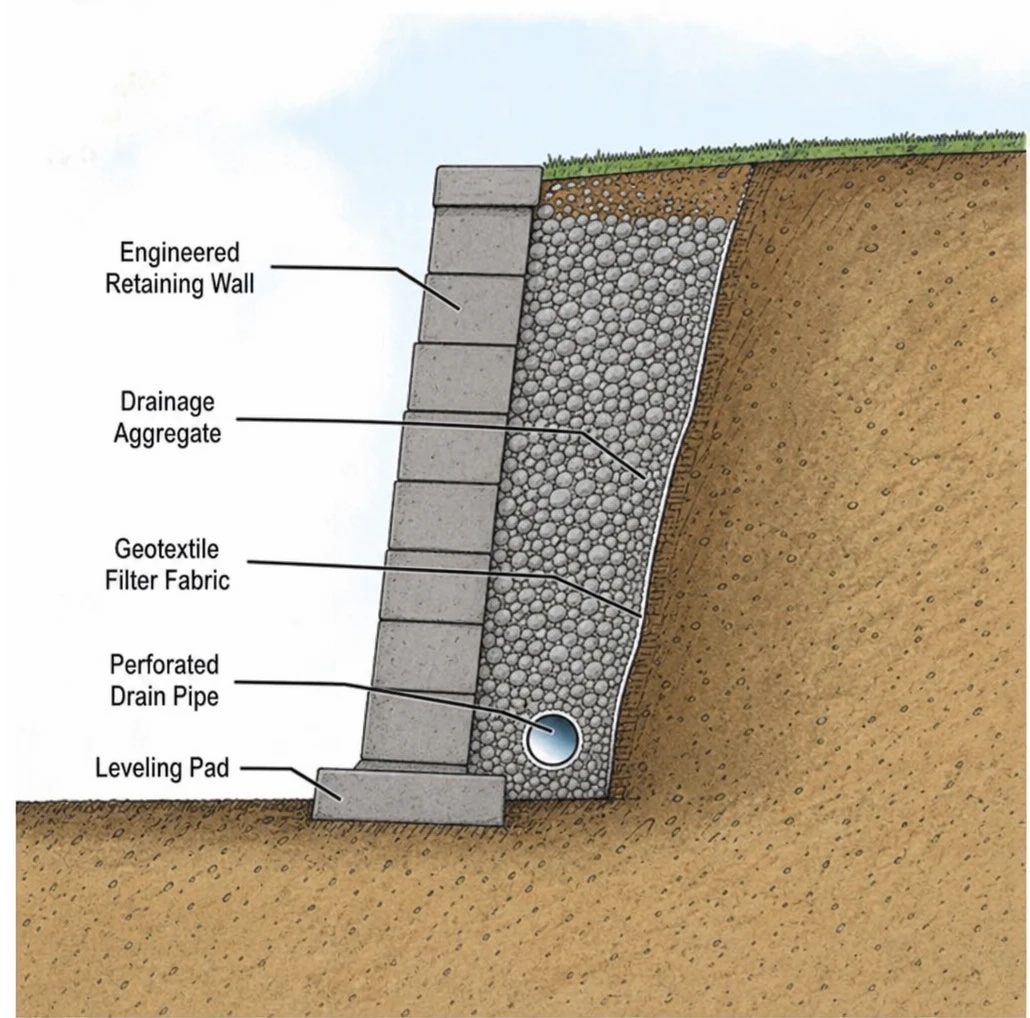
- Drainage: drainage strips, ag lines and drains behind walls lead water to sumps.
- Dewatering systems: spear points or bores lower the water table around the excavation. For larger inflows.
- Cut-off walls: secant pile walls limit how much water enters. See piled walls.
Approvals and discharge
Pumped water cannot just go down the gutter. It may carry sediment or contaminants and may need treatment and testing first. Discharging to stormwater or sewer needs the right approvals, and significant dewatering may need a licence or approval from state water authorities. The project's conditions of consent often set requirements.
Protecting neighbours
Lowering groundwater can cause settlement in nearby soft soils. Geotechnical advice, monitoring and limits on drawdown protect neighbouring buildings.
Permanent basements
Once built, a basement is either drained (water collected and pumped away permanently) or tanked (sealed to keep water out). See tanking vs drainage.
Excavation in wet ground
We excavate and manage water on Sydney sites, working with geotechnical engineers and dewatering specialists. See excavation. METCON is a licensed NSW builder (384697C) delivering civil works, excavation and retaining walls across Sydney. Call 0415 840 500 or request a quote.
Frequently asked questions
Is water in an excavation a problem?
Small seepage is common and manageable. Large inflows need a proper dewatering plan and possibly approvals.
Can I pump excavation water into the street?
Not without the right approvals. It often needs sediment treatment and testing first.
Does dewatering affect neighbours?
It can, in soft soils. Geotechnical advice and monitoring manage the risk.