Timber retaining walls are popular because they are quick to build and cost less up front. But wood in contact with wet soil has a limited life, and many Sydney homes now have timber walls that are rotting, leaning or both.
Types of timber retaining wall
Treated pine sleepers
The most common and lowest cost option. Treated to resist rot and termites, but quality and treatment level vary a lot. Sleepers and posts in ground contact need the right treatment level for that use.
Hardwood sleepers
Denser and more durable than pine, with a more natural look, but heavier, more expensive and still subject to rot over time.
Timber sleepers with steel posts
Timber infill between galvanised steel posts. The posts usually outlast the sleepers, so individual sleepers can be replaced.
How long do wood retaining walls last?
It depends on the timber, the treatment, drainage and how wet the site is. Walls that are well drained and built with properly treated timber last much longer than walls sitting in wet clay with no drainage. Even so, timber walls typically need replacing far sooner than concrete sleeper, block or sandstone walls.
Signs your timber wall is failing
- Soft or crumbling timber, especially at ground level.
- Posts that move when pushed.
- Sleepers bowing, splitting or popping out.
- The wall leaning forward.
- Soil washing through gaps.
- Termite activity.
Repair or replace?
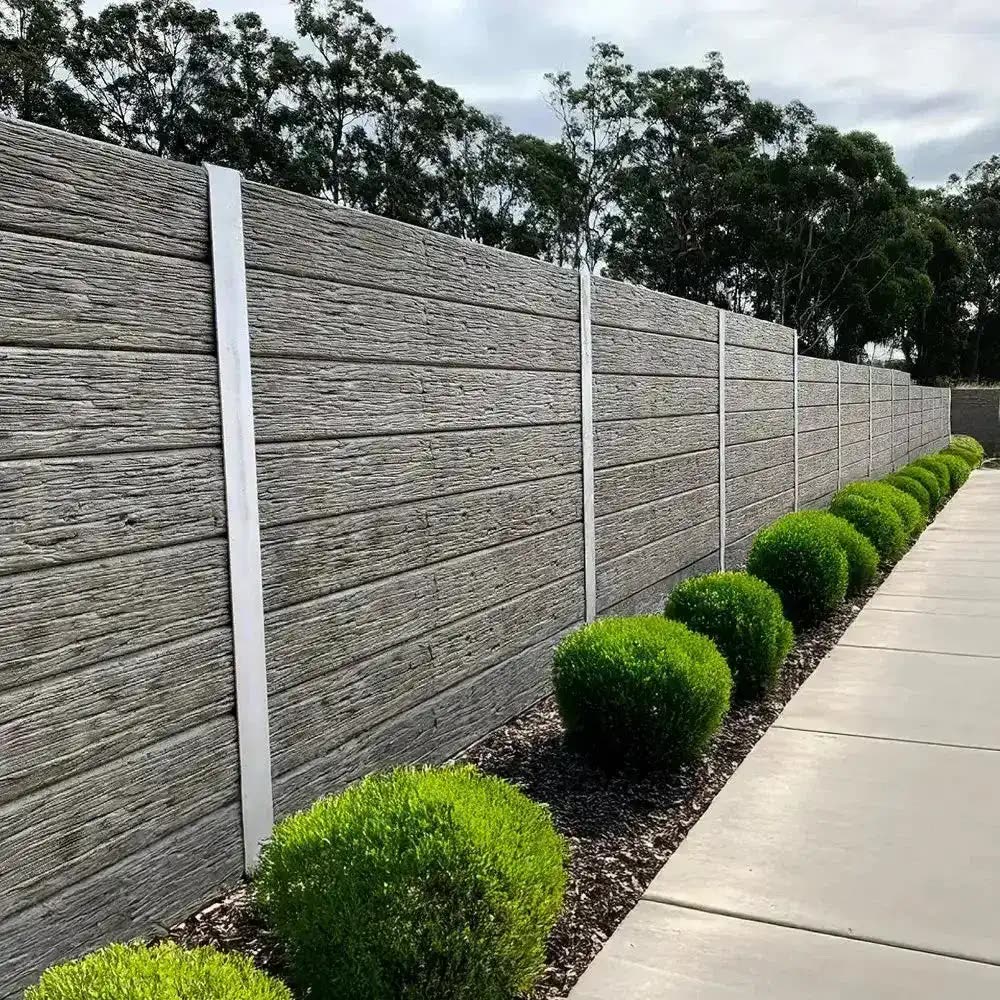
If a few sleepers have rotted on an otherwise sound wall with steel posts, replacing those sleepers can be enough. If the posts are rotting, the wall is leaning, or it was built without drainage, replacement is usually better value. Many homeowners replace timber walls with concrete sleepers, which keep a similar look and cost but last far longer.
Timber is still right for some jobs
For low garden beds, short-term landscaping and some low walls, timber remains a sensible, budget-friendly choice. The key is proper posts, footings and drainage.
Timber and replacement walls
See our timber retaining wall service, or our retaining wall repairs if your wall is already failing.
Frequently asked questions
Is treated pine OK for retaining walls?
Yes, if it is treated to the right level for ground contact and installed with proper posts, footings and drainage. It will still need replacing sooner than concrete or stone.
What is the best replacement for a rotting timber wall?
Concrete sleeper walls are the most common replacement. Sandstone, block and gabion walls are also long-lasting options.
Can I replace just the rotten sleepers?
Sometimes, if the posts are sound steel and the wall is not leaning. Rotting posts or a leaning wall usually mean a rebuild.