"Concrete retaining wall" covers several quite different systems. Choosing the right one depends on the height, the load behind the wall, the space you have and the look you want.
1. Reinforced concrete walls (poured in place)
Steel reinforcement is fixed, formwork is built and concrete is poured on site. These walls are very strong and can be slim for their height, so they suit tall walls, driveways, basements, boundaries and walls supporting buildings. They need engineering and careful construction, and often waterproofing on the retained side where they back onto living space.
2. Core-filled concrete block walls
Hollow concrete blocks, often called besser blocks, are laid on a reinforced footing, then steel bars are placed in the cores and filled with concrete. The result is a solid reinforced wall that can be rendered, painted or clad. See our block and brick retaining walls page.
3. Concrete sleeper walls
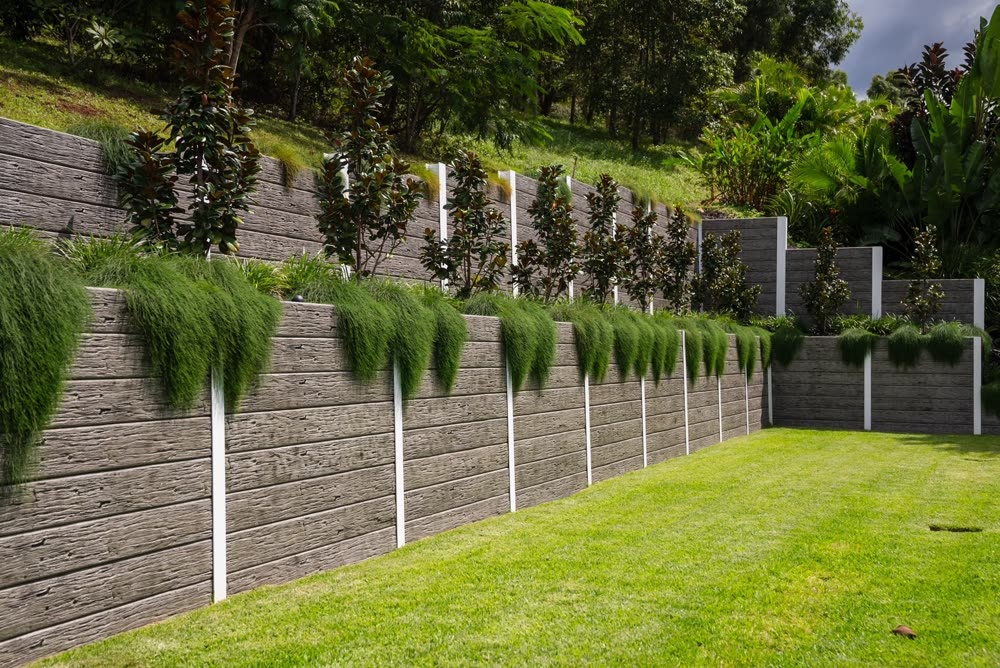
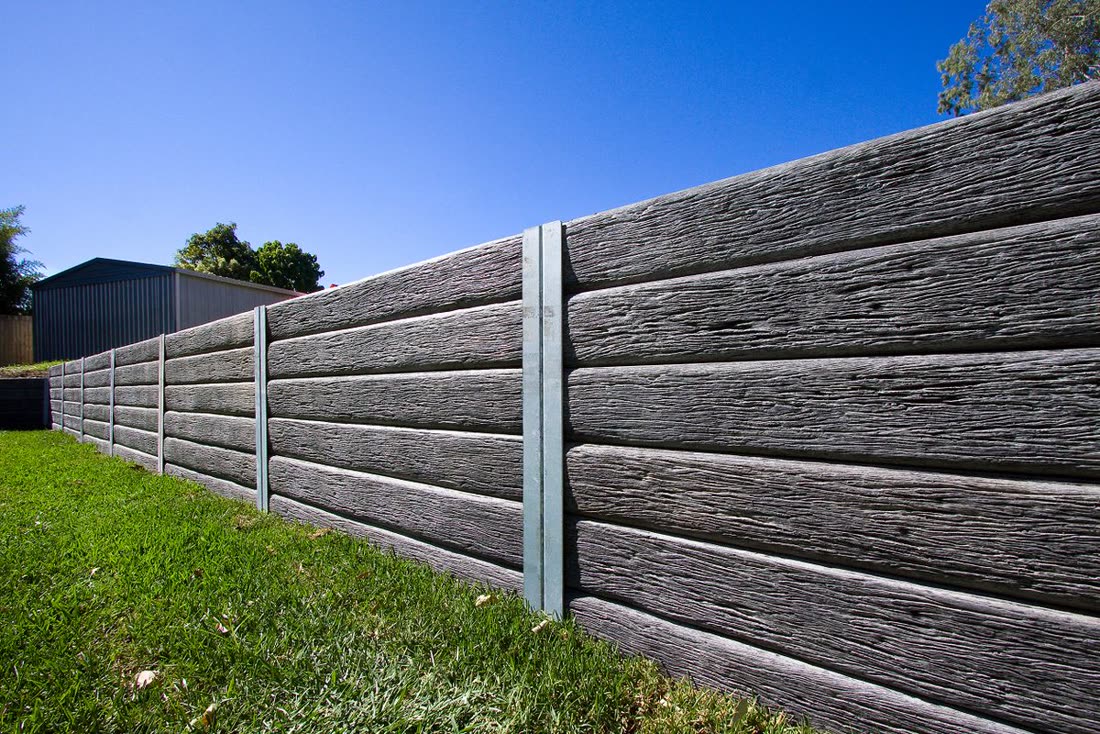
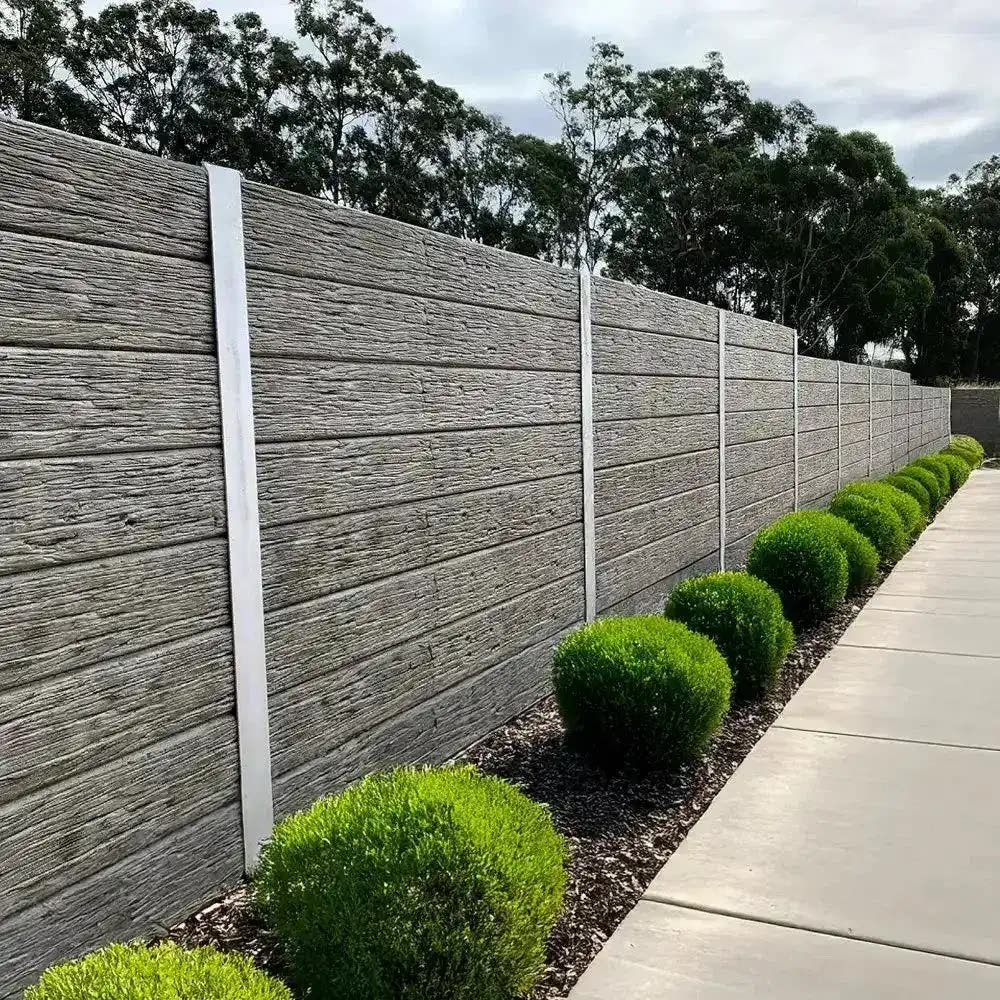
Precast concrete sleepers slot between galvanised steel posts concreted into the ground. They are quick to build, cost-effective for small to medium walls and come in plain, timber-look and stone-look finishes. See retaining wall posts for why the posts matter most.
4. Segmental concrete block walls
Interlocking blocks stacked without mortar, relying on their weight and setback. They suit lower garden walls and terraces, and taller versions use geogrid reinforcement in the soil behind.
5. Precast concrete panels
Large factory-made panels lifted into place, used on commercial and civil projects where speed and long runs matter.
Which is right for you?
- Low garden wall, budget-focused: concrete sleepers or segmental blocks.
- Tall wall, tight space or vehicle loads: reinforced concrete or core-filled block.
- Wall against a house or basement: reinforced concrete or block with waterproofing.
- Feature finish: block wall clad in sandstone or rendered.
What every concrete wall needs
- A footing designed for the soil and load.
- Drainage: ag pipe, clean aggregate and geofabric behind the wall, with weep holes. See retaining wall drainage.
- Engineering to AS 4678 for taller or loaded walls, and council approval where required.
Concrete retaining walls in Sydney
See our retaining wall services or call 0415 840 500 for a free site assessment.
Frequently asked questions
What is the strongest type of concrete retaining wall?
Reinforced concrete and properly reinforced, core-filled block walls are the strongest residential options, suited to tall walls and heavy loads.
Is a cement retaining wall the same as a concrete retaining wall?
Yes, people use the terms interchangeably. Concrete is the material; cement is one of its ingredients.
Do concrete retaining walls need drainage?
Yes. Every retaining wall needs drainage behind it to stop water pressure building up.