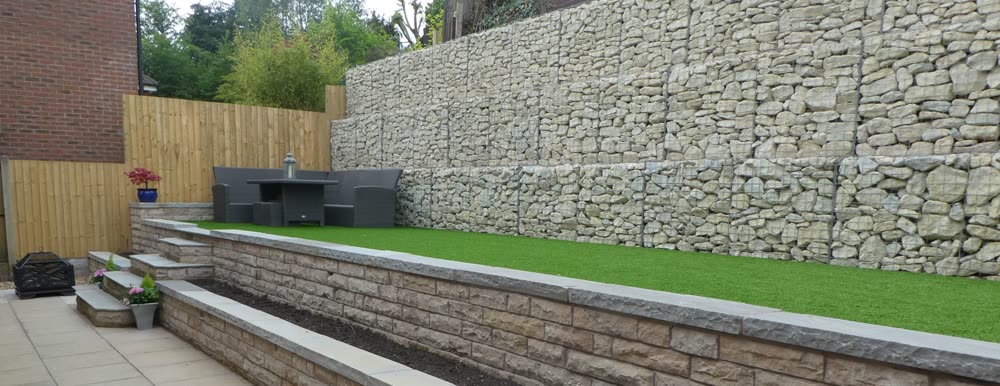
Sloping blocks are common across Sydney, and they bring water problems. Rain from uphill properties runs across the site, groundwater seeps out of cuttings, and water pools against buildings and retaining walls. Good drainage is what keeps a sloping site stable and dry.
Where the water comes from
- Surface runoff from uphill properties and the street.
- Your own roofs, driveways and paving.
- Groundwater seeping through soil and rock, often after rain.
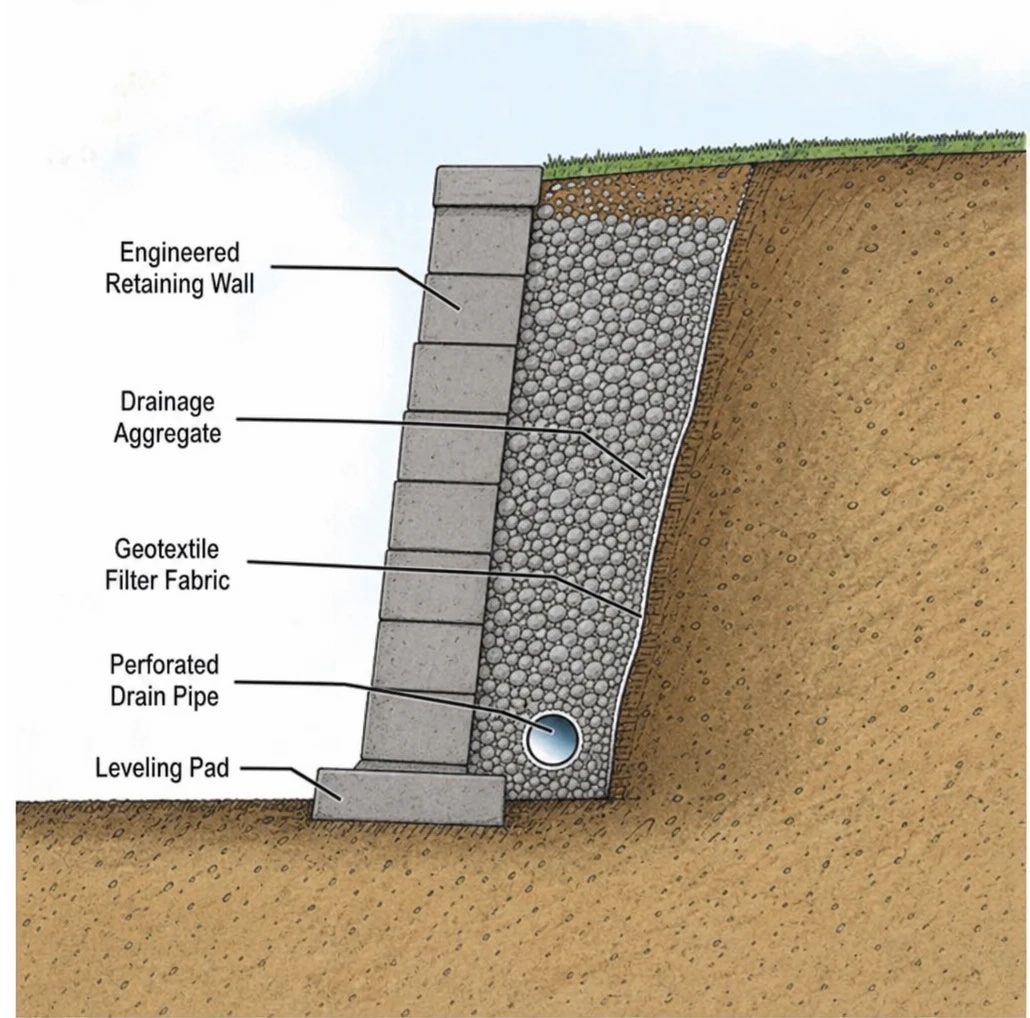
- Water behind retaining walls.
The usual solutions
| Problem | Typical solution |
|---|---|
| Water flowing onto the site from above | Cut-off drain or spoon drain across the top |
| Seepage from a cutting | Subsoil drainage (ag pipe in gravel) at the base |
| Water behind retaining walls | Drainage layer, ag pipe and outlet |
| Water pooling against the house | Regrading, grated drains and pits |
| Driveway runoff | Grated trench drain at the bottom |
Where it all goes
Stormwater must discharge to a lawful point, such as the street kerb, a council pipe or an easement. Downhill blocks without street frontage may need an easement through a neighbour's land. Some councils allow absorption trenches in suitable soils. Many new developments also need on-site detention. See OSD tanks.
Who does what
Stormwater drainage pipework and connections are done by licensed plumbers and drainers to a hydraulic design. We carry out the civil works: excavation, trenches, pits, concrete, retaining walls, regrading and making good.
Do not send it next door
Redirecting water onto a neighbour's land can lead to disputes and claims. Plan where every drain goes.
Civil drainage works
We carry out drainage-related civil works on sloping Sydney sites. See civil works and excavation. METCON is a licensed NSW builder (384697C) delivering civil works, excavation and retaining walls across Sydney. Call 0415 840 500 or request a quote.
Frequently asked questions
My uphill neighbour's water floods my yard. What can I do?
Talk to them first. Natural flow is treated differently from water redirected by works. Council or legal advice may be needed.
Do I need a hydraulic engineer?
For new developments and complex sites, usually yes. Councils often require a stormwater plan.
Can I connect to the street kerb?
Often, with council approval and to council's specifications.