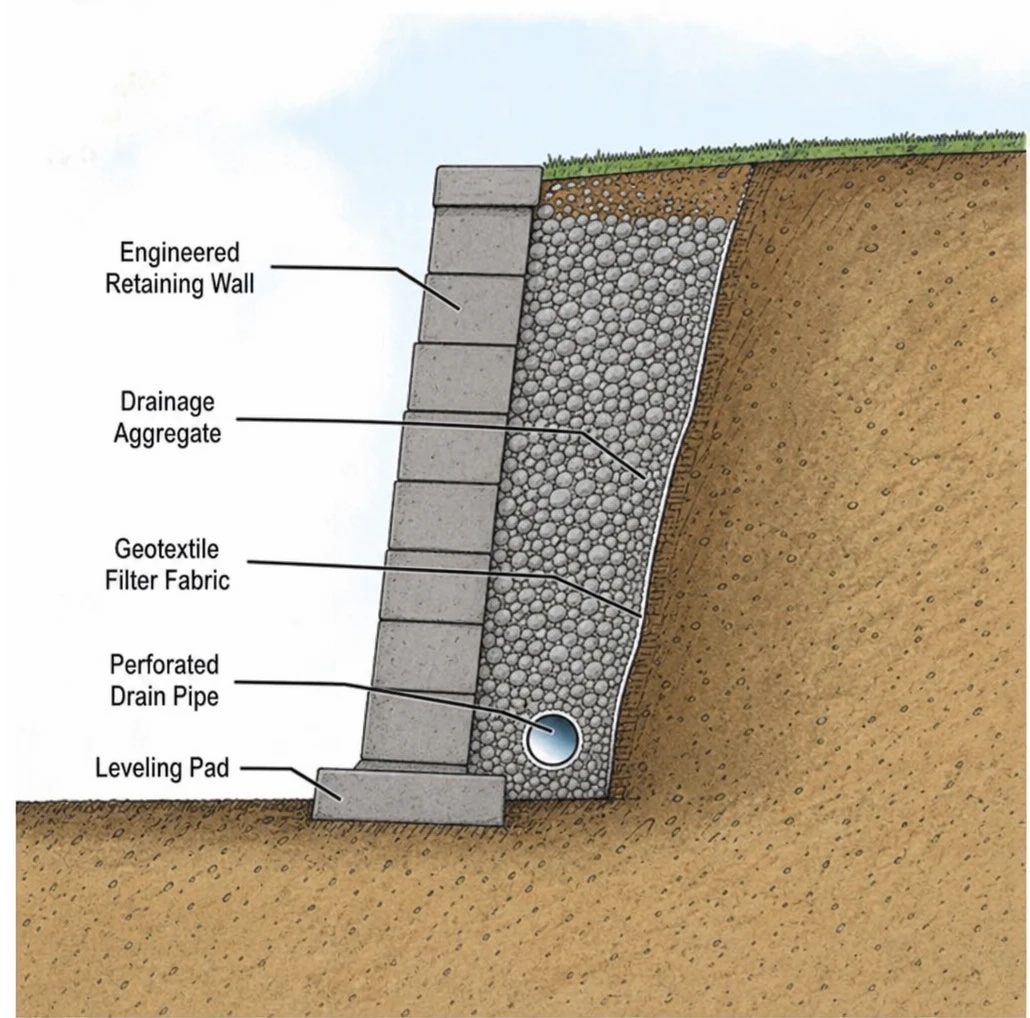
Many Sydney properties back onto creeks, gullies and drainage lines. In heavy rain, fast water scours the banks, undermines fences and retaining walls, and carries soil away. Gabions are one of the most effective ways to stop it.
Why gabions suit waterways
- They are flexible, so they settle with the ground rather than cracking.
- Water passes through, reducing pressure behind the wall.
- The rock surface slows water and resists scour.
- Plants can grow through them over time.
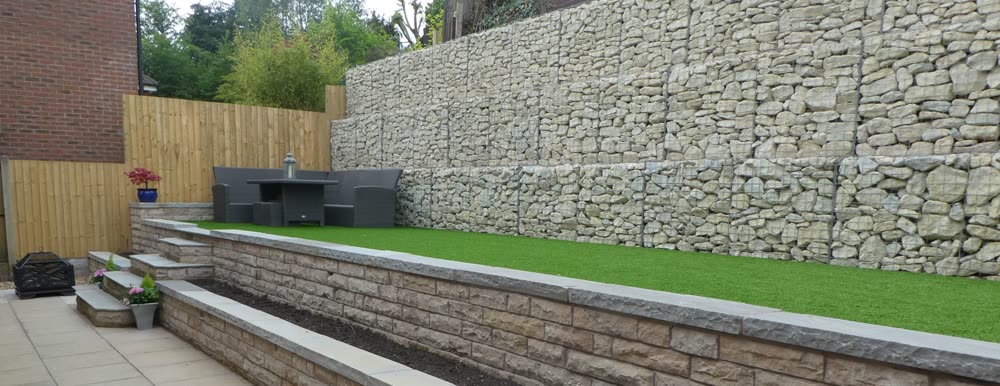
Gabion walls and mattresses
| Type | Use |
|---|---|
| Gabion baskets | Stacked walls along steep banks |
| Gabion mattresses | Thin, wide baskets laid on sloping banks or channel beds |
| Combined | A mattress apron at the toe to stop undermining, with a wall above |
Design points
- Protect the toe: most bank failures start at the bottom.
- Key the structure into the bank at each end.
- Use a filter fabric behind to stop soil washing out.
- Choose mesh with suitable corrosion protection for permanent water contact.
- Consider flood levels and flow speeds, with engineering input.
Approvals near waterways
Work on or near a river, creek or lake in NSW can need approval beyond council, for example a controlled activity approval for work on waterfront land. Some waterways also involve council-owned land or easements. Check before any work starts; we help with this as part of planning.
Other options
Rock armour, vegetation and bank reshaping may suit some sites, alone or with gabions. The right answer depends on the water, the soil and the space.
Creek bank protection
We build gabion walls and erosion protection on creek banks and slopes. See gabion walls and civil works. METCON is a licensed NSW builder (384697C) delivering civil works, excavation and retaining walls across Sydney. Call 0415 840 500 or request a quote.
Frequently asked questions
Can I fix my creek bank myself?
Small works may be possible, but work on waterfront land often needs approval. Check first.
Will gabions wash away in a flood?
Properly designed and anchored gabions resist floods well. The toe and ends must be protected.
Who owns the creek bank?
It depends on the property title and any council land or easements. Check your survey and title.