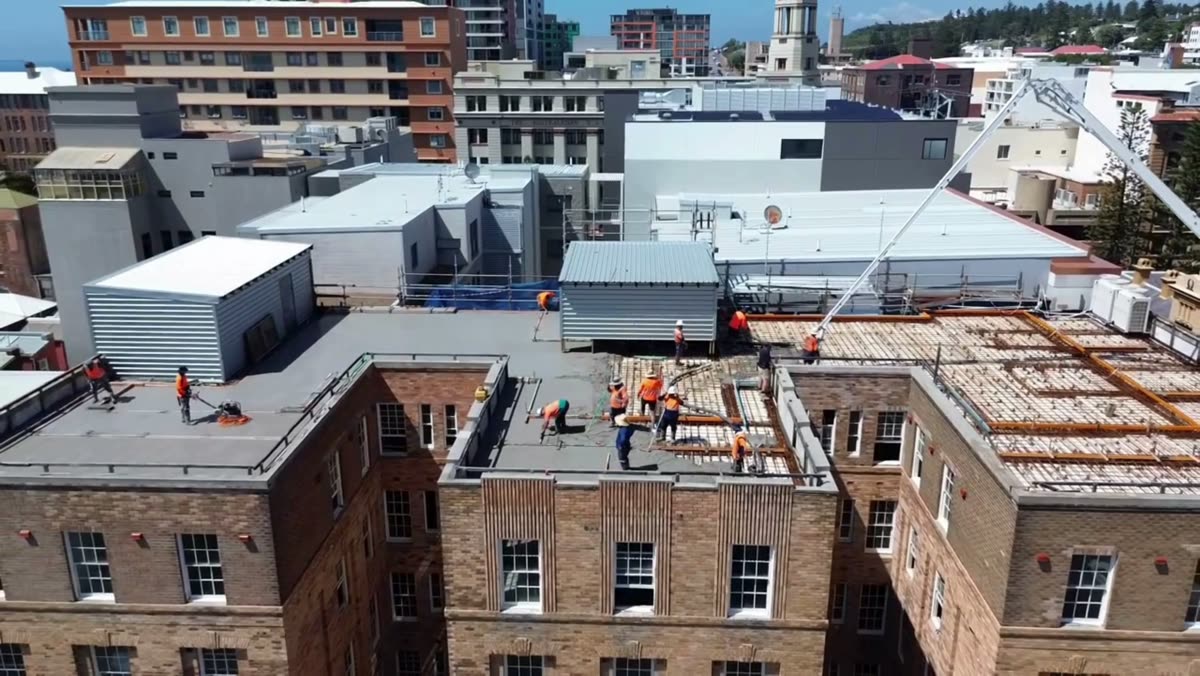
Commercial buildings work hard. More people, more load, more services and often less maintenance than they need. When defects appear, owners and managers have to balance repair, cost, tenants and liability at the same time. This guide covers how commercial remedial works are usually approached.
Common defects in commercial buildings
- Concrete cancer on awnings, slab edges, columns and carparks, sometimes above public areas.
- Corroded structural steel in beams, lintels and frames, often found during refurbishments.
- Roof, podium and planter leaks into tenancies, plant rooms and basements.
- Facade deterioration: cracked render, failed sealant joints, fretting brickwork and loose cladding.
- Carpark deterioration: cracked slabs, leaking joints and spalling.
Start with the right report
Most commercial remedial projects begin with an engineer's or building consultant's report that identifies defects and specifies repairs. A clear specification means contractors price the same work, and the repairs fix causes rather than symptoms.
Planning works around a trading building
- Staging floor by floor or zone by zone.
- After-hours work for noisy or disruptive tasks.
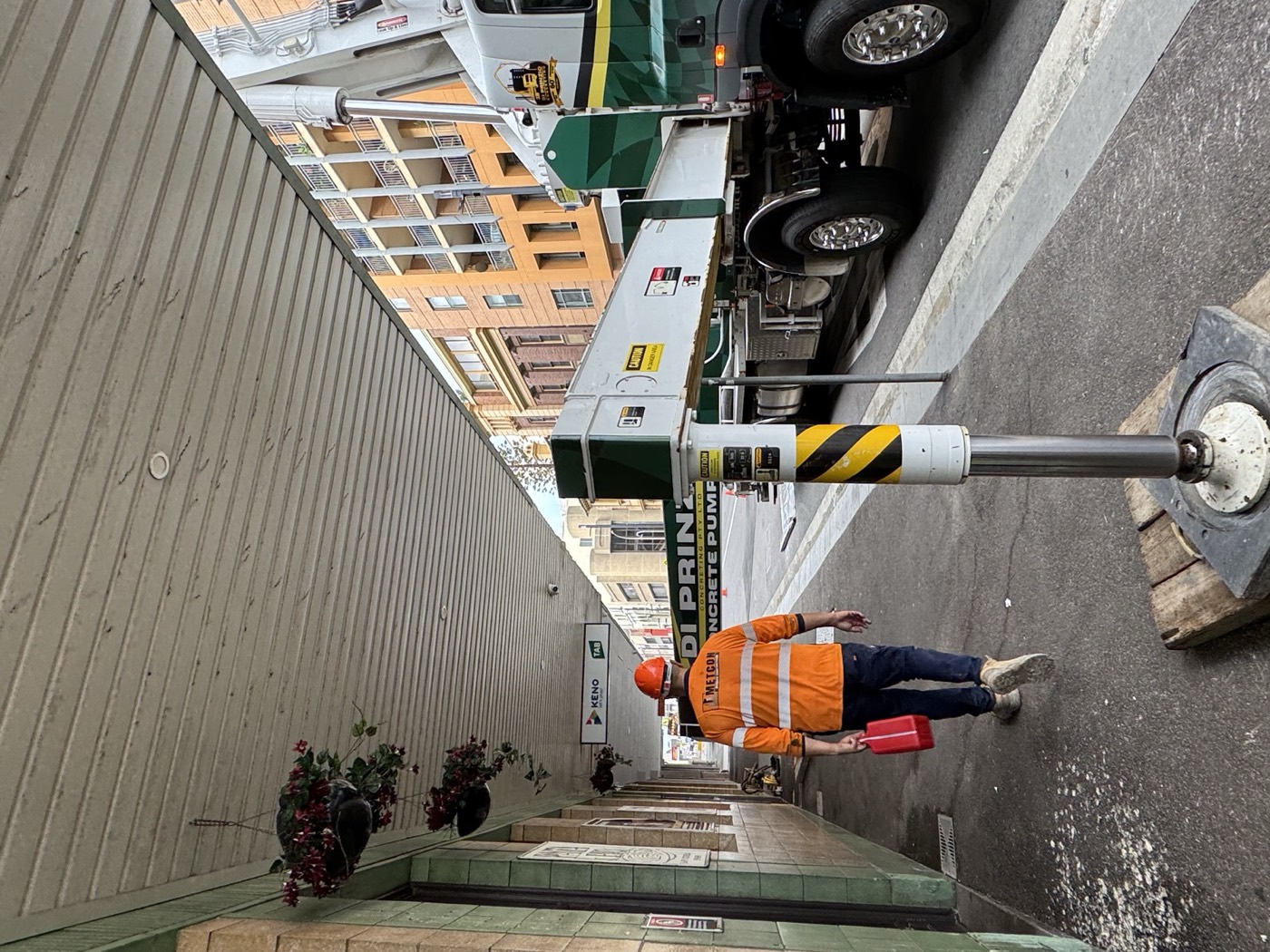
- Hoardings and public safety where work is above footpaths and entries.
- Traffic management for cranes, concrete pumps and deliveries.
- Tenant communication with notices before disruptive work.
Approvals and compliance
Like-for-like repairs often do not need development consent, but structural changes, facade alterations and work on heritage-listed buildings may. Hoardings and road occupancy usually need council permits. Remedial work on Class 2 parts of mixed-use buildings is regulated under the Design and Building Practitioners Act 2020.
What to ask for from a remedial contractor
- An itemised price against the specification.
- A staging plan and programme.
- Safety, hoarding and traffic plans.
- Hold point inspections and photo records.
- A handover pack for your asset register and insurers.
Commercial remedial services
We deliver remedial and structural works on operating commercial buildings. See our commercial remedial services.
Frequently asked questions
Can remedial works be done while a building is trading?
Usually, yes. Works can be staged, done after hours and isolated with hoardings so tenants and customers are disrupted as little as possible.
Who specifies commercial remedial repairs?
Usually a remedial or structural engineer or a building consultant, who inspects the defects and writes a specification for contractors to price.
Do commercial remedial works need council approval?
Like-for-like repairs often do not, but structural changes, facade alterations, heritage buildings, hoardings and road occupancy may need approvals or permits.