A concrete driveway should last for decades. Whether it does depends far more on what is underneath it than on the finish you see. When you compare driveway quotes, it helps to know what you are actually paying for.
What affects concrete driveway cost
Size and shape
Driveways are usually priced by area, but shape matters. Curves, steps, steep grades and tight access take more formwork and labour than a simple straight run.
Removing the old driveway
Breaking out and removing an existing concrete, asphalt or paved driveway adds machine time, truck movements and tipping fees.
Excavation and base preparation
This is where good and bad driveways are separated. Soft, reactive or poorly compacted ground leads to cracking and sinking. A proper job excavates to the right depth, compacts the subgrade and lays a compacted crushed rock base.
Thickness and reinforcement
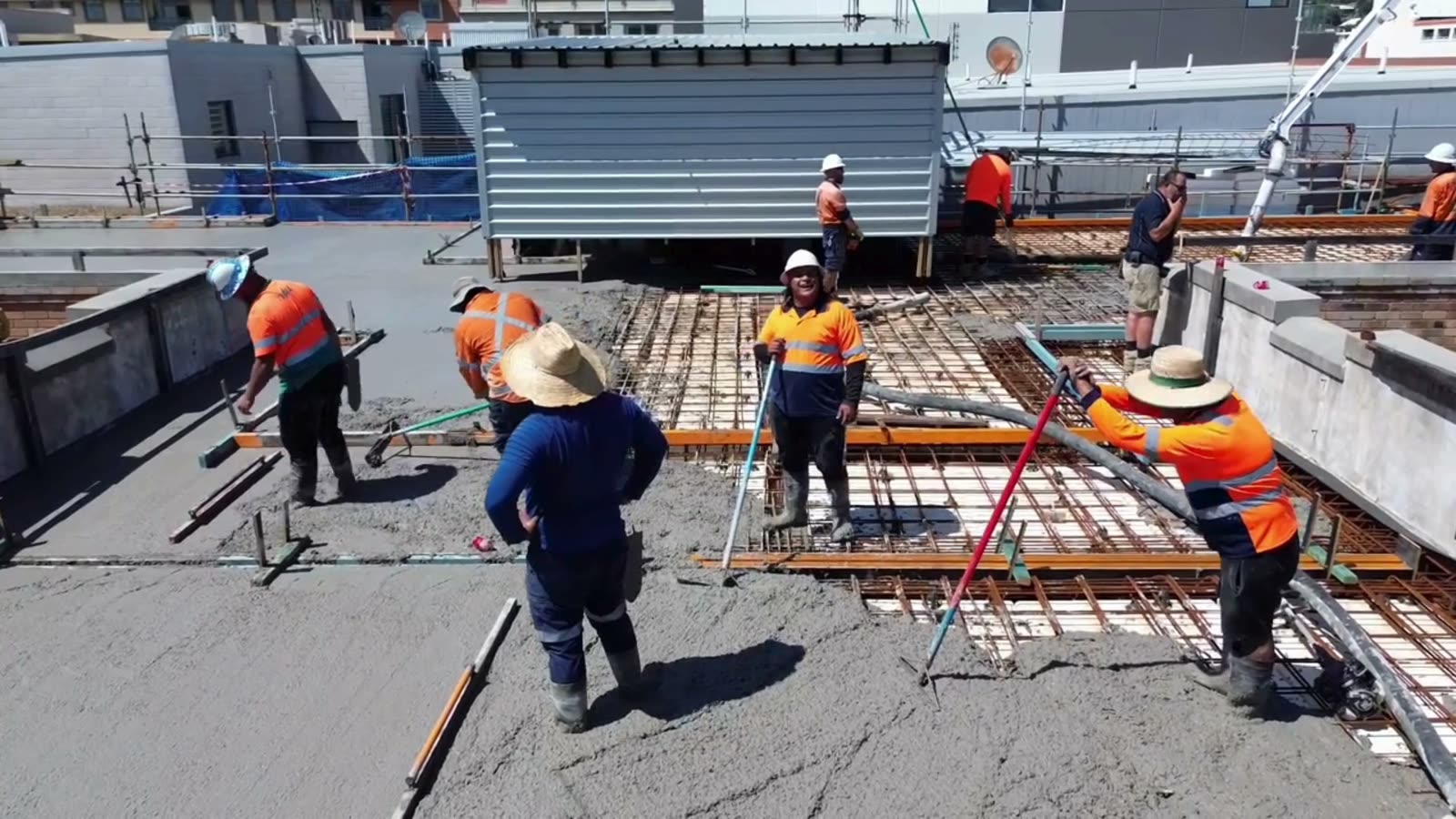
Residential driveways are commonly around 100mm thick with steel mesh reinforcement, and thicker where heavier vehicles are expected. Thickness, mesh type and any extra reinforcement at edges and joints affect both cost and lifespan.
Finish
Plain broom finish is the most economical. Coloured concrete, exposed aggregate, stencilled and stamped finishes, or a sealed finish all add cost but change the look completely.
Drainage
Driveways that fall towards the house or garage need grated drains and connection to stormwater. Steep driveways may need extra grooves or a textured finish for grip.
The council crossover
The section of driveway between your boundary and the road, the vehicle crossing, is on council land and usually needs council approval and must be built to council specifications and levels.
Control joints and cracking
All concrete shrinks as it cures. Properly placed control joints give that shrinkage somewhere to go so cracking happens neatly in the joints, not randomly across the slab. Ask where the joints will be.
What a good driveway quote includes
- Removal of the existing surface and excavation to level.
- Subgrade compaction and a compacted road base.
- Formwork, reinforcement, concrete strength and thickness.
- Finish, control joints and curing.
- Drainage and stormwater connections.
- Council crossover approval and inspections where required.
Get a driveway that lasts
See our concrete works service, or send us the address and a few photos of the existing driveway for a free itemised quote.
Frequently asked questions
How thick should a concrete driveway be?
Residential driveways are commonly around 100mm thick with reinforcement mesh on a compacted base, and thicker where heavier vehicles will use them. Your site conditions and any engineering requirements decide the final specification.
Do I need council approval for a new driveway?
The section crossing the footpath to the road, the vehicle crossing, is on council land and generally needs council approval and must meet council levels and specifications.
Why do concrete driveways crack?
Concrete shrinks as it cures and moves with the ground. Poor base preparation, too few control joints and thin concrete all increase cracking. Correct joints control where cracks form.