Footings and foundations carry the whole weight of a building into the ground. Get them right and the house stays straight for generations. Get them wrong and cracks, sticking doors and sloping floors follow.
Foundation vs footing
Strictly, the foundation is the ground that supports the building and the footing is the concrete element that spreads the load into it. In everyday use, people use both words for the concrete under the house.
Site classification comes first
Australian Standard AS 2870 classifies residential sites by how much the soil moves, from Class A (stable) through S, M, H1, H2 and E for increasingly reactive clay, plus Class P for problem sites such as fill or soft soils. A geotechnical report sets the class, and the engineer designs the footings to suit.
Common footing types
Strip footings
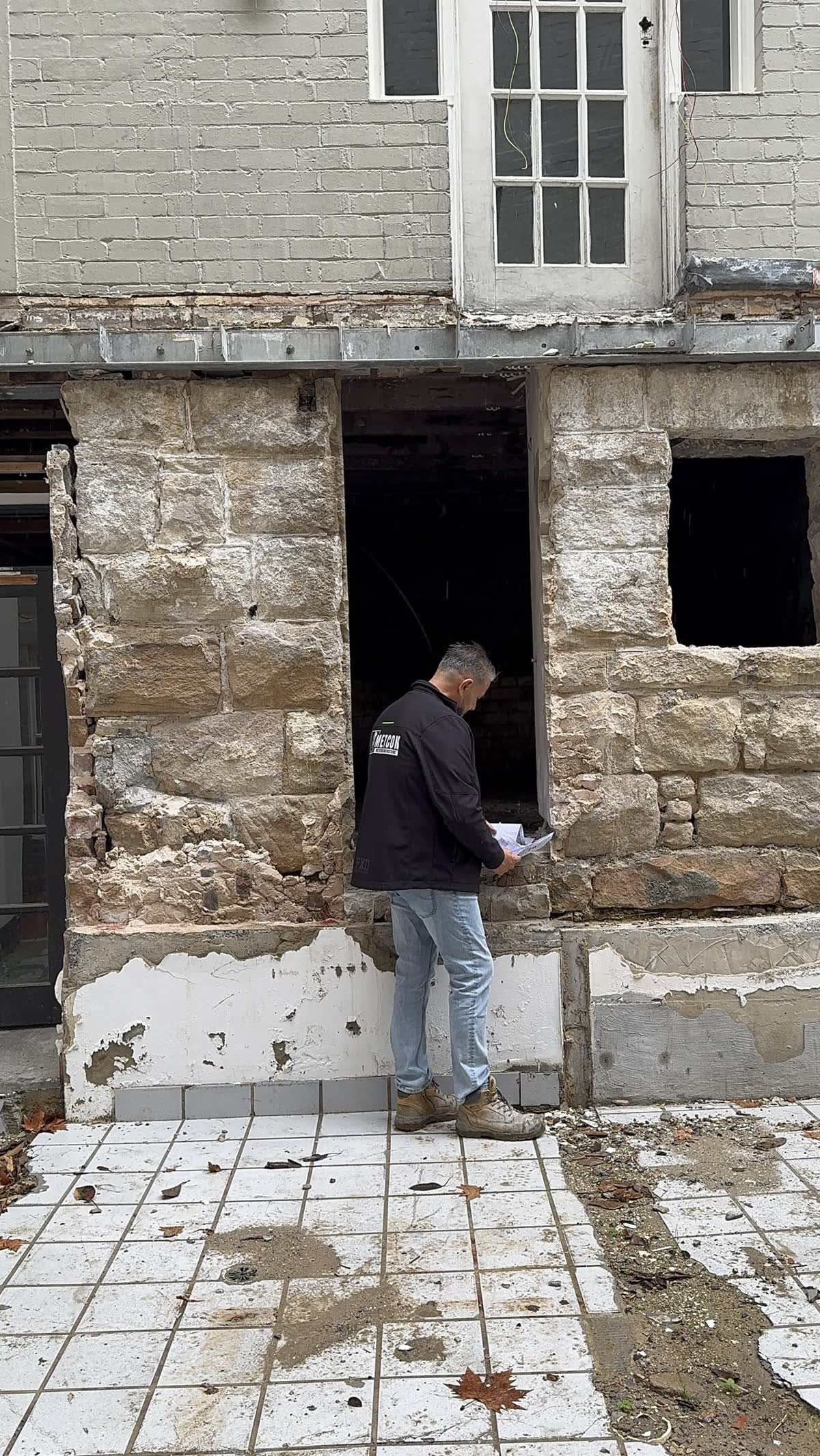
Continuous concrete strips under load-bearing walls. Common under older brick homes and extensions.
Pad footings
Isolated square or round pads under posts and columns, such as under decks and subfloor piers.
Raft and stiffened raft slabs
A concrete slab with thickened edge and internal beams, cast as one, common for new houses on reactive clay.
Waffle pod slabs
A slab cast over polystyrene pods forming a grid of ribs. Quick to build on suitable flat sites.
Piers and bored piers
Concrete columns taken down to stronger ground, used on sloping, filled or very reactive sites.
Screw piles
Steel piles screwed into the ground, useful where access is tight or a quick installation is needed.
When footings go wrong
Most footing problems come from moisture changes in clay: leaking pipes, poor drainage, trees drying the soil, or footings that were too shallow. See signs of foundation movement. Fixes range from drainage repairs to underpinning.
Footings for extensions
New footings for an extension must work with the existing house. Different footing types side by side can move differently, so the junction between old and new needs careful design.
Footings and concrete in Sydney
See our concrete works service or call 0415 840 500.
Frequently asked questions
What is the difference between a footing and a foundation?
The foundation is the ground supporting the building; the footing is the concrete that spreads the load into it. People often use both words for the concrete under a house.
Which footing is best for reactive clay?
Usually a stiffened raft slab or piers taken to stable ground, as designed by an engineer for the site class.
Why do house footings move?
Mostly because of moisture changes in clay soil from leaks, poor drainage, trees or shallow footings.